If water is coming through your ceiling or a tree is lying on your roof right now, call (773) 207-0769 and we will answer, at 2 in the afternoon or 2 in the morning. Tell us what you see, and we send the nearest available roofer to stop the water as fast as it can be done safely.
Emergency roof repair in Milton, FL is the first response to an open roof: stop the water, make the roof safe, and document the damage, any hour of the day. It is a temporary fix by design. The permanent repair follows once the weather and daylight allow it.
Emergency work in Milton is mostly about buying time. A tarp or temporary dry-in keeps rain out of the drywall until the weather allows a permanent repair. Below: what counts as an emergency, what to do in the next ten minutes, and what can be done while the storm is still overhead. Every roofer we send is licensed and insured in Florida.
What counts as a roofing emergency
A roofing emergency is any opening that lets water or weather into the house and will get worse before morning. A slow stain from last week's rain can usually wait for a scheduled roof leak repair. These should not:
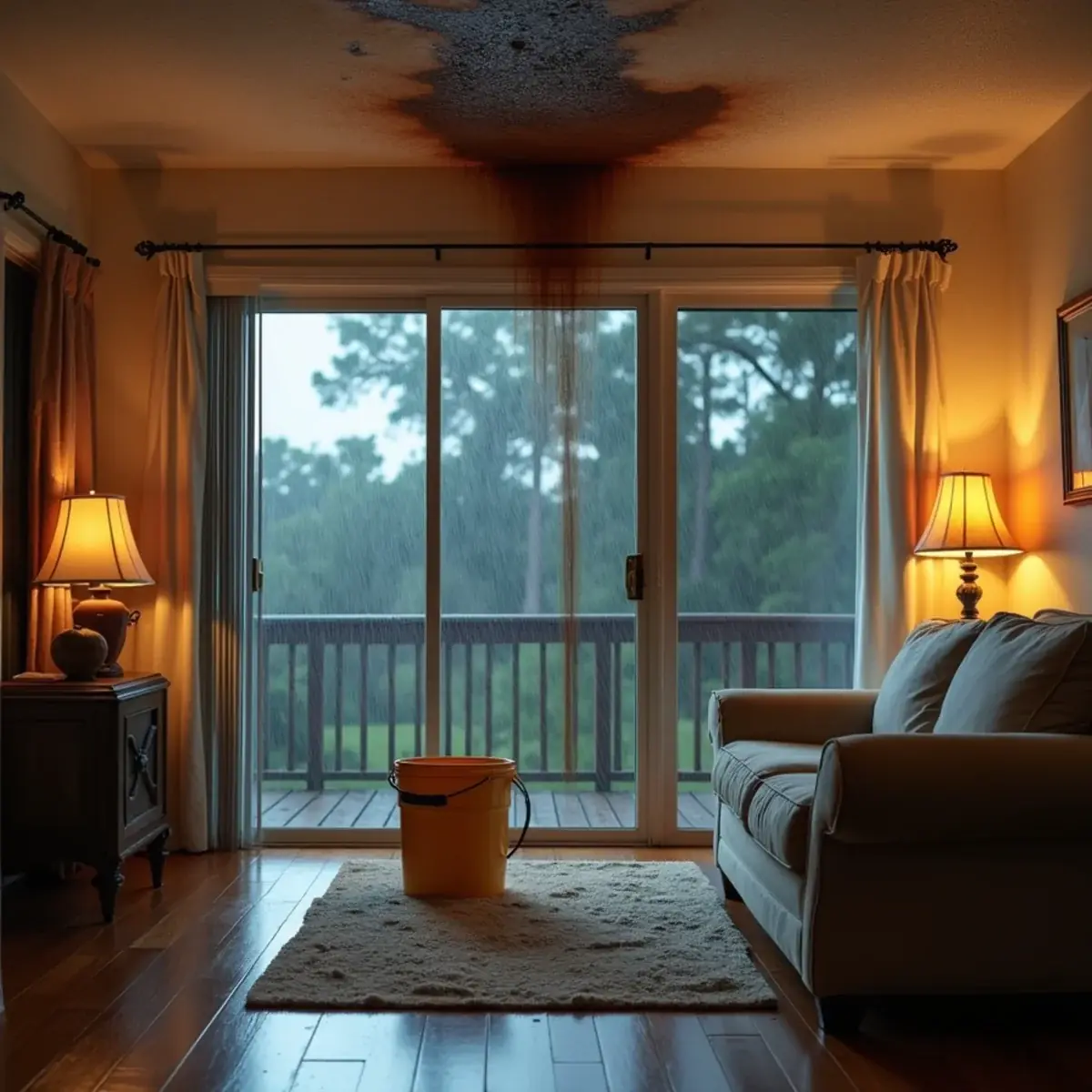
- Water dripping or running through a ceiling, light fixture or smoke detector.
- A ceiling that sags or bulges with trapped water.
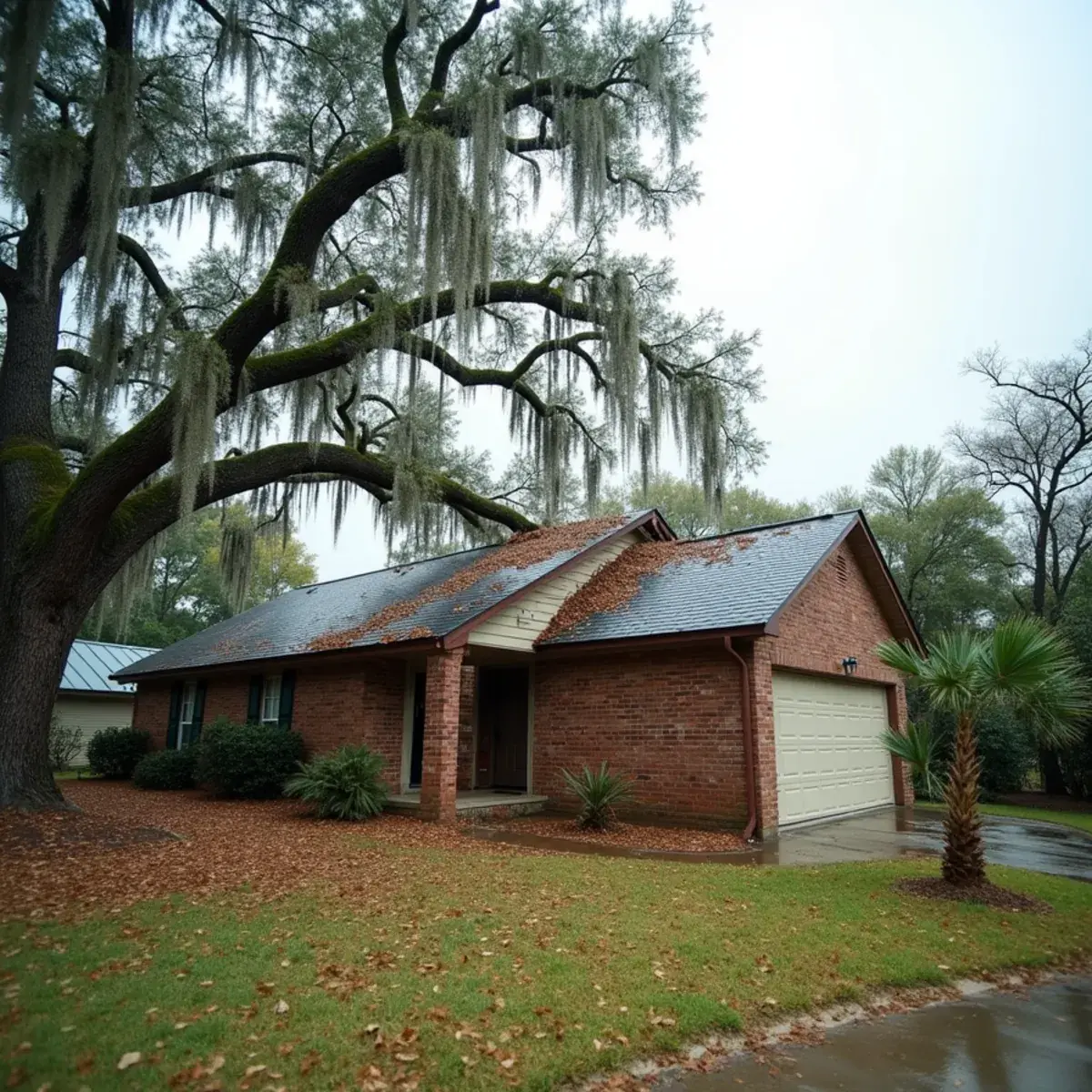
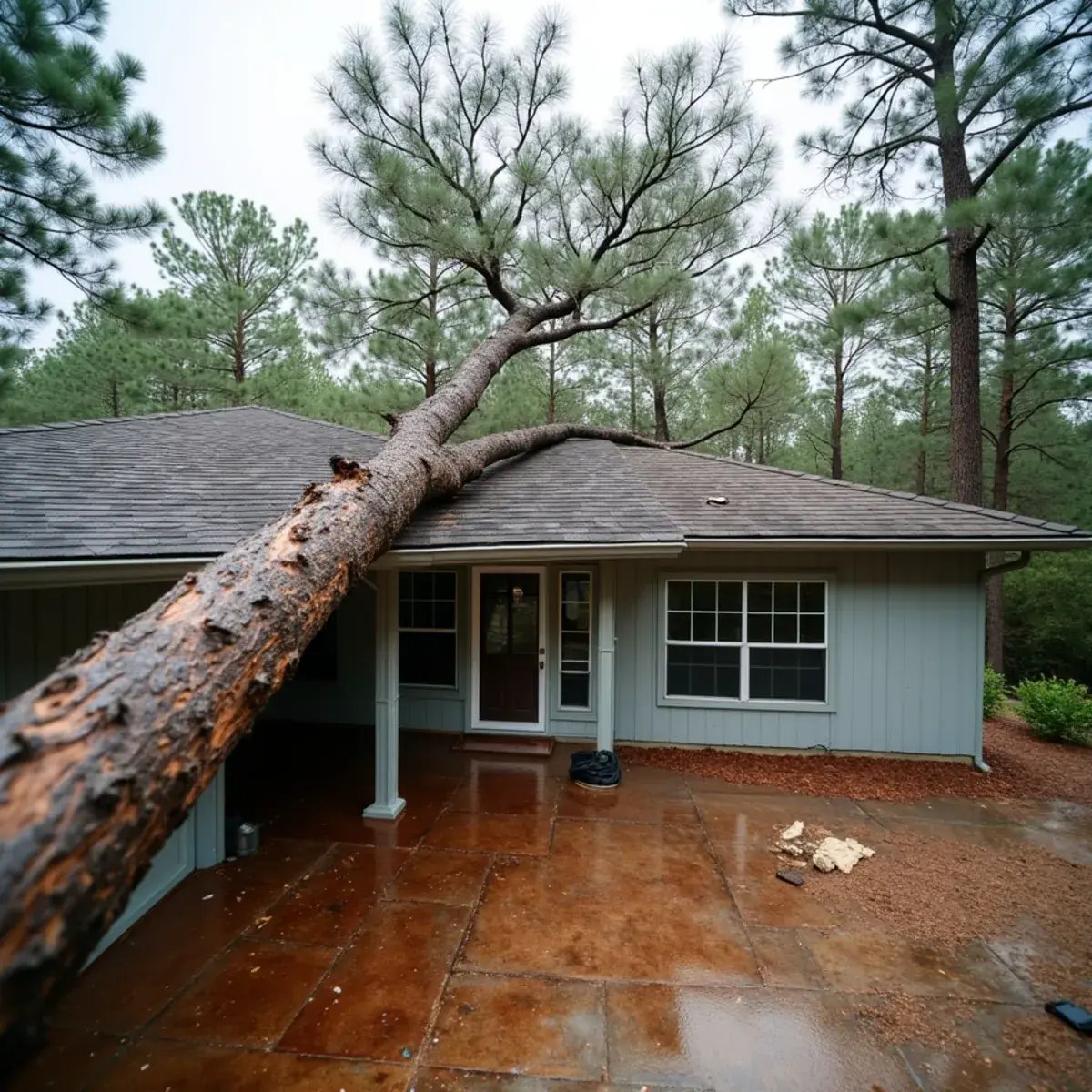
- A tree or large limb resting on or through the roof.
- Bare decking or a hole visible from the yard after wind.
- A metal panel or ridge cap flapping loose in the wind.
Emergencies we handle: tree strikes, blown-off shingles, torn metal panels, exposed decking, sudden interior leaks
Milton sits under tall longleaf and slash pines and old live oaks, so limb strikes top the list of night calls. A pine limb can punch through shingles and decking and leave a hole the size of a door. The roofer covers the opening and leaves heavy tree removal to a tree service. Our guide on what to do when a tree falls on your roof covers the insurance photos and the order of calls.
Wind damage
Thunderstorm gusts can peel shingles off a ridge or rake edge, or bend back a loose metal panel end. Both are quick to secure before the next band of rain.
Sudden interior leaks
Sometimes nothing looks wrong from the yard, yet water is streaming into a bedroom. A failed pipe boot or lifted step flashing lets in a lot of water in a downpour. The emergency step is to find the entry point and cover it.
Emergency tarping and temporary dry-in
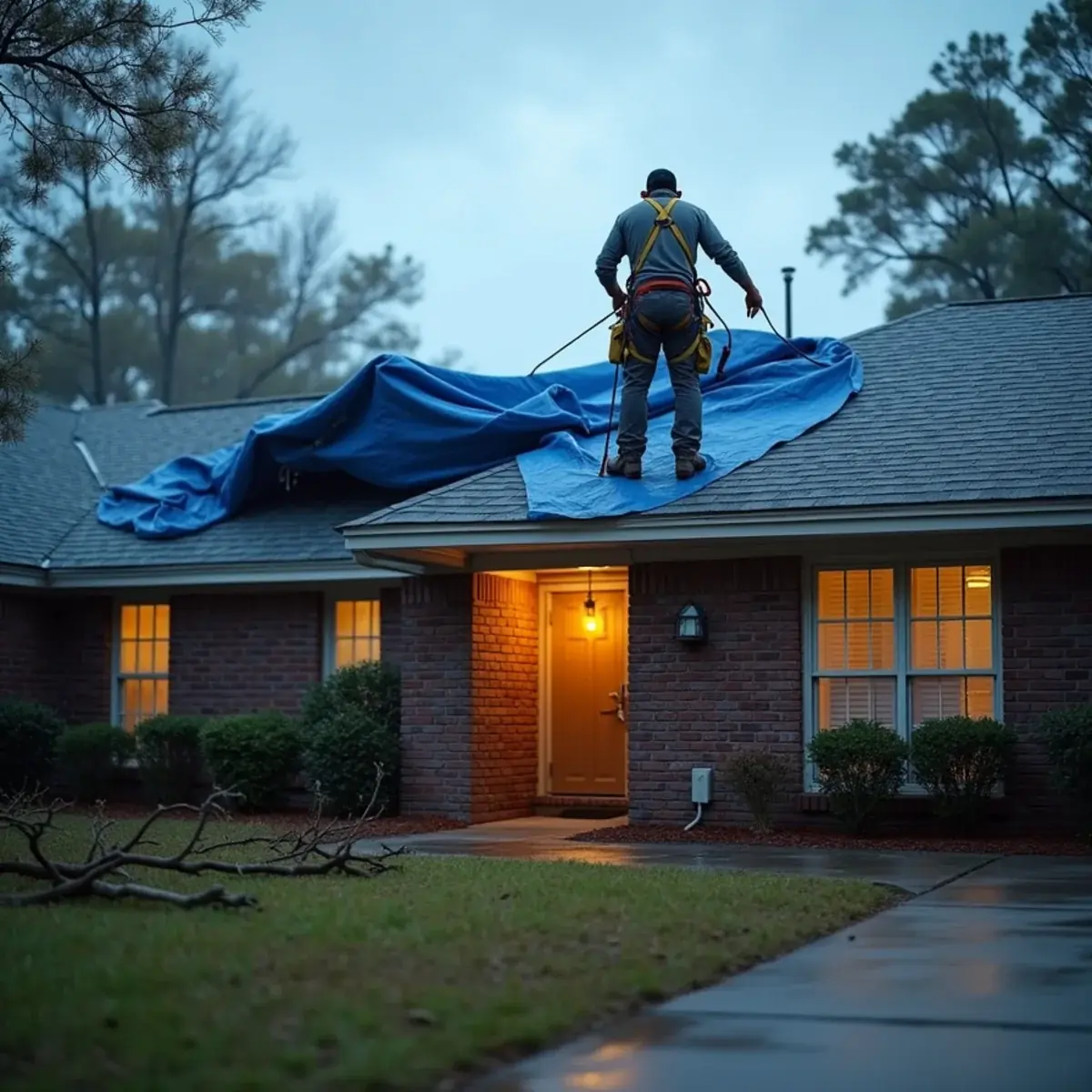
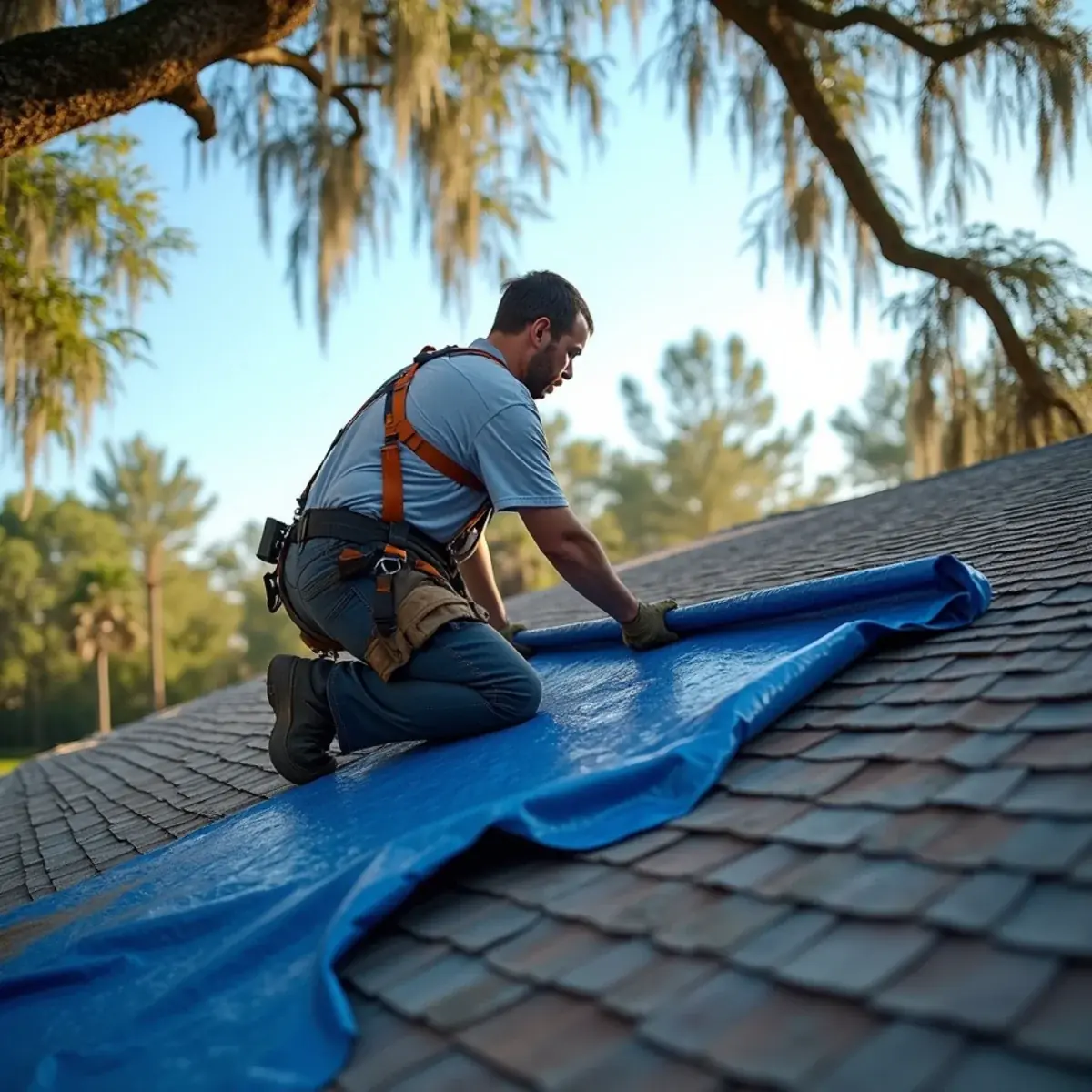
A good tarp job is more than plastic thrown over a hole. The roofer follows a set order so the tarp sheds water instead of channeling it under the shingles.
- Clear loose debris and broken pieces from the damaged area.
- Size a heavy-duty tarp to run past the damage on every side and, where possible, over the ridge so water cannot get in at the top.
- Fasten the edges to wood battens (furring strips) screwed through to the decking, rather than nailing through the tarp itself.
- Check the lap direction so rain runs over the tarp and off the roof, not into a fold.
- Look inside the attic, if it is safe, to confirm the drip has slowed or stopped.
On a low-slope section or around a chimney, the roofer may instead apply a peel-and-stick membrane or a temporary flashing patch. That is the dry-in. Either way, it is a holding measure, and it is priced as one.
What emergency roof service includes, and what it does not
Included
- A live answer and a roofer sent to your address, day or night
- A safety check of the roof and the area under the damage before anyone climbs
- Tarping, peel-and-stick membrane or a temporary panel to close the opening
- Clearing loose debris and small limbs from the roof surface around the opening
- Dated photos of the damage and the temporary work, and a written description of both
- A written estimate for the permanent repair once the roof has been inspected in daylight
Not included
Cutting and lifting a large tree off the house is a tree service job, often with a crane, and it comes before the tarp. Water extraction, drying and interior repairs belong to a restoration company. Downed lines belong to the power company. The roofer can tell you which of them you need and in what order.
What to do before the roofer arrives: catch water, move valuables, cut power to wet fixtures, stay off the roof
The first minutes matter most for your floors and furniture. Work through these steps and skip any that put you at risk.
- Catch the water. Put buckets, pots or a trash can under each drip. Lay towels around them to stop splashing.
- Relieve a bulging ceiling. If drywall is sagging with water, stand to one side and poke a small hole at the lowest point with a screwdriver so it drains into a bucket instead of collapsing.
- Move valuables. Pull electronics, documents and rugs away from the wet area, or cover them with plastic.
- Cut power to wet fixtures. If water is coming through a light or ceiling fan, switch that circuit off at the breaker panel, but only if you can reach the panel without standing in water. If you cannot, leave the room and tell us when you call.
- Stay off the roof. Wet shingles, wet metal and wind are a dangerous mix, and damaged decking can give way.
- Take photos. Shoot the ceiling, the water and anything damaged, with the date visible on your phone.
Our post on what to do in the first hour of a storm leak goes through these steps in more detail.
How 24/7 dispatch works: live answer, nearest available roofer, price before work
When you call, a person answers and asks a few quick questions: where the water is, whether a tree is involved, the roof type and the address. That lets us send the nearest available roofer who handles that kind of damage.
We serve all of Milton plus Pace, East Milton and Bagdad, and the rest of the Santa Rosa County service area. We do not promise an arrival time, because downed lines on Avalon Boulevard or a dozen storm calls can change it. We promise an answer and the fastest safe response.
Before any work starts, the roofer looks at the damage and gives you the price in writing. You decide whether to go ahead.
From your call to a dry ceiling
- A person answers and asks where the water is, what happened and whether anyone is hurt or a power line is down.
- We send the nearest available roofer who handles emergency tarping and tell you what to expect for timing.
- The roofer assesses safety first: wind, lightning, darkness and the condition of the decking decide what can be done right now.
- You approve the price for the temporary work in writing.
- The roof gets tarped or dried in and photographed, and the permanent repair is scheduled for the first safe window.
Wind, lightning and darkness: what can safely be done right now
No roofer should be on a pitched roof during lightning or strong gusts, and a wet roof in the dark is risky even for experienced hands. At night or while a storm is passing, the roofer can usually only tarp or dry in, sometimes only from the eave or the attic.
| Conditions | What the roofer can usually do |
|---|---|
| Lightning nearby or strong gusts | Assess from the ground and attic, help contain water inside, return when it passes |
| Night, light rain, calm wind | Tarp or dry in the opening with work lights |
| Daylight, dry or drizzle | Tarp, remove debris, and in some cases make a small permanent repair |
| Clear weather after the storm | Full assessment, written estimate, permanent repair |
From temporary fix to permanent repair
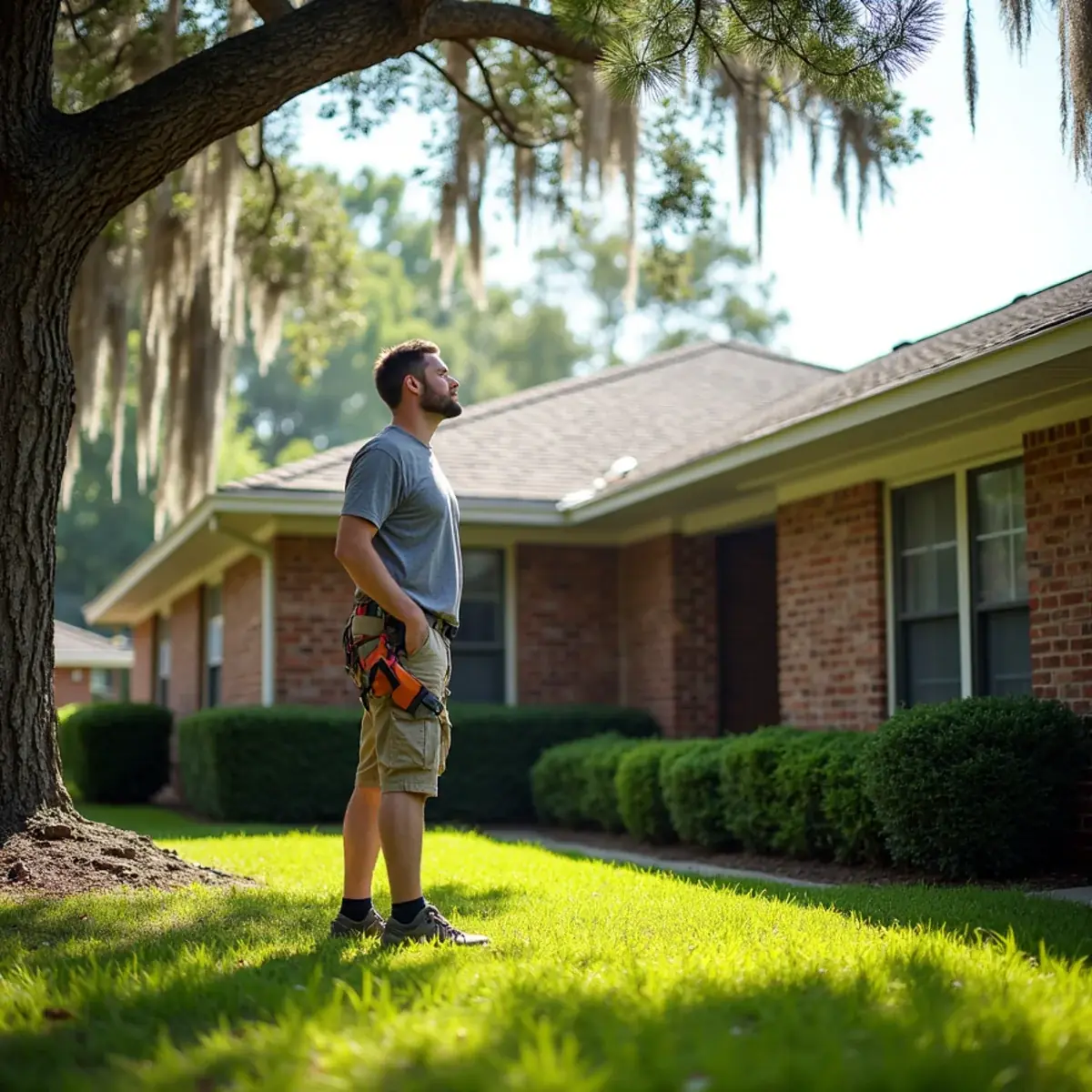
A tarp is the start, not the end. Once the weather clears, the roofer inspects the decking, underlayment and flashing around the damage and writes an estimate for the permanent work. Small openings become a patch of matching shingles or a replacement metal panel. Larger damage may call for a section rebuild, and an older roof that took a hard hit can raise the question of full roof replacement.
Florida's 25 percent rule can matter here: on roofs built under the 2007 Florida Building Code or later, only the repaired portion must meet current code, while older roofs can still trigger a full-section upgrade. From that point the job is ordinary roof repair in Milton, scheduled for dry weather.
What affects the cost of emergency roof repair
Emergency work is priced from what the roofer finds when they get there, and you hear the price before work starts. These are the things that move it:
- Size of the opening and how much tarp, membrane or batten it takes to close it
- Roof height and pitch, which decide how much safety setup the job needs
- Debris on the roof, such as limbs that have to be cut and cleared before the tarp can go down
- Time and conditions: a 2 a.m. call during a squall line takes more people and more care than a Tuesday morning
- Demand after a named storm, when every roofer in the county is booked
- Return trips, if a tarp has to be re-secured before the permanent repair
The temporary work is a separate line from the permanent repair, so you can see what each costs. If you are working with an insurer, keep both receipts.
After a hurricane or tropical storm in Santa Rosa County
A named storm changes emergency work. After Hurricane Sally in 2020, Santa Rosa County handed out about 8,500 tarps, and Ivan (2004) and Dennis (2005) left roofers booked for weeks. Expect longer waits for permanent repairs.
- Call early, even if the damage looks small, so you are in line for a tarp.
- Check that the roofer at your door is licensed using the DBPR license search. Storm chasers arrive within days.
- Report damage to your insurer promptly. Florida law allows one year from the date of loss for a new claim; check your policy.
- Keep receipts for the tarp and any water cleanup.
The roofer can document damage and write a repair estimate, but cannot interpret your policy or negotiate your claim. For the longer view, see our storm damage roof repair page.
Why Milton homeowners call Zana Roofers in an emergency
- A person, not a voicemail. The line is answered 24 hours a day, 7 days a week, including holidays and the night a storm comes through.
- Honest about what is possible. No promised arrival time we cannot keep, and no roofer on a slick roof in lightning. You hear what can be done now and what waits for daylight.
- Licensed and insured roofers only. Every roofer we send is licensed and insured in Florida; after a storm, that matters more than ever.
- Price before work, even at night, and a record of the temporary work you can keep.
Emergency roof repair across Milton and Santa Rosa County
Calls from downtown Milton, Whiting Field, the Avalon Boulevard corridor, East Milton and Bagdad are the closest, usually a few minutes from Milton in normal conditions. Pace is a short drive west along US 90.
Navarre and Gulf Breeze sit at the edge of the area, roughly 30 to 40 minutes out on a clear night and longer after a storm, when bridges, flooded roads and fallen trees slow everyone down. We tell you honestly how long it is likely to take. The full list of communities is on the service areas page.
Emergency Roof Repair: questions from Milton homeowners
Are you really available 24 hours a day?
Yes. Calls to (773) 207-0769 are answered 24 hours a day, 7 days a week, including weekends, holidays and the night a storm comes through. How fast a roofer can safely reach you depends on the weather, the hour and how many calls came in, so we tell you honestly what to expect.
Can a roofer tarp my roof at night or in the rain?
Often yes, in steady rain with calm wind, using work lights and a harness. If there is lightning nearby or strong gusts, the roofer will wait until it passes, because climbing a wet roof in those conditions puts everyone at risk. In the meantime the roofer can help you contain water from inside and in the attic.
How long can a tarp stay on a roof?
A tarp is meant to last weeks, not months. Florida sun breaks the material down and every windy day works the fasteners loose, so a tarp left up too long starts letting water in again. Plan the permanent repair as soon as the weather clears, and ask the roofer to check the tarp if a storm passes before the work is done.
Does emergency roof service cost more after hours?
It can. Work at night, on a holiday or in the middle of a storm takes more effort and more risk, and that can affect the price. What does not change is that the roofer gives you the price in writing before any work starts, so you can decide before a single screw goes in.
Does homeowners insurance pay for emergency tarping?
Many policies treat a tarp as reasonable mitigation, meaning work to keep damage from getting worse, but it depends on your policy and the cause of the damage. Your insurer decides. Photograph the damage before the tarp goes on, keep the written invoice for the temporary work separate from the permanent repair, and report the damage to your insurer promptly.
Should I call a tree service or a roofer first when a tree hits the roof?
If the tree is still on the house, the tree service usually comes first, because the roof cannot be tarped under a trunk. Call us anyway: a roofer can often protect the rest of the roof and be ready the moment the tree is off. If lines are down or anyone is hurt, call 911 first. Our guide to a tree on your roof covers the order step by step.