If a tree or a big limb lands on your roof, get everyone out of the rooms under the impact first. If power lines are down or touching the tree, stay well away and call the power company and 911. Do not climb onto the roof or try to cut the tree off yourself. Take photos from a safe spot, report the damage to your insurer, then call a tree service to remove the weight and a roofer to tarp or dry-in the opening. Zana Roofers answers (773) 207-0769 24 hours a day and sends a licensed roofer for the tarp and the repair.
The First Few Minutes: Get Everyone Safe
A falling pine can weigh several tons. It can crack rafters, push ceilings down and pull wires off the service mast. Treat the house as unstable until someone qualified has looked at it.
- Move everyone, pets included, out of any room under or next to the strike. Close the door behind you.
- Look for wires on the ground, in the branches or draped over the roof. Assume every wire is live.
- If you smell gas or hear a hiss, leave the house and call 911 from outside.
- If water is pouring through a light fixture or near outlets, turn off that circuit at the breaker panel only if you can reach it without walking through water.
- Stay off the roof and off ladders. Wet shingles, broken decking and a tree that can still shift are a bad combination.
Why Rooms Under the Strike Are Off Limits
What you see from the yard is usually the smallest part of the damage. The load travels down into the framing.
Rafters and trusses
Older Milton houses are usually framed with rafters; newer homes mostly use engineered trusses. A cracked rafter can sag. A truss with a broken chord or torn gusset plate can lose much of its strength while looking fine from below. Either may need a framing repair, sometimes with an engineer's letter, before the roof is rebuilt.
Ceilings and wet insulation
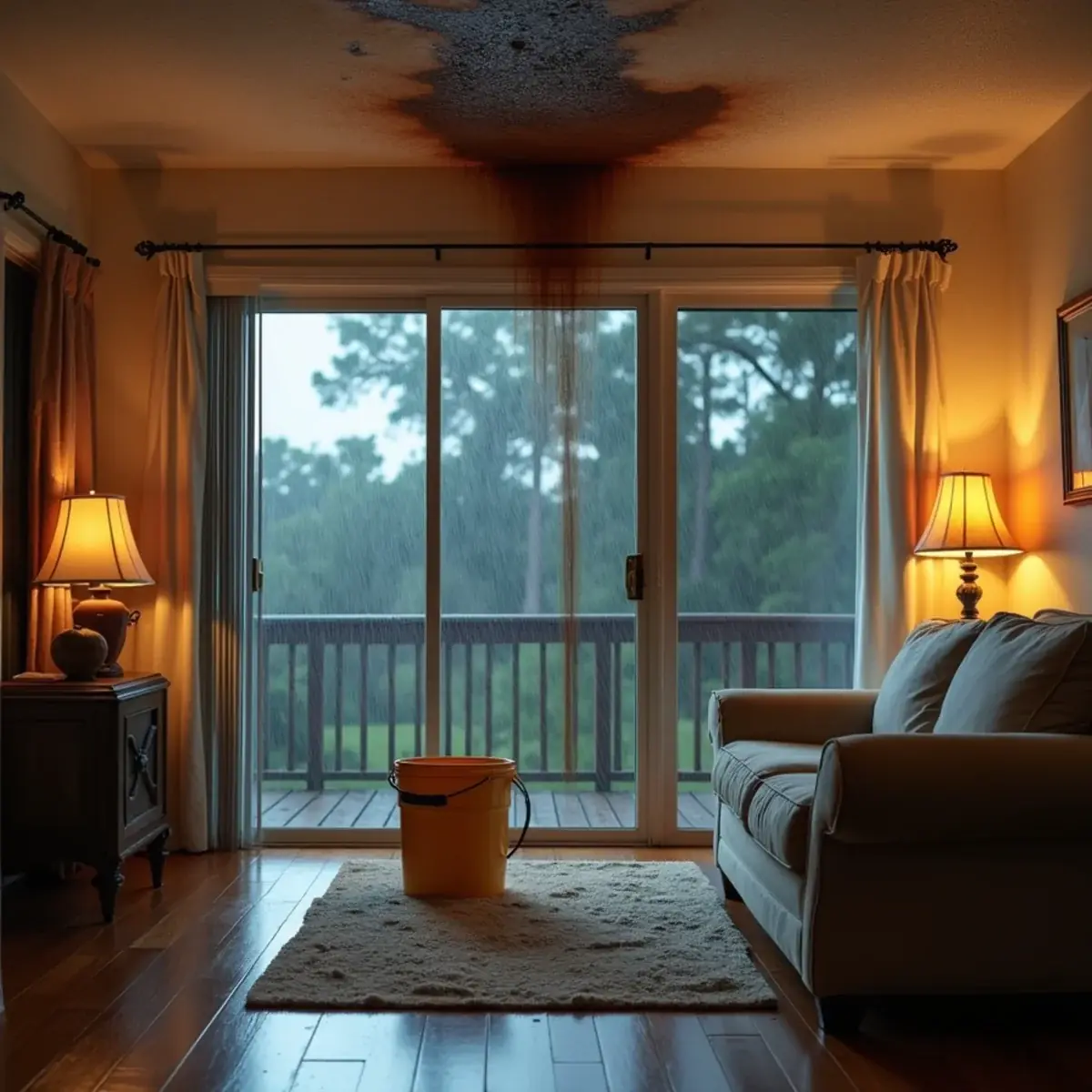
Rain coming through the hole soaks the attic insulation. Wet insulation is heavy, and drywall ceilings can bulge and drop without much warning. A ceiling that bows, cracks in a spiderweb pattern or drips from several spots is a reason to stay out of that room.
Document the Damage Before Anything Moves
Once the tree is hauled away, the clearest evidence goes with it. Take photos while it is still in place, from the ground and from rooms you can safely enter.
- Wide shots of the house from each side, showing where the tree came from and where it landed.
- The stump or broken trunk, which shows whether the tree snapped or uprooted.
- Close shots of the roof damage you can see from the yard: crushed shingles, bent metal panels, broken fascia, torn gutters.
- Inside: ceiling stains, cracks, wet insulation, water on floors and damaged belongings.
- A short video walking from room to room, with the date and time on your phone.
Keep receipts for anything you spend to prevent more damage, such as tarps, fans or a hotel night.
Tree Removal Comes Before Roof Repair
A roofer cannot tarp, dry-in or rebuild under a trunk. The weight has to come off first, and that is a tree service's job. On a big pine that can mean a crane or a bucket truck, cutting the tree in sections so pieces do not drop through the roof.
| Task | Tree service | Roofer |
|---|---|---|
| Cut and lift the tree off the house | Yes | No |
| Haul debris and grind the stump | Yes | No |
| Tarp or dry-in the opening | No | Yes |
| Check rafters, trusses and decking | No | Yes, and refers framing beyond roof scope |
| Replace decking, underlayment and roofing | No | Yes |
| Write a repair estimate with photos | For tree work only | For the roof |
Ask the tree crew to call when the last section is off so the roofer can cover the opening quickly. Exposed decking soaks up water fast in a Panhandle thunderstorm.
Tarping and Dry-In After the Tree Is Off
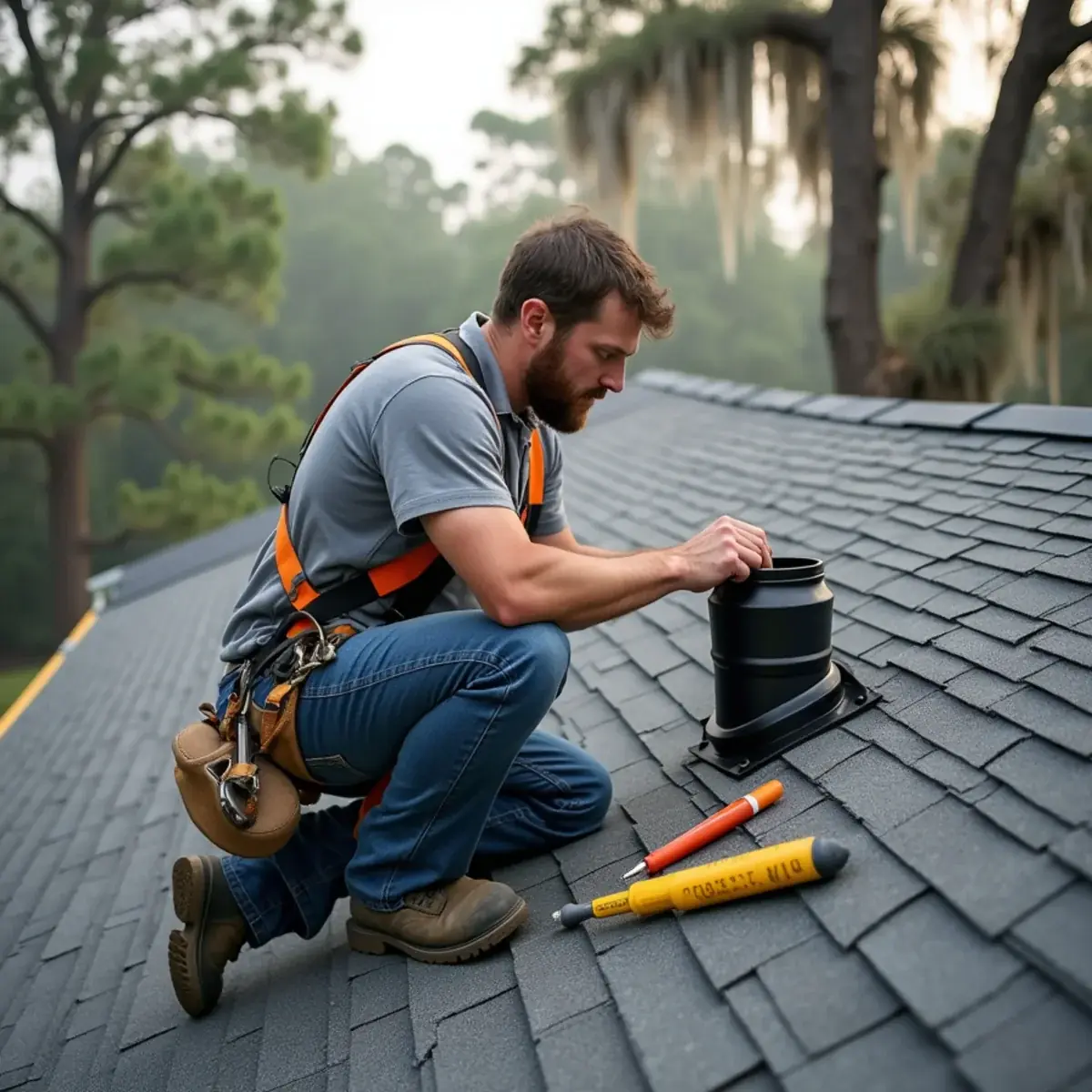
The first roofing visit is about stopping water. If the decking is broken, the roofer may cut out the damaged section and screw down temporary sheathing before the tarp goes on. A good tarp runs over the ridge, is fastened with battens rather than loose nails, and covers well past the damage on every side. Our emergency roof repair page explains how that visit works.
At night or in active wind and lightning, a roofer can usually only tarp or dry-in. The permanent repair comes later, once the framing has been checked, the scope is written and any permit is pulled. A tarp is temporary. It is meant for weeks, not months, because sun and wind break it down.
If water got inside before the tarp went on, start drying right away. Wet drywall and insulation need to be dried within a day or two, the window EPA guidance gives for keeping mold from taking hold. Our post on what to do when the roof leaks in a storm covers buckets, ceiling bulges and moving furniture.
What the Roofer Checks Once the Tree Is Off
A tree strike is rarely just a hole. Once the trunk is gone and the opening is dried in, the roofer works outward from the impact, because the force spreads through the framing:
- The impact zone. Broken decking, split rafters or truss chords, and torn underlayment, opened up enough to see clean wood on every side.
- The ridge and the roofline. A dip in the ridge or a wave in the roofline seen from the street means framing has moved.
- The attic around the strike. Cracked or shifted framing members, popped truss plates and nails pulled from the top of the walls.
- The ceiling below. Fresh cracks along drywall seams and nail pops show where the load traveled.
- The edges. Gutters, fascia and soffit where limbs raked the eave on the way down.
Insurance Basics When a Tree Hits the House
You, the homeowner, report the damage to your insurer and deal with the claim. Under Florida law (s. 627.70132), a new property claim must be reported within 1 year of the date of loss, but do it as soon as you can and check your own policy for its terms.
- Policies differ on tree removal. Some pay to remove a tree only when it hits a covered structure, and some cap that amount. Read your policy or ask your agent.
- The roofer can document conditions with photos and write a repair estimate. The roofer cannot interpret your coverage, tell you what the insurer will pay or negotiate the claim. That takes a public adjuster license.
- You pay your deductible. No contractor can pay, waive or rebate it.
For wind and storm damage beyond a single tree, see our storm damage roof repair page. Every roofer we send is licensed and insured in Florida.
East Milton Pines, Acreage Lots and Prevention
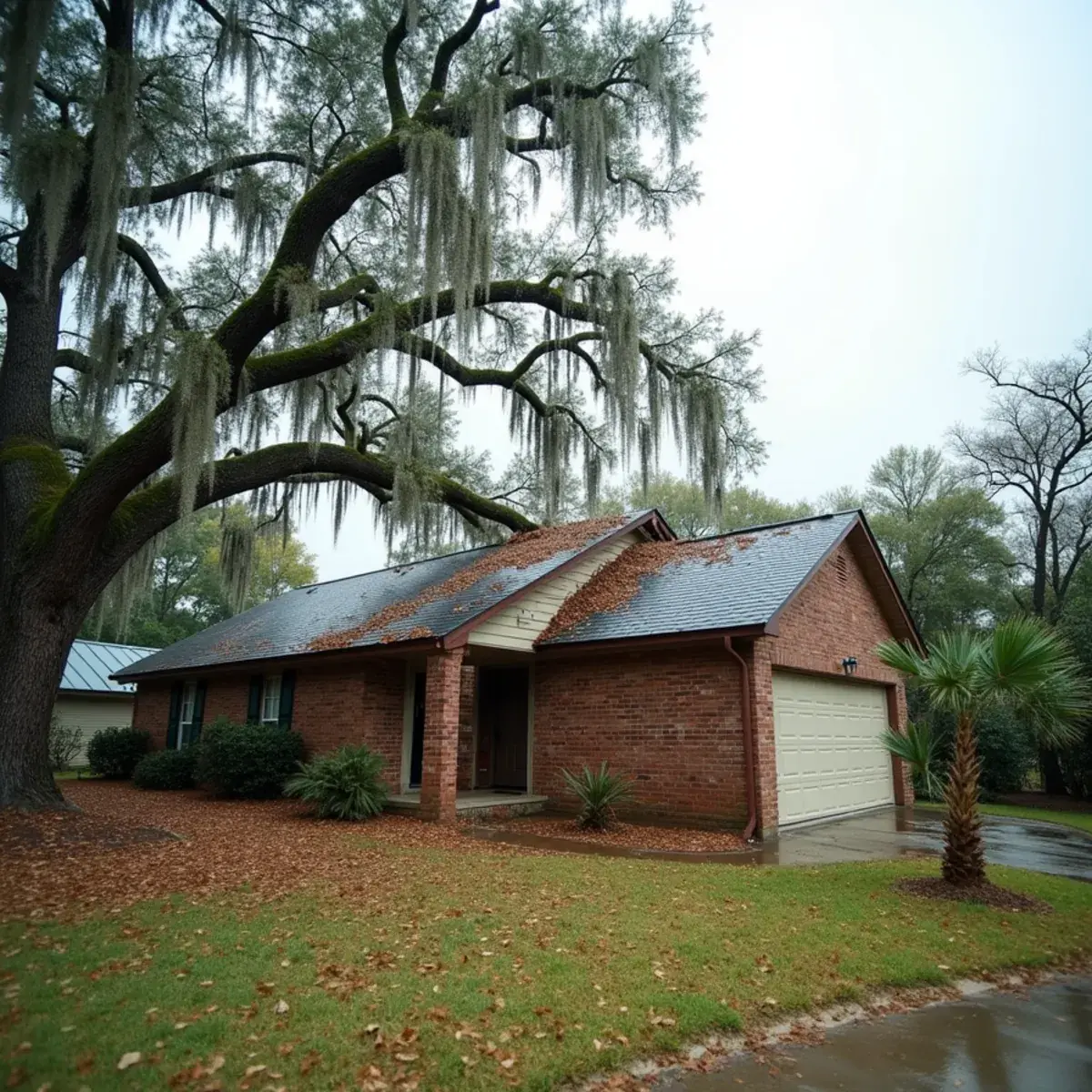
Much of East Milton sits on larger lots along US 90 and State Road 87, with slash and longleaf pines that stand well above a one-story roof. In sandy soil soaked by days of rain, a strong gust can tip a whole pine. Live oaks tend to drop heavy limbs instead.
- Have an arborist look at any pine that leans toward the house, has a split trunk or shows a soil bulge at the base.
- Trim limbs that hang over the roof before hurricane season.
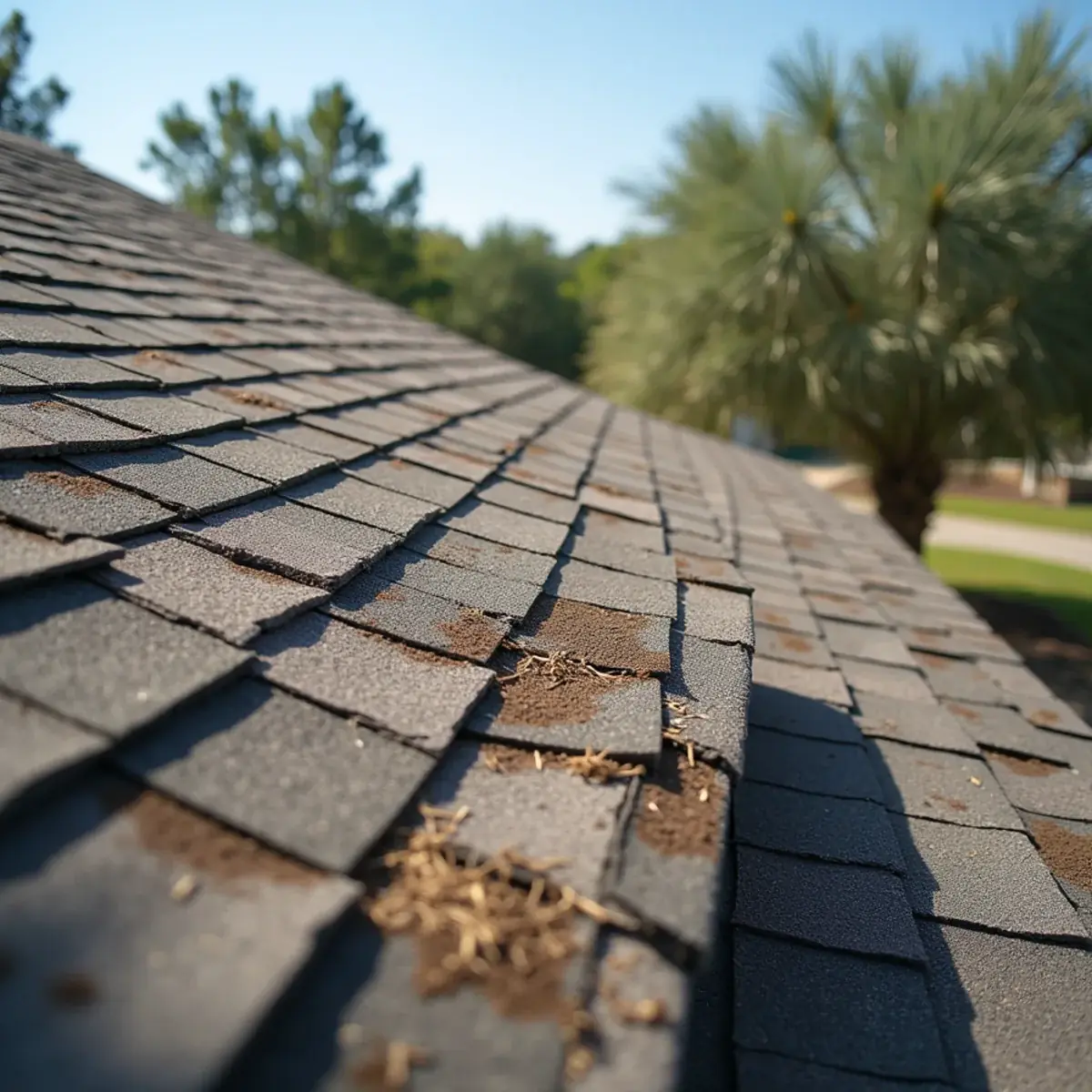
- After a tree strike, ask for a roof inspection of the rest of the roof. Impact can loosen flashing and crack shingles well away from where the trunk landed.
The Bottom Line
When a tree lands on your roof, people come first, then photos, then the tree service, then the roofer. Stay out of the rooms under the strike, keep away from any downed line, and let each trade do its part in order. The tarp keeps the house dry while the damage is assessed, and the permanent repair is built on framing that has been checked.
If it happens anywhere around Milton, call (773) 207-0769. A person answers 24/7, and our emergency roof repair team gets the opening covered as soon as the trunk is off and it is safe to climb.
Frequently asked questions
Is it safe to stay in the house after a tree hits the roof?
It can be, if the strike is limited to one area and nobody uses the rooms beneath it. Stay out of any room with a sagging or cracked ceiling, keep away from downed lines, and leave if you smell gas. If the tree came through into living space or the framing looks broken, find another place to sleep until the house has been checked.
Who removes the tree, the roofer or a tree service?
A tree service removes the tree. Roofers are not equipped to cut and lift large trunks off a house, and doing it wrong can drop sections through the roof. Once the weight is off, the roofer tarps or dries in the opening, checks the decking and framing, and writes the repair estimate.
Can a roofer tarp the roof at night after a tree falls?
Sometimes, once the tree is off and the weather is calm. A roofer will not work under a trunk, near live wires, or on a wet roof in lightning or strong wind. In those conditions the safe move is to protect the inside of the house and schedule the tarp for first light. Call (773) 207-0769 and the roofer we send will give you the fastest safe response.
Who pays if my neighbor's tree falls on my house?
In most cases your own homeowners policy is where the claim for your house starts, even when the tree came from next door. Whether the neighbor is responsible usually depends on whether the tree was obviously dead or hazardous and they were warned. Policies and situations differ, so report the damage to your insurer and ask them how it applies.
How long does it take to fix a roof after a tree falls on it?
The tarp can go on the day the tree is removed, weather permitting. The permanent repair depends on the damage: replacing a few sheets of decking and shingles can take a day, while cracked rafters or trusses need framing repair first, sometimes designed by an engineer, and a permit. After a big storm, demand for tree crews and roofers adds time too.
Every roofer we send is licensed and insured in Florida. Zana Roofers connects you with independent licensed roofing contractors who perform the work.