Roof leak repair in Milton, FL comes down to three jobs: find where water actually gets past the roof, fix that spot so it holds through the next downpour, and make sure nothing wet gets sealed in. Most leaks here start at a pipe boot, a piece of flashing or a clogged valley, and most end in a repair, not a new roof.
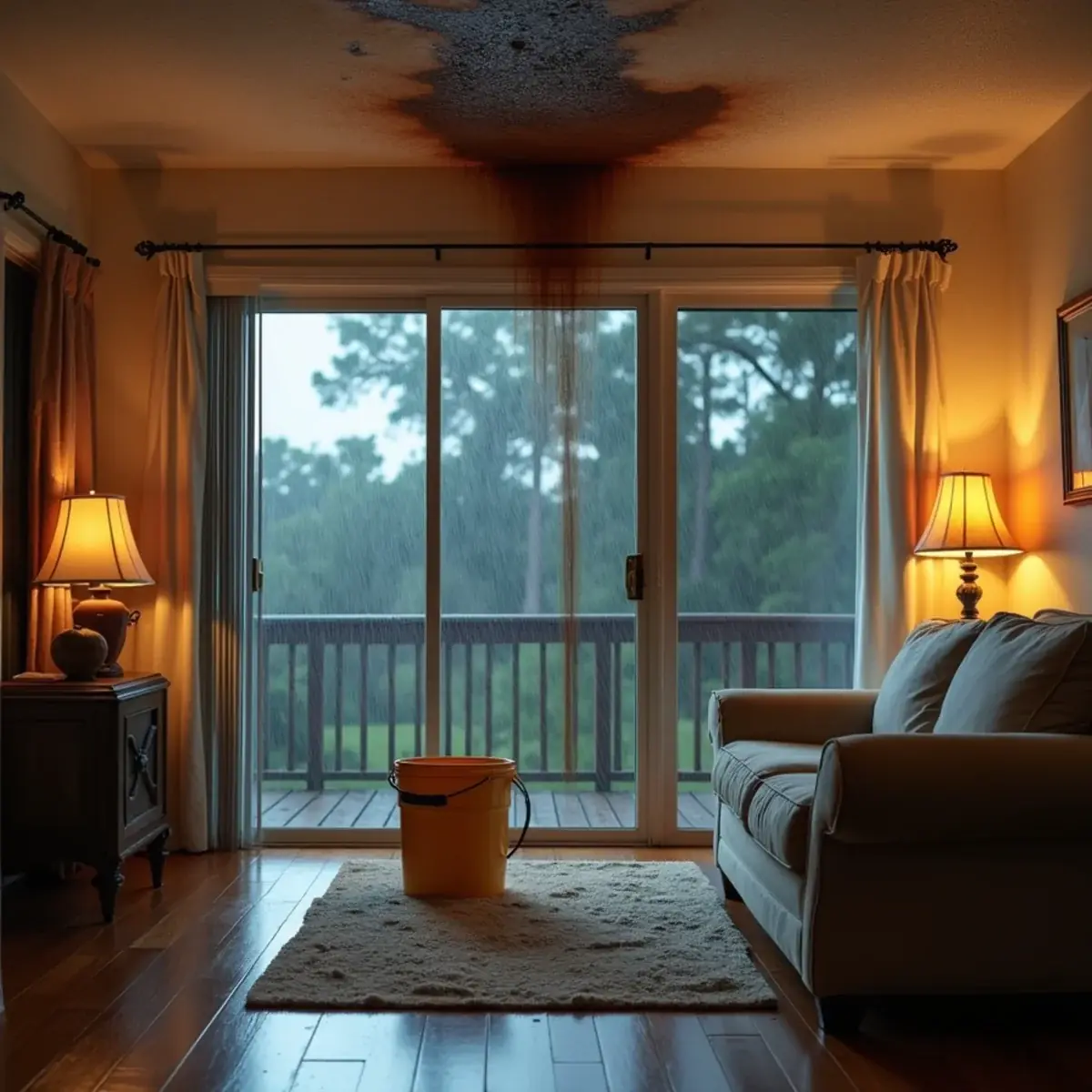
In Milton, a roof leak usually announces itself after a late-afternoon thunderstorm that dumps an inch of rain in half an hour. The stain you see is only where the water finally fell. The actual hole can be several feet uphill, around a vent, along a wall or in a valley packed with pine straw.
Call (773) 207-0769 any hour and we answer. We send a roofer who checks the attic and the roof, finds where the water is getting in, and writes up the repair before any work begins. Every roofer we send is licensed and insured in Florida.
Signs your roof is leaking before the ceiling stain shows
By the time a ceiling stain appears, the decking and insulation above it have usually been wet for a while. Earlier clues worth checking after a heavy storm:
- A musty smell in a closet or bedroom that does not go away when the AC runs.
- Dark streaks or rings on the underside of the roof deck when you shine a flashlight into the attic.
- Damp or matted insulation, especially around the plumbing vent stacks and the chimney chase.
- Rusty nail tips poking through the deck in the attic, which tells you moisture is condensing or leaking around them.
- Shingle granules piling up at the downspouts, or a shingle lying in the yard after wind.
EPA guidance is to dry wet materials within 24 to 48 hours to keep mold from taking hold, and a Gulf Coast attic in August does not give you much margin. If water is near a light fixture, switch that circuit off at the breaker.
Where Milton roofs leak: pipe boots, valleys, flashing and skylights
Shingles in the middle of a slope are rarely the problem. Most leaks start where something interrupts the roof: a pipe, a wall, a change of direction or a hole cut for light.
Pipe boots
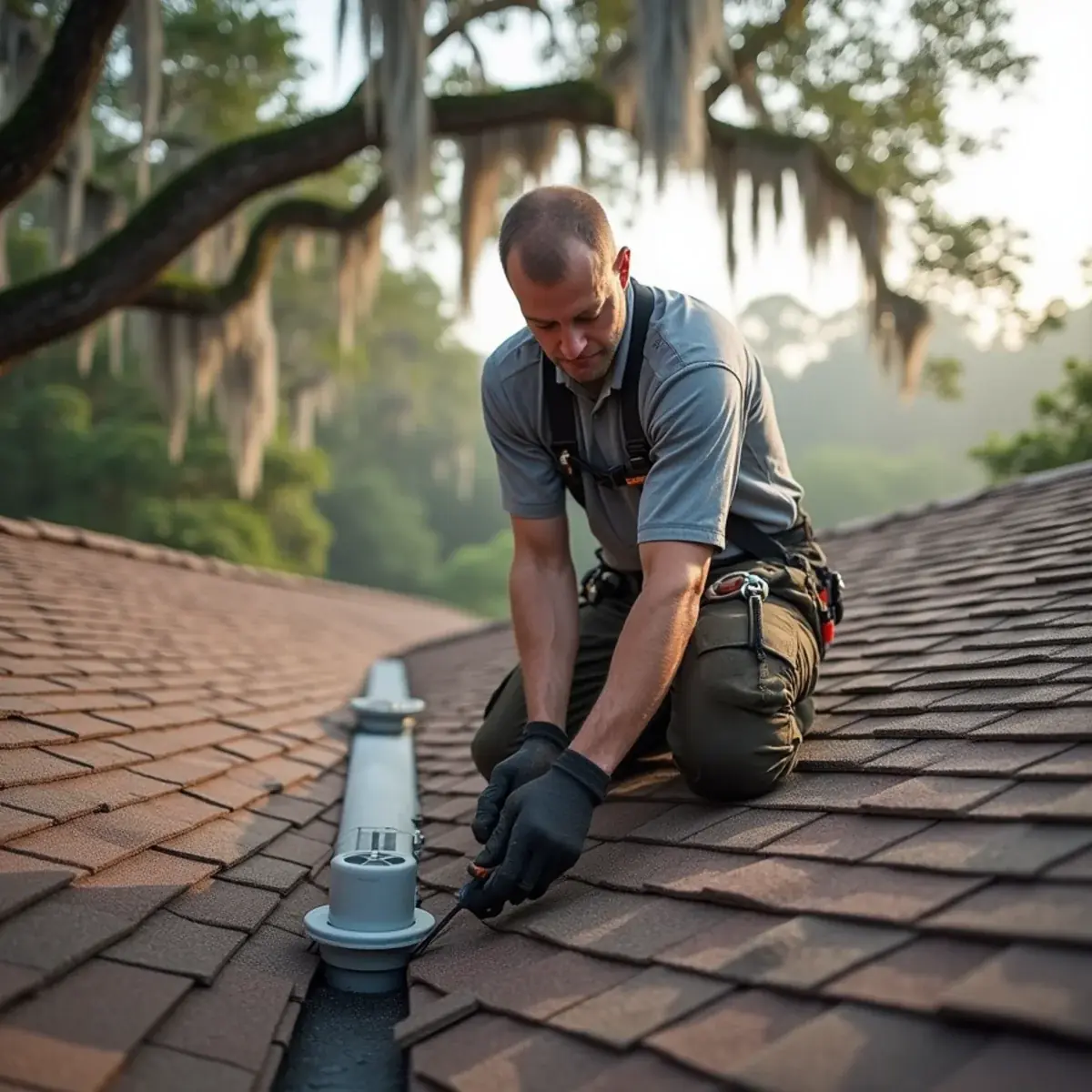
The rubber collar around a plumbing vent cracks in Florida sun, often years before the shingles around it wear out. Water runs down the pipe onto the bathroom ceiling. Pipe boot replacement is one of the most common leak repairs there is.
Valleys
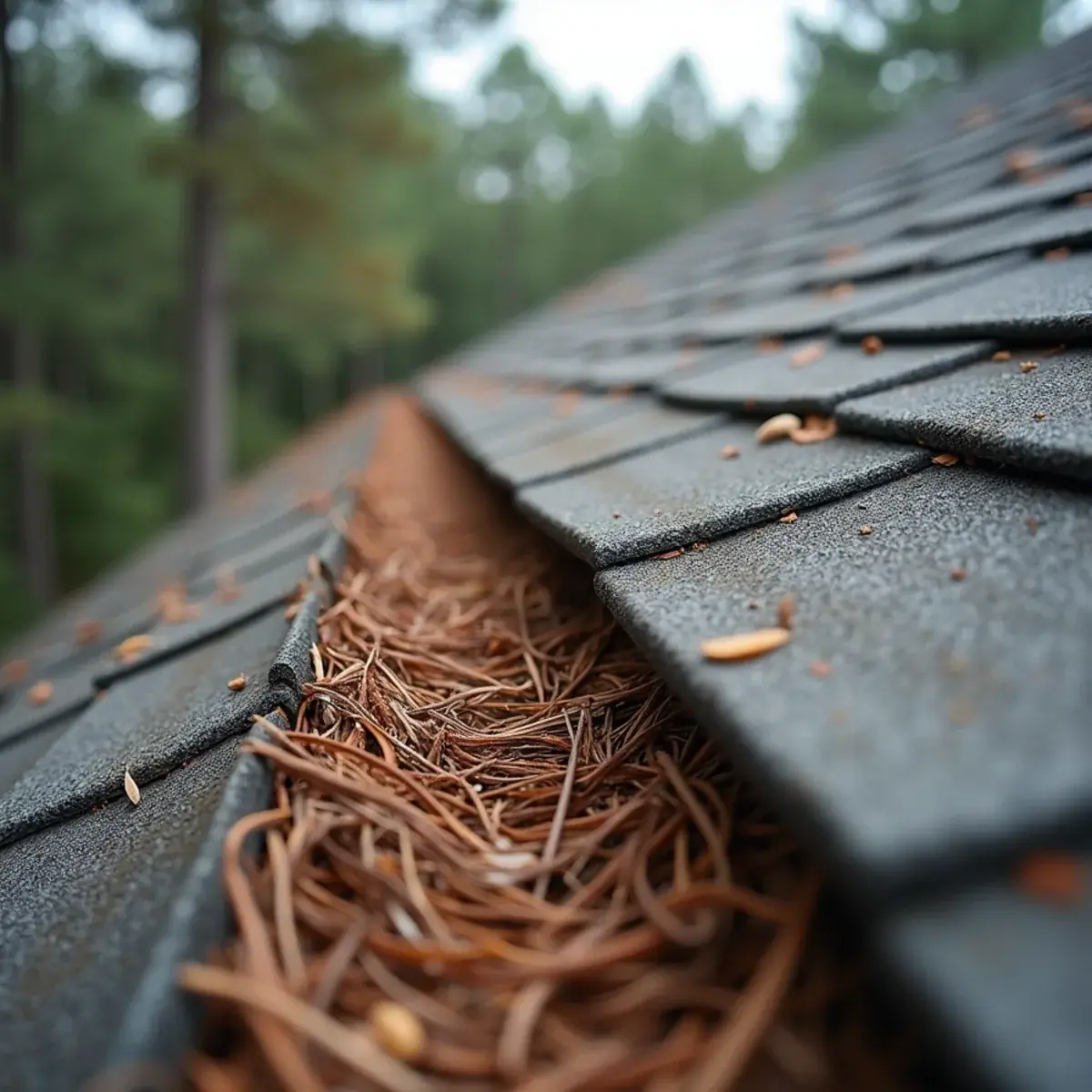
Where two slopes meet, the rain from both funnels into one channel. When pine needles and oak leaves fill it, water backs up sideways under the shingle edges.
Step, wall and chimney flashing
Step flashing is the row of small metal pieces woven into the shingles where a roof meets a wall or dormer. Chimney flashing wraps the masonry under a counter-flashing set into the mortar. Caulk used in place of real flashing, rusted pieces and missing kick-out flashing are common finds on chimney leak calls.
Skylights and nail pops
A skylight leak comes either from a failed seal in the unit or from the flashing around the curb, and each needs a different fix. Nail pops happen when a fastener backs up through the shingle above it and lets water run down the shank.
Our roof leak repair process, from call to dry ceiling
Every leak call follows the same order, whether it comes in at noon or during a midnight thunderstorm. Skipping a step is how a leak gets patched twice.
- You call and describe it. Where the stain is, how long it has been there, what kind of roof you have and whether water is dripping right now. That tells us how urgent the visit is.
- Water gets stopped first. If it is still coming in and the weather allows, the roofer tarps or seals the area so the ceiling stops taking damage while the real fix is worked out.
- The leak gets traced. Attic first, then the roof above it, using the steps below. Some roofers add a thermal camera to spot cold, wet decking that the eye misses.
- You get the price in writing. The cause, the repair and the cost, with photos, before any work starts.
- The source is repaired. New pipe boot, re-flashed wall or chimney, rebuilt valley, replaced shingles or reset metal fasteners, whatever the trace found.
- The repair gets checked. A water test on the repaired area, or a look in the attic after the next rain, plus photos of the finished work.
How a roofer traces a roof leak: attic, water test, moisture readings
Roof leak detection is patient elimination. Smearing roof cement on whatever looks suspicious is how leaks come back with the next storm. A careful trace goes like this:
- Attic check. The roofer follows the water trail on rafters and decking uphill to its highest point.
- Roof surface inspection. Every boot, vent, flashing lap and nail head above that area gets checked.
- Moisture readings. A moisture meter on the deck and drywall shows how far the water spread, so wet wood does not get covered up.
- Water test. If the source is still unclear, the roofer hoses one small section at a time, bottom up, while someone watches in the attic. It is slow, but it proves the entry point.
- Written findings. You get the cause, the repair and the price in writing before work starts.

What is included in a roof leak repair
A leak repair is a defined job with a defined result. Here is what you should get from the roofer we send, and what belongs to other trades.
Included
- A trace from the attic stain to the entry point, with photos of both
- A temporary dry-in when water is coming in and the weather blocks the permanent repair
- Repair of the source itself, not just the spot above the stain
- Replacement of soft decking found under the leak, after you approve the added cost in writing
- A look at the slopes around the repair so the next weak spot gets noted now, not after the next storm
- Before and after photos, a written description of the work, and the roofer's workmanship warranty terms in writing
Not included, and who handles it
Wet drywall, ceiling paint, flooring and mold cleanup are interior work. The roofer can show you how far the water reached with a moisture meter, and a water-damage restoration company or a drywall contractor takes it from there. Get that drying started within a day or two; Milton humidity will not do it for you.
Shingle roof repair: lifted tabs, missing shingles and exposed nails
Most homes around Milton have asphalt shingles, so many leak calls end in straightforward shingle roof repair:
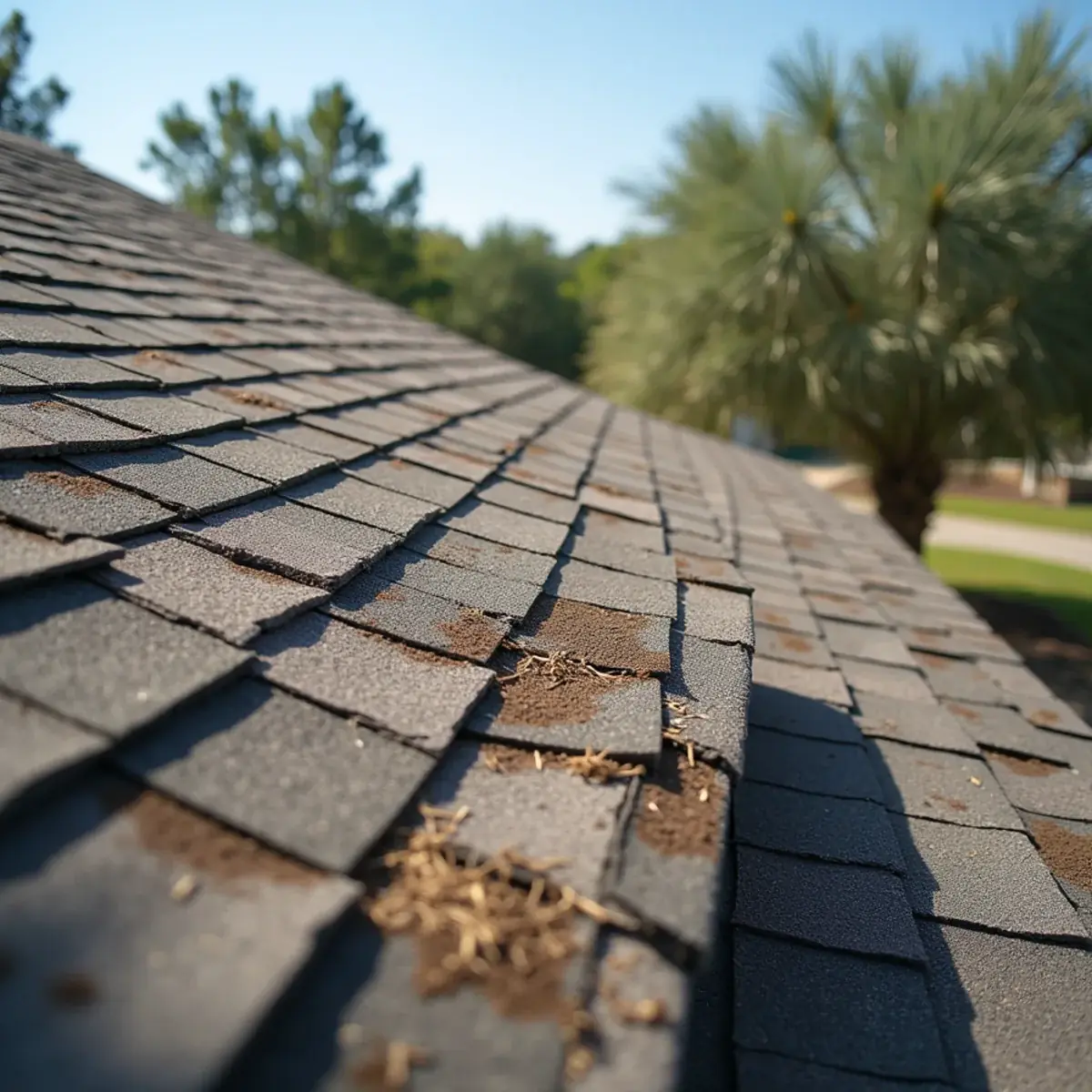
- Lifted or creased tabs. Gusts break the adhesive strip and bend the shingle back. Once creased, it will not lie flat again and should be replaced, not glued.
- Missing shingles. A blown-off shingle exposes the nails of the course below. The roofer slides in a replacement and fastens it in the correct zone.
- Exposed nails. Face-nailed shingles, raised fasteners on ridge caps and nail pops get pulled, the holes sealed and the area re-covered.
- Worn ridge cap. Cracked cap shingles along the peak let wind-driven rain in at the highest point of the roof.
Color matching on a faded older roof is not always exact, and the roofer will tell you up front if a patch will show. For roof repair in Milton beyond a single leak, start at our homepage.
Leaks on metal and low-slope roofs
Metal roofs are common on rural lots east of the Blackwater, and they leak in their own ways. On screw-down panels the rubber washers harden and crack, and screws back out as the metal heats and cools every day. Open side laps and loose ridge caps are the other usual suspects. Our metal roof repair page covers fastener and seam work.
Low-slope sections, like a porch tie-in or a flat addition, drain slowly, and ponding water finds any weak seam. Shingles laid on too shallow a pitch also let water flow back up under the laps.
Why roof leaks are so common in Milton: rain, thunderstorms and pine needles
Santa Rosa County gets well over 60 inches of rain a year, much of it in short summer downpours driven sideways by gust fronts. Three local conditions add to it:
- Trees over the roof. Pines drop needles all year into valleys, gutters and the space behind chimneys, holding water against the shingles.
- Heat and UV. Rubber pipe boots, sealants and the adhesive strips on shingles break down faster under Gulf Coast sun.
- Aging storm-era roofs. Many roofs from the rebuild after Ivan and Dennis are now more than 20 years old, and their flashing and boots were never replaced.
The same calls come from subdivisions off Woodbine Road in Pace, acreage homes in East Milton and old frame houses in Bagdad; see all our Santa Rosa County service areas. If water is pouring in now, read what to do in the first hour of a roof leak.
Repair or replace? When a leak means the roof is done
One leak at a pipe boot on a ten-year-old roof is a repair. It is a different conversation when the leak is a symptom of a roof wearing out everywhere:
- Leaks in several unrelated spots, or new ones every few months.
- Shingles that are curling, cracking or bald of granules on every slope.
- Soft or delaminated decking found during the repair.
- A roof near or past 20 years, especially if your insurer has started asking about its age.
What affects the cost of a roof leak repair
No two leaks cost the same, because tracing time and hidden damage vary so much. The factors that move the price:
| Factor | Why it matters |
|---|---|
| Source of the leak | A pipe boot is a quick swap; rebuilding chimney or step flashing takes far more labor. |
| Pitch and height | Steep or two-story roofs need extra safety setup. |
| Hidden deck damage | Rotted plywood has to be replaced before new shingles go on. |
| Roofing material | Discontinued shingles, metal panels or a membrane each change the parts and method. |
| Timing | A night or mid-storm call usually means a temporary dry-in first, then a second visit. |
Our post on roof repair cost in Milton goes deeper. If wind, hail or a fallen limb caused the leak, see storm damage roof repair for inspections and Florida's repair rules.
Why Milton homeowners call Zana Roofers for leak repair
- Leaks do not wait for office hours, and neither do we. Most leaks show up during an evening storm. A person answers every call, 24/7, and the first job is stopping the water.
- Licensed and insured roofers only. Every roofer we send is licensed and insured in Florida, and you can check the license yourself on the DBPR license search before work starts.
- The source, not the symptom. The repair goes where the trace says the water gets in, and the photos show it. Roof cement smeared over a stain is not a repair.
- No surprise invoices. The price is in writing before work starts, and hidden damage such as soft decking is priced and approved before it is replaced.
- A straight answer about the roof. If the roof has reached the point where patching wastes money, you hear that, with the evidence, and the roof replacement options laid out.
Roof leak repair across Milton and Santa Rosa County
Leak calls come from every kind of roof in the county. In and around downtown Milton, older frame homes leak at chimney flashing and around additions tied into the original roof. Homes in the 1990s and 2000s subdivisions along Avalon Boulevard and Berryhill Road, and the brick houses off Woodbine Road in Pace, mostly leak at pipe boots and valleys as their shingles age. Out in East Milton, screw-down metal roofs under tall pines leak at backed-out fasteners, and the old frame houses in Bagdad leak where porch roofs meet the main roof.
Closer to the water, wind-driven rain off Santa Rosa Sound pushes under shingle edges and flashing in Navarre, and oak leaves pile into valleys on the shaded streets of Gulf Breeze. The phone is answered 24/7 for all of them; see every community on the service areas page.
Roof Leak Repair: questions from Milton homeowners
How fast can a roofer get to a leak in Milton?
We answer 24 hours a day and send the nearest available roofer for the fastest safe response. Timing depends on the hour, the weather and how many calls came in after a storm. During a regional storm it can take longer, and an active drip may get a temporary dry-in first.
Can a roof leak be fixed while it is still raining?
Usually only temporarily. In light rain a roofer can often tarp the area or seal the obvious opening to stop water coming in. Shingles, sealants and flashing need a dry surface to bond, so the permanent repair waits for dry weather. Nobody should be on a roof during lightning or strong wind, so in those conditions the work waits until it is safe.
Does one leak mean I need a new roof?
No. A single leak from a cracked pipe boot, a nail pop or loose flashing is normally a small, targeted repair. Replacement comes up when the roof is leaking in several places, the shingles are worn across every slope, or the deck underneath is soft. The roofer will look at the whole roof and tell you which situation you are in.
Will I get a price before the repair starts?
Yes. After tracing the leak, the roofer explains the cause and the repair and gives you the price in writing before work begins. If rotted decking or other hidden damage turns up once shingles come off, you hear about it and the added cost before that extra work goes ahead.
Can a roof leak be fixed from inside the attic?
Only temporarily. From the attic you can catch water, mark where it comes through and keep insulation from soaking, which helps the roofer later. The actual opening is on the outside, under a shingle, a boot or a piece of flashing, so the permanent repair has to be made on the roof. Sealant smeared on the underside of the deck just moves the water somewhere else.
How long does a roof leak repair take?
Most leak repairs, such as a new pipe boot, a few shingles or a re-flashed section of wall, take a few hours once the roofer is on site. Tracing a stubborn leak with a water test can add time, and replacing soft decking or rebuilding a valley can stretch the job to a full day. Rain delays the permanent repair, not the temporary dry-in.