When your roof starts leaking during a storm, work in this order: get people and pets away from the wet area and any wiring it touches, catch and contain the water, photograph the damage, and call a roofer. Do not climb onto the roof while wind, rain or lightning is active. A roofer can usually tarp or dry-in the opening that night, and the permanent repair follows once the weather clears.
If water is coming through a ceiling in Milton or anywhere nearby in Santa Rosa County, call (773) 207-0769. We answer 24 hours a day, 7 days a week, and send a roofer for the fastest safe response. The steps below cover what to do while you wait.
Make the Room Safe Before You Touch the Water
Water and household current are the real danger in the first few minutes. If the drip is coming through a light fixture, a ceiling fan or a smoke detector, or if water is running down a wall with outlets on it, treat that circuit as live.
- Switch off the breaker for that room if you can reach the panel while standing on a dry floor. If the panel is in a wet garage or you are unsure which breaker it is, leave it alone and keep everyone out of the room.
- Do not flip wall switches or unplug cords with wet hands or while standing in water.
- If you smell burning, hear buzzing or see sparks, get everyone outside and call 911.
When the ceiling starts to bulge
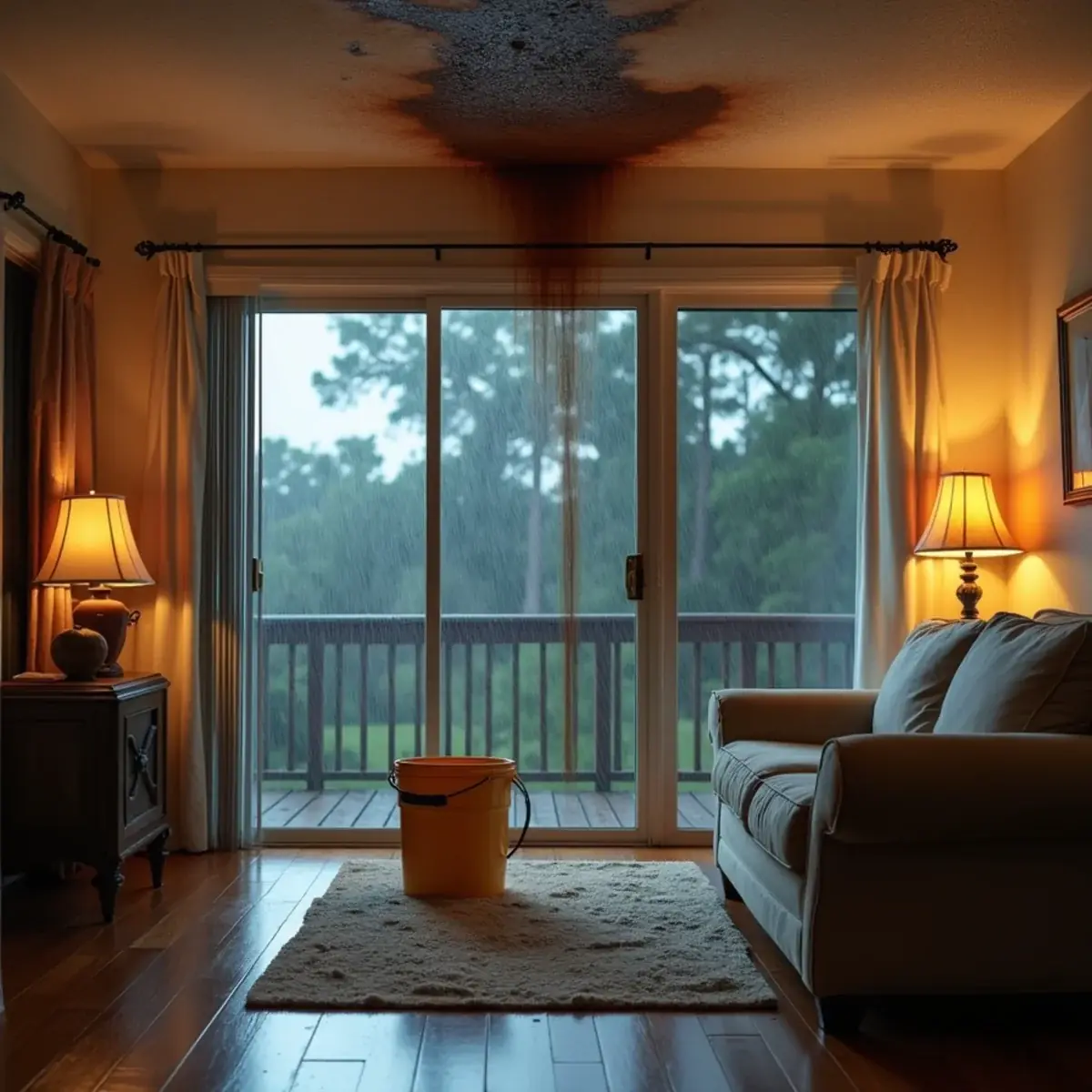
A drywall ceiling that sags into a bubble is holding a pool of water. Left alone, it can tear open all at once. If the bulge is small, nowhere near a fixture, and you can reach it from a sturdy step stool, set a bucket underneath and poke a small hole at the lowest point with a screwdriver. If the ceiling is cracking, sagging over a wide area or sits next to wiring, skip this step, close the door and keep people out.
Why You Should Stay Off the Roof Until the Weather Breaks
Do not grab a ladder and a tarp. Wet asphalt shingles are slick, metal panels are worse, and a ladder footed in soaked sandy soil can kick out from under you. Gusts that come through with a Gulf squall line can lift a loose tarp like a sail with you holding the other end. Lightning is common in Panhandle summer storms, and a person on a roof is the tallest thing around.
Milton has plenty of tall pines and big live oaks. If a limb opened the roof, more may be hanging above it, so wait for daylight and calm air.
Contain the Water Inside the House
Once the room is safe, keep the water in one place and away from your belongings.
- Set buckets, trash cans or storage bins under every drip, with a towel inside to stop splashing.
- Move furniture, rugs and electronics out of the way. Cover what you cannot move with plastic sheeting or trash bags.
- Lay towels along baseboards so water does not wick under walls or into the next room.
- If you can reach the attic hatch safely and there is no lightning, look for where water is landing on the insulation. A bucket or a piece of plywood set across the joists can catch it before it reaches the ceiling. Step only on the joists.
After the rain stops, start drying. The EPA advises drying water-damaged materials within 24 to 48 hours to limit mold growth, and in Milton's humidity that clock runs fast. Fans and a dehumidifier help once the power is confirmed safe.
Photograph Everything Before You Clean Up
Photos taken now are hard to recreate later, and your phone timestamps them.
- Take a wide shot of each wet room, then close-ups of the ceiling stain, the drip and the bucket filling.
- Photograph damaged belongings where they sit before you move them.
- From the ground, photograph the outside: missing shingles, a limb on the roof, flashing or ridge cap lying in the yard, debris in the gutters.
- Write down when the leak started and roughly how much water came in.
- Keep receipts for anything you buy to protect the house.
Whether to file a claim is between you and your insurance company. Florida law generally requires a new property claim to be reported within one year of the date of loss, so check your own policy for its terms. A roofer can document what they find on the roof and write a repair estimate. A roofer cannot tell you what your policy covers or negotiate with your insurer.
What the Roofer Can Do Tonight, and What Waits for Daylight
When you call, we will ask for your address, where the water is showing up, what kind of roof you have (shingle or metal) and whether anything is lying on it. Every roofer we send is licensed and insured in Florida.
Tarp or dry-in
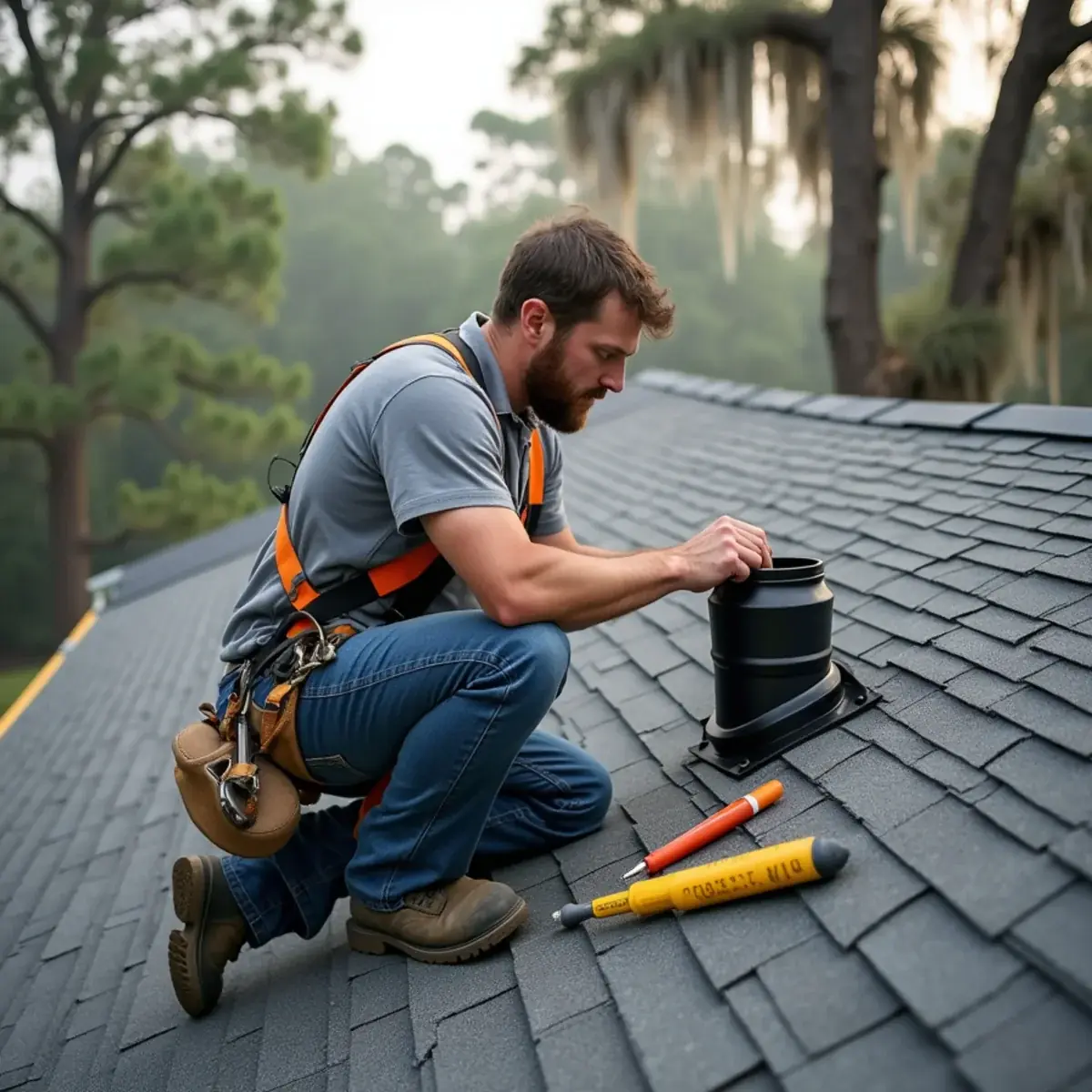
At night or in rough weather, the realistic goal is to stop more water from getting in. On a shingle roof that usually means a heavy tarp run over the damaged area and up past the ridge, held down with wood battens fastened through the tarp so wind cannot get under it. For a small opening, the roofer may dry-in the spot with underlayment instead. On a metal roof, it can mean temporarily fastening a lifted panel. If wind or lightning makes it unsafe to go up at all, the roofer will tell you that and come back when it is safe. You can read more about how an emergency roof repair visit runs.
The permanent fix
In daylight the roofer can trace the leak to its source. The stain on your ceiling is often several feet from where water actually enters, because it runs along the deck and rafters first. Common culprits are a cracked pipe boot, step flashing pulled away from a wall, a worn valley, or shingles torn off along a rake edge. You get a written estimate for the permanent roof leak repair before work starts. A tarp is a stopgap meant for weeks, not months, since sun and wind break it down.
Why Some Roofs Leak Only in Wind-Driven Rain
One of the most common calls after a storm goes like this: the roof has been dry for years, and tonight it is dripping. That usually means the roof sheds straight-down rain fine but has a weak spot that only opens when wind pushes water sideways or uphill. From the roofer's side, these are the usual culprits:
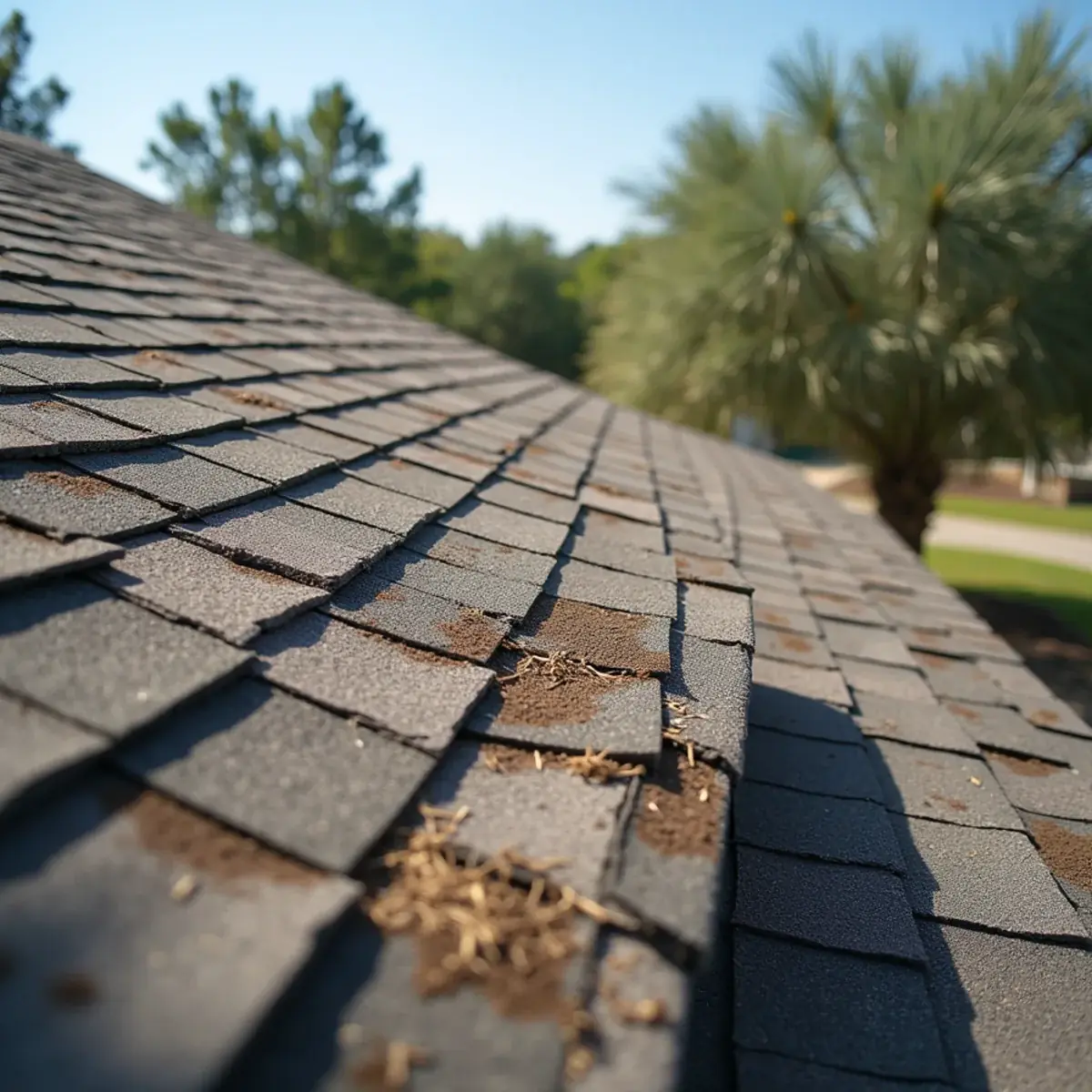
- Shingles that lost their seal. The adhesive strip under each tab lets go with age and heat. In calm rain the tab lies flat; in a gust it lifts and water blows underneath.
- Short or missing flashing at walls and chimneys. Fine in a drizzle, but sideways rain runs behind it.
- Ridge and box vents. Wind-driven rain can be forced through the vent openings themselves, especially on older vents without baffles.
- Gaps at the rake edge. Without proper drip edge and starter shingles along the gable ends, wind drives water in at the edge of the deck.
The clue is timing. A leak that shows up only with wind from one direction points to the slope facing that wind. Tell the roofer which way the storm was blowing and when the drip started; it shortens the trace considerably.
Storm Leaks We Hear About Around Milton and Pace
Wind-driven rain pushes sideways under shingles that have lost their seal. Pipe boots baked by years of Gulf sun split and let water run down the vent stack. Limbs from pines and oaks puncture the deck. On metal roofs in the rural parts of the county, rubber washers under the screws dry out and let water in at every fastener.
Subdivisions in Pace built in the 1990s and 2000s have a lot of shingle roofs reaching the age where seals and boots fail together, so a single storm can open several small leaks at once. If the roofer finds several problems, ask for each one priced separately. Our guide to what drives roof repair cost in Milton explains what goes into that number. If the leak came with broader wind or hail damage, the roofer may point you to storm damage roof repair instead of a spot fix.
The Bottom Line
In the first hour, your job is small and specific: keep people safe from wiring and falling drywall, keep the water in one place, take photos, and call. The roofer's job is to close the roof as soon as it is safe and find the real source in daylight. Done in that order, most storm leaks end as a contained repair rather than a ruined ceiling.
If water is coming in now anywhere around Milton, call (773) 207-0769. For what happens next, see how emergency roof repair works and what a full roof leak repair involves.
Frequently asked questions
Should I put a tarp on my roof myself during a storm?
No. Wait until the wind, rain and lightning have passed, and even then a roof is a dangerous place for someone without a harness and experience. A tarp that is not fastened with battens and run over the ridge can tear loose in the next gust and make the leak worse. Catch the water inside, document it, and let a roofer handle the tarp.
How long can an emergency tarp stay on my roof?
A well-installed tarp is a temporary measure meant for weeks, not months. Gulf Coast sun breaks down the fabric, and summer storms work at the edges and fasteners. Schedule the permanent repair as soon as the roofer can do it safely, and check the tarp after every storm in the meantime from the ground, looking for flapping edges or pooled water.
Should I call a roofer during the storm or wait until it passes?
Call during the storm. The line is answered 24/7, and getting on the list early matters because calls stack up as soon as the weather clears. The roofer will not climb in lightning or strong wind, but you will know when to expect someone and what to do until then, and the tarp goes up at the first safe window.
How do I stop a roof leak from inside the house?
You cannot stop it from inside, only control it. Catch the water, relieve a bulging ceiling into a bucket if it is safe, and move belongings. If you can reach the attic safely, a bucket or plastic sheet under the drip keeps insulation drier. The opening is outside, so the real fix waits for a tarp and then a repair on the roof.
Every roofer we send is licensed and insured in Florida. Zana Roofers connects you with independent licensed roofing contractors who perform the work.