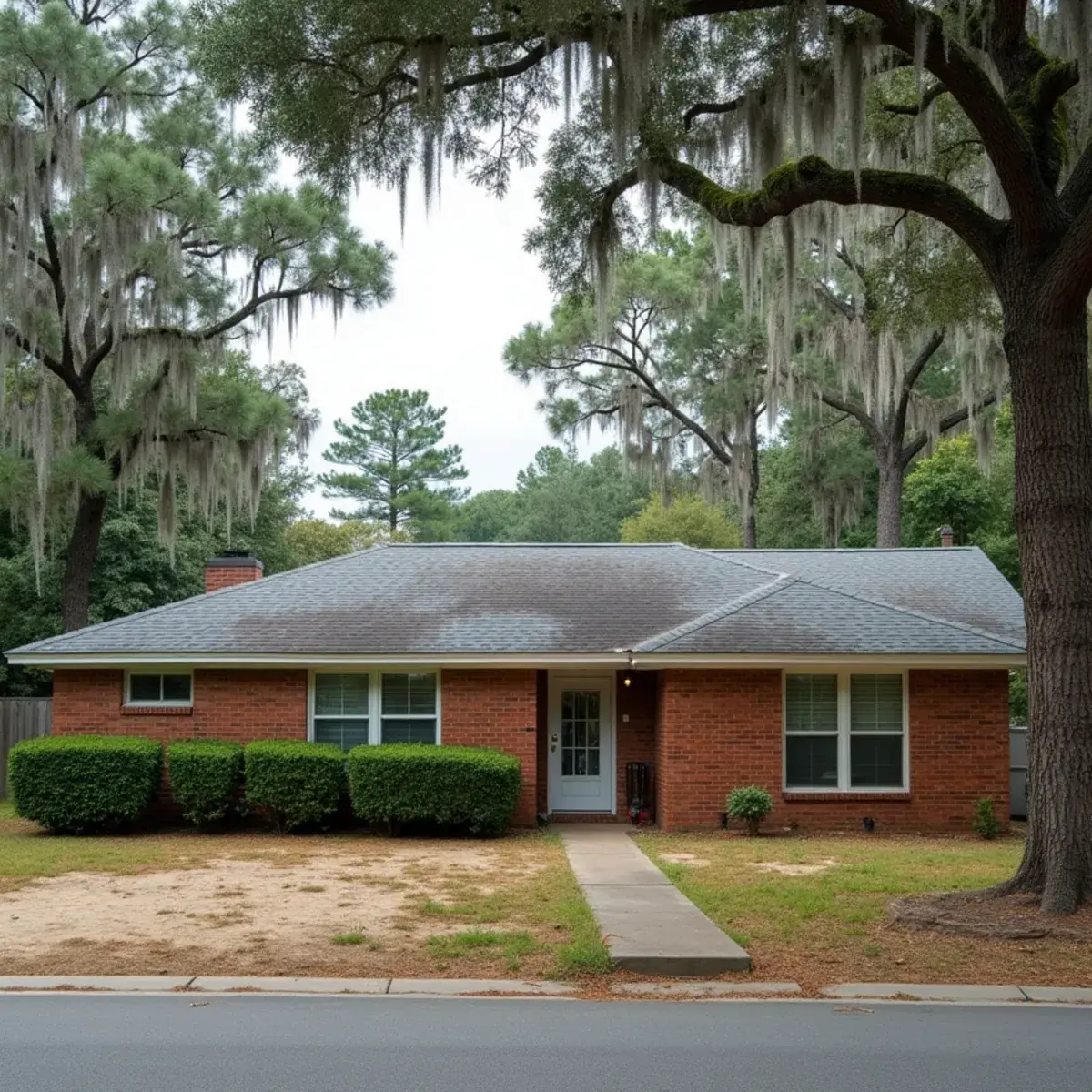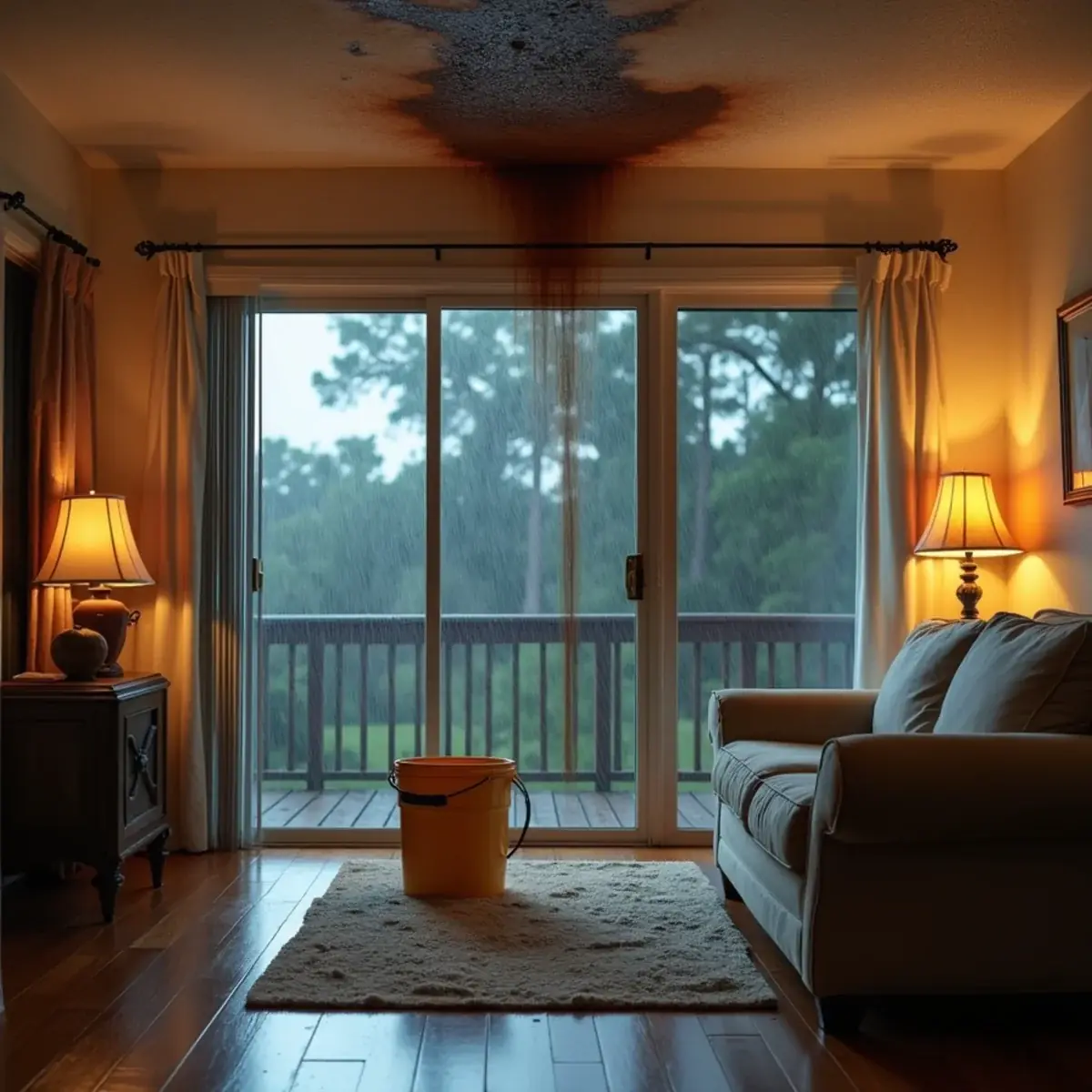
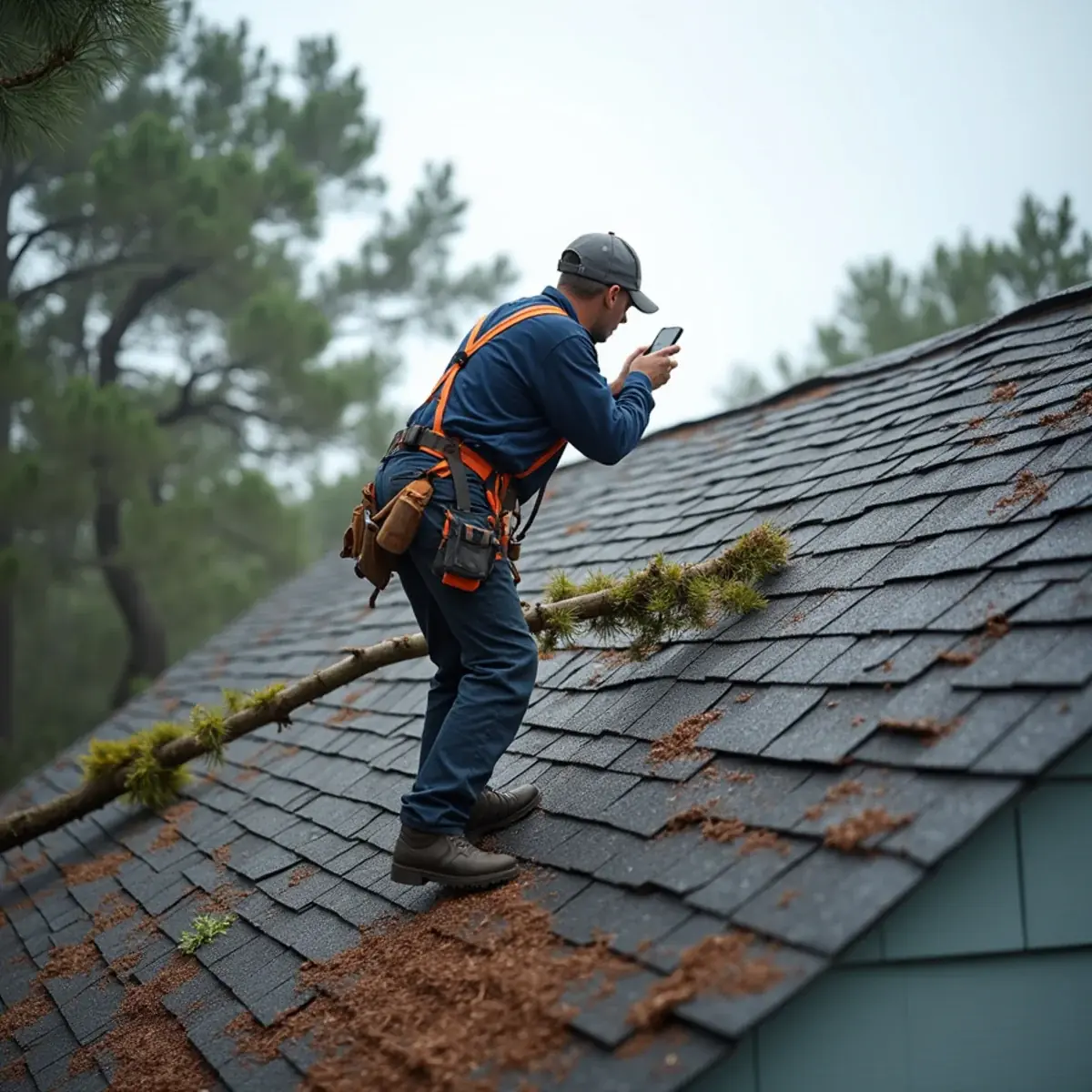
Storm damage roof repair in Milton, FL starts with getting the water stopped, then a documented inspection of every slope, then a permanent repair built to current Florida code. Wind, hail and falling limbs often do more damage than you can see from the driveway, so the record of what the roofer finds matters as much as the repair itself.
Storms come at Milton from two directions: tropical systems from the Gulf between June and November, and fast-moving thunderstorm lines that can bring straight-line wind and hail in any month. Either one can leave a roof that keeps out the next rain only by luck.
If you need a roof looked at after a storm, call (773) 207-0769. We answer around the clock and send a roofer who documents the damage, explains what needs fixing and gives you a written estimate before work starts. Every roofer we send is licensed and insured in Florida. If water is coming in right now, our emergency roof repair service handles tarping and temporary dry-in first.
Storm damage we repair: wind, hail, limbs, flashing and metal panels
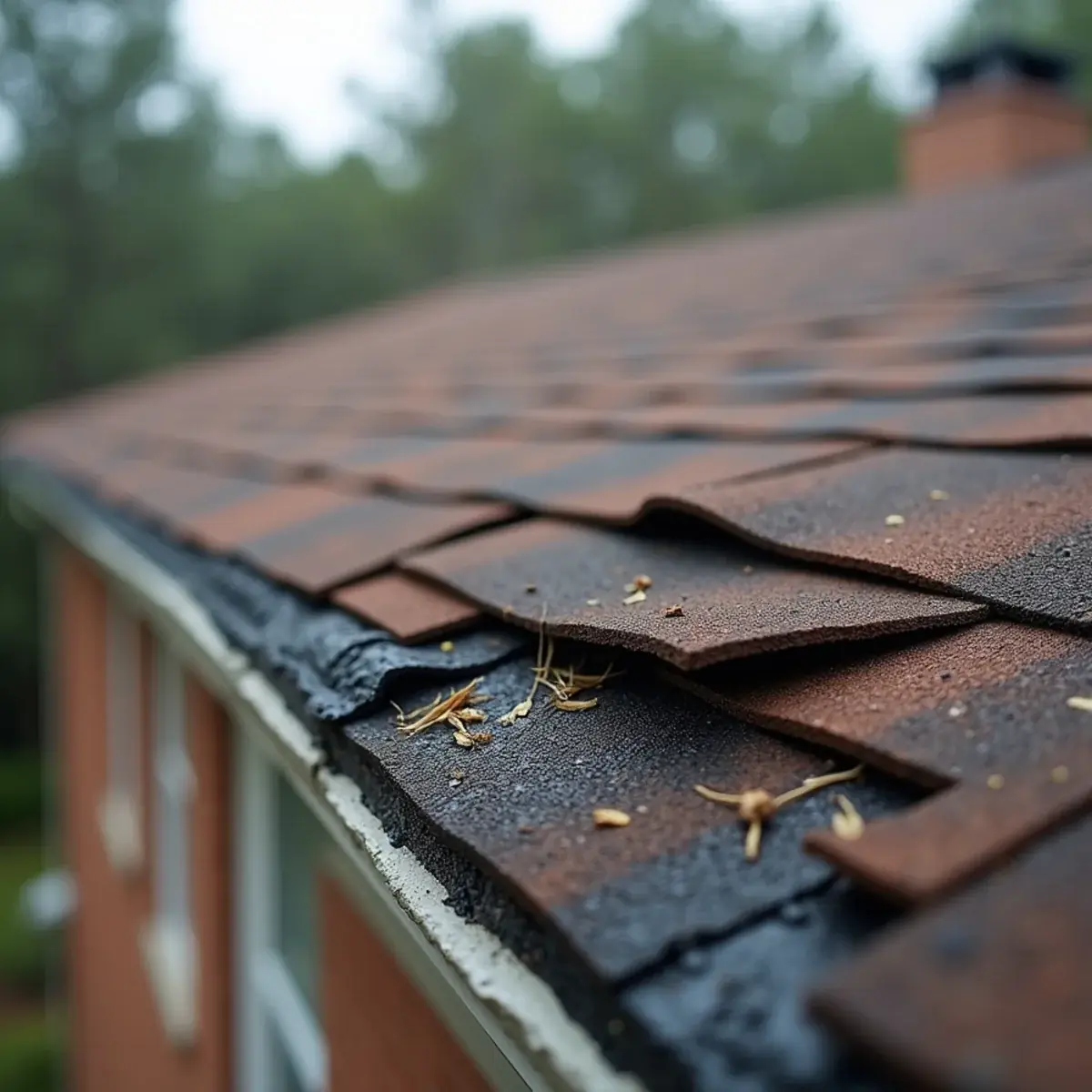
- Wind-lifted and creased shingles. Gusts break the sealant bond and fold the shingle back. Once creased, it has lost its holding power even if it settles flat.
- Missing shingles after a storm. Pieces or whole courses gone, usually along rakes, eaves and ridges where wind pressure peaks.
- Hail bruising. Soft dents that knock granules loose and crack the mat underneath.
- Limb punctures. Pine and oak limbs that crack the decking or punch into the attic.
- Torn or lifted flashing. Wall flashing, drip edge and ridge vents pulled loose so wind-driven rain gets behind them.
- Bent or loosened metal panels. Peeled edges, sheared screws and buckled ridge caps on screw-down and standing seam roofs.
What Ivan, Dennis and Sally did to Santa Rosa County roofs
Opal in 1995 was followed by Ivan in September 2004, which came ashore near Gulf Shores, Alabama, and put Santa Rosa County on the storm's stronger eastern side. Ten months later, Dennis made landfall on Santa Rosa Island in July 2005. Between them they stripped shingles, dropped pines onto houses and set off a reroofing wave across Milton, Pace and Navarre.
Sally in September 2020 was slow and wet, crawling over the area with hours of wind and torrential rain. Afterward Santa Rosa County handed out about 8,500 tarps. Roofers still find slow leaks on homes that lost only a few shingles in Sally and were never properly repaired.
So many roofs here date from the 2004 to 2005 rebuild that the next storm will find a lot of tired shingles. Read our post on roofs twenty years after Ivan and Dennis; coastal homes in Navarre take the most wind of all.
Damage you cannot see from the ground
From the driveway, most people look for missing shingles. The damage that causes trouble months later is subtler:
- Broken seal strips: shingles that lie flat but are no longer bonded, so the next gust lifts them.
- Fasteners pulled partly through the shingle or backed out of the deck.
- Hairline cracks at creases and hail bruises that only show up close.
- Cracked deck boards under a limb strike, with the shingles above still intact.
- Wet insulation and stained decking in the attic from rain that came in sideways.
Please do not climb up to check for yourself. Wet shingles and weakened decking make a storm-damaged roof a dangerous place to stand.
Our storm damage repair process, step by step
The order matters after a storm, because a rushed permanent repair can bury damage nobody photographed, and a slow tarp lets the ceiling soak.
- Call and triage. A person answers 24/7 and asks whether water is coming in, what hit the roof and whether anyone is hurt or lines are down.
- Secure the roof. If water is entering, the roofer tarps or dries in the damaged area as soon as it is safe to climb. That temporary work is photographed and itemized.
- Inspect and document. Every slope, the flashing, the gutters and the attic, with photos and measurements, as described below.
- Written scope and price. Temporary work, confirmed damage and allowances for anything hidden are listed separately, so you can compare it with any other estimate or an adjuster's scope.
- You decide. Whether to involve your insurer is your call; the roofer's report is yours to use either way.
- Permanent repair. Shingles or panels matched as closely as the roof allows, new flashing where it tore, decking replaced where it cracked, under a permit when the scope needs one.
- Close-out. Final photos, the invoice and any permit record, kept together for your files and your next insurance renewal.
The storm damage inspection: photos, measurements, written findings
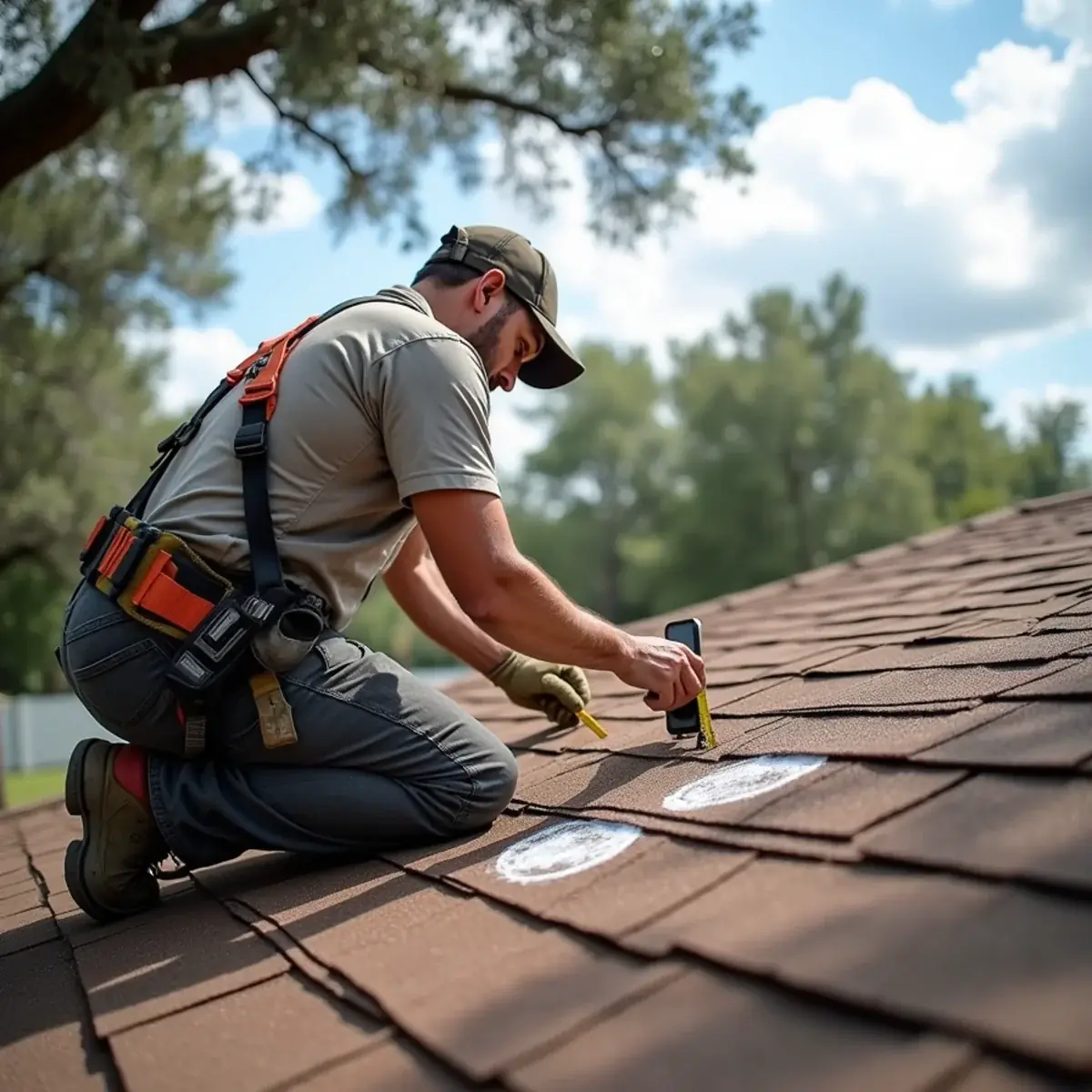
A storm damage roof inspection should produce a record you can rely on, not a sales pitch. A thorough one covers:
- Every slope walked (when safe), with lift tests on shingles to check whether seals held.
- Dated photos of each damaged area, plus wide shots that show where it sits on the house.
- Measurements of the roof and of each damaged section, which feed directly into the 25 percent rule question below.
- An attic check for wet decking, insulation and daylight.
- Written findings and a repair estimate you keep, whatever you decide to do next.
For a condition report with no storm involved, such as for an insurance renewal, see our roof inspection service.
What storm damage roof repair includes
- Temporary protection: tarp or dry-in over openings, secured with battens or roofing fasteners rather than sandbags
- Debris and limb removal from the roof surface once a tree service has taken off anything large or still attached to the trunk
- Shingle and panel repair: replacing creased, torn or missing shingles and bent or loose metal panels, with new fasteners
- Flashing and penetrations: re-setting or replacing flashing, pipe boots, vents and ridge caps the wind pulled loose
- Decking: replacing cracked or punctured sheathing where a limb came through
- A photo record of the damage, the temporary work and the finished repair, dated, that stays with you
Interior water damage, tree removal and fence or siding repair are separate trades. The roofer can tell you what they saw and where the water went, which helps whoever handles the rest.
Repair, partial reroof or full replacement: how Florida's 25 percent rule works
For years Florida had a simple but costly rule: if 25 percent or more of a roof section was repaired or replaced within 12 months, the whole section had to be brought up to current code. In practice, a bad storm often meant a full roof.
In 2022 the Legislature changed that in s. 553.844(5), Florida Statutes. Now, if the existing roof was built, repaired or replaced under the 2007 Florida Building Code or later (in effect from March 1, 2009), only the portion being repaired or replaced has to meet current code. Roofs installed before that, including many from the Ivan and Dennis era, can still trigger the full-section requirement.
| Your roof | Storm damage on a section | Likely outcome |
|---|---|---|
| Permitted under the 2007 code or later | Under or over 25 percent | Repair or replace the damaged portion to current code |
| Permitted before March 1, 2009 | Under 25 percent | Repair the damaged area |
| Permitted before March 1, 2009 | 25 percent or more | The whole section may need to meet current code |
The permit history is what decides which row you are in, and a roofer can look it up with the county. When the answer is a full reroof, our roof replacement page covers materials, code and permits.
Your insurance claim: what a roofer can and cannot do under Florida law
Whether to file a claim is your decision, and the claim is between you and your insurance company. Florida law draws clear lines around what a roofing contractor may do in that process.
What a roofer can do
- Inspect the roof and document its condition with photos and measurements.
- Write a repair or replacement estimate with a scope of work.
- Make temporary repairs, like a tarp, to stop further water damage.
- Give you copies of all of it to use however you choose.
What a roofer cannot do
- Interpret your policy or tell you what is covered.
- Negotiate or adjust the claim with your insurer; that takes a public adjuster license.
- Pay, waive or rebate your deductible.
- Offer cash, gifts or anything of value in exchange for an inspection or a claim.
Deadlines to report roof damage
Under s. 627.70132, Florida Statutes, a new or reopened property claim must be reported to your insurer within 1 year of the date of loss, and a supplemental claim within 18 months. Check your own policy for any other notice requirements, and keep your photos and receipts together.
Avoiding storm chasers: how to check a Florida roofing license
After every major storm, out-of-area trucks start knocking on doors across the county. Some are legitimate; plenty are not. Warning signs:
- Pressure to sign today, or a contract handed over before anyone has been on the roof.
- Any offer to cover, waive or work around your deductible.
- A large payment up front for materials.
- No permit, or a suggestion that you pull it yourself.
- A license number they are vague about, or none at all.
Florida licenses roofers through the DBPR Construction Industry Licensing Board. A Certified Roofing Contractor holds a CCC license valid statewide; a registered roofer may work only where the registration applies. Check any name or number on the DBPR license search and confirm it is current. A Florida roof contract should also tell you, in bold, to contact your insurer about coverage before signing.
What affects storm repair cost and timing
Storm work is priced on what the roofer finds, with a few storm-specific twists:
- Extent of damage. A few lifted tabs and a whole slope of creased shingles are very different jobs.
- Decking. Limb strikes often mean replacing plywood.
- Code requirements. The 25 percent rule and your roof's permit date can expand the scope.
- Material availability. After a regional storm, some shingle colors and metal panels get back-ordered.
- Demand. When many roofs are damaged at once, every roofer has a queue, and a tarp buys time for the permanent repair.
- Weather. Permanent repairs need dry, calm days.
We take storm calls from Pace, East Milton, Bagdad and the rest of our service areas. For problems that are not storm related, see roof leak repair or general roof repair in Milton. Caught mid-storm with water coming in? Read what to do when your roof leaks in a storm.
If a storm leaves you replacing a large part of the roof anyway, it is worth asking about hardening at the same time: re-nailing the deck, adding a secondary water barrier and upgrading roof-to-wall connections. Florida's My Safe Florida Home program has helped pay for some of these upgrades in past years; check whether it is open before work begins.
Why Milton homeowners call Zana Roofers after a storm
- A person answers when the storm is still blowing. Calls are answered 24/7, so the tarp request is in before the morning rush that follows every big storm here.
- Local, licensed and insured. Every roofer we send is licensed and insured in Florida and works Santa Rosa County, not a crew that follows hurricanes from state to state.
- Honest about what the law allows. No deductible offers, no promises about what an insurer will pay, and no pressure to sign before anyone has been on the roof.
- Documentation you keep. Photos, measurements and a written scope that separates temporary work from the permanent repair.
Storm damage roof repair around Milton and the coast
Inland, the storm calls are mostly limbs and wind. Tall pines over acreage lots in East Milton and live oaks in the older streets of Milton and Bagdad drop limbs through decking, and the 1990s and 2000s subdivisions in Pace lose shingles off aging roofs.
On the coast the damage pattern changes. Homes in Navarre take open-water wind off Santa Rosa Sound and the Gulf, which lifts shingle edges and peels ridge caps, and Gulf Breeze sits with water on three sides, so wind-driven rain gets under flashing on every exposure. After a named storm, all of these areas call at once; the earlier you call, the earlier your tarp goes up. Every community is listed on the service areas page.
Storm Damage Roof Repair: questions from Milton homeowners
How soon after a storm should my roof be looked at?
As soon as it is safe, ideally within days. Early inspection catches broken seals and small openings before the next afternoon storm turns them into a ceiling leak, and dated photos help if you later decide to file a claim. If water is already coming in, call for a temporary repair right away rather than waiting for a full inspection.
Can wind damage a roof without any shingles missing?
Yes. Wind often breaks the adhesive seal under a shingle, creases it or pulls fasteners partly loose while the shingle settles back into place. From the ground the roof looks normal, but those shingles are no longer holding and lift easily in the next blow. A roofer finds this by checking shingles up close on each slope.
Who pays the insurance deductible on a roof repair in Florida?
The homeowner does. Florida law makes the policyholder responsible for the deductible, and a contractor who pays, waives or rebates it commits insurance fraud, a third-degree felony. If any roofer offers to cover or absorb your deductible, treat that as a reason to look elsewhere. Your insurer can tell you exactly what your deductible is.
How long do I have to report roof damage to my insurer in Florida?
Under s. 627.70132, Florida Statutes, a new or reopened property claim must be reported within 1 year of the date of loss, and a supplemental claim within 18 months. Those limits apply to the notice, not the repair. Read your own policy too, since it may require prompt notice and reasonable steps to prevent more damage.
Should I wait for the insurance adjuster before fixing storm damage?
Do not wait to stop water coming in. Photograph the damage first, then have the roof tarped or dried in and keep the receipt; policies generally expect you to prevent further damage. The permanent repair is different: many homeowners hold it until the damage is documented. Your insurer and your policy set those rules, so ask them, and keep every photo.
What does hail damage look like on a shingle roof?
Hail leaves dark, roughly round spots where granules were knocked off, soft bruises that give under a thumb, and cracked or split shingles on the slopes facing the storm. Gutters, vents and metal flashing often show dents too. From the ground it is nearly invisible, which is why a close inspection with photos matters after a hailstorm.