Metal roofing in Milton, FL covers two jobs: keeping the metal roof you already have tight and dry, and installing a new standing seam or screw-down roof when shingles have run their course. Most metal leaks here come from fasteners, washers and seams, not the panels, so a good repair is usually smaller than people expect.
Drive the back roads around Milton and you will count as many metal roofs as shingle ones: 5V crimp on farmhouses, R-panel on shops and manufactured homes, standing seam on newer builds and restored houses near the Blackwater River. Metal lasts, but it still needs care. Screws back out, washers dry and crack, and seams open after enough heat cycles.
Call (773) 207-0769 for a roofer who works on metal. The roofer can repair the roof you have or price a new one, and gives you the price in writing before work starts. Every roofer we send is licensed and insured in Florida.
Metal roof problems we repair: backed-out screws, failed washers, open seams, rust, loose ridge caps
Most metal roof leaks trace back to a handful of parts. The panels rarely fail first.
Backed-out screws and failed washers
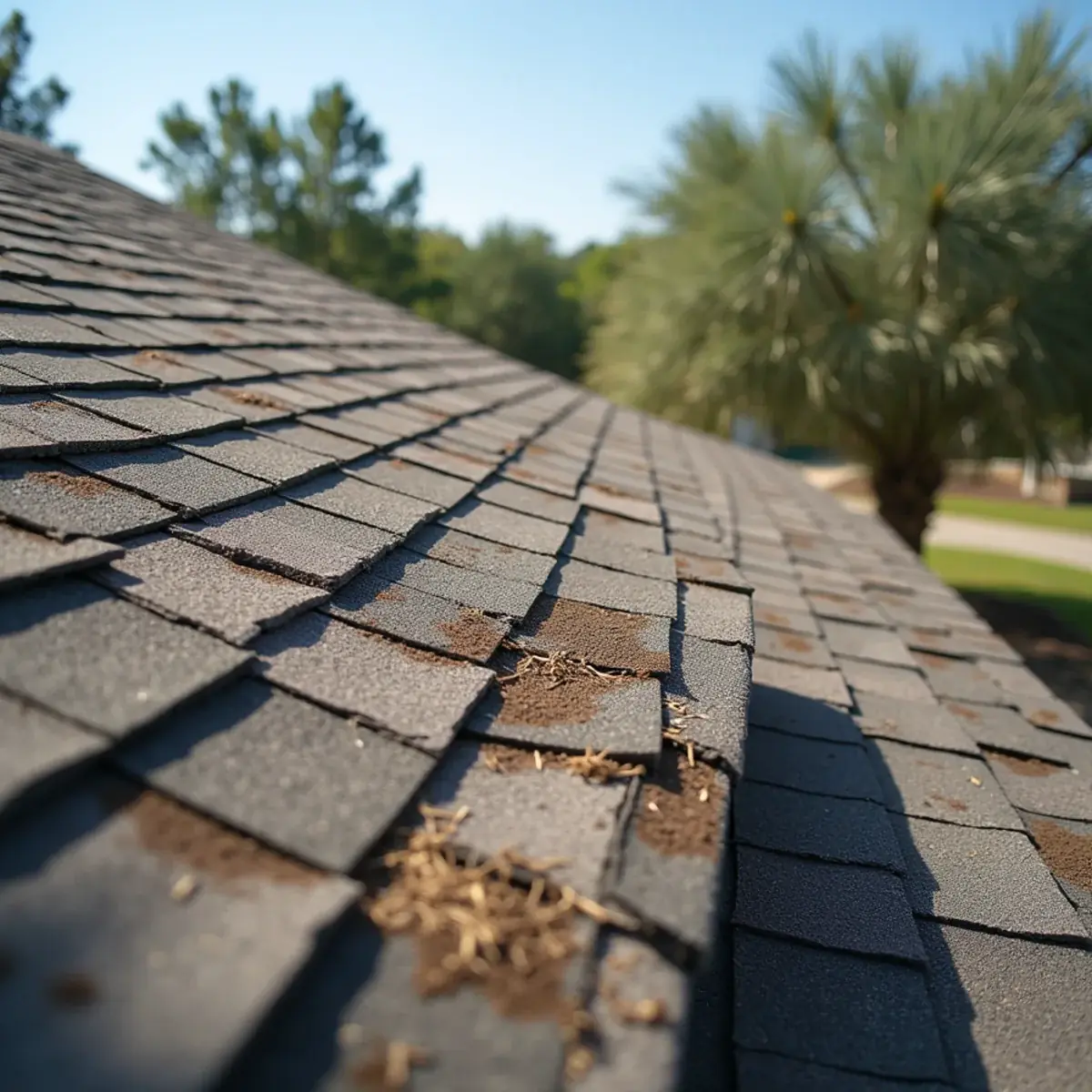
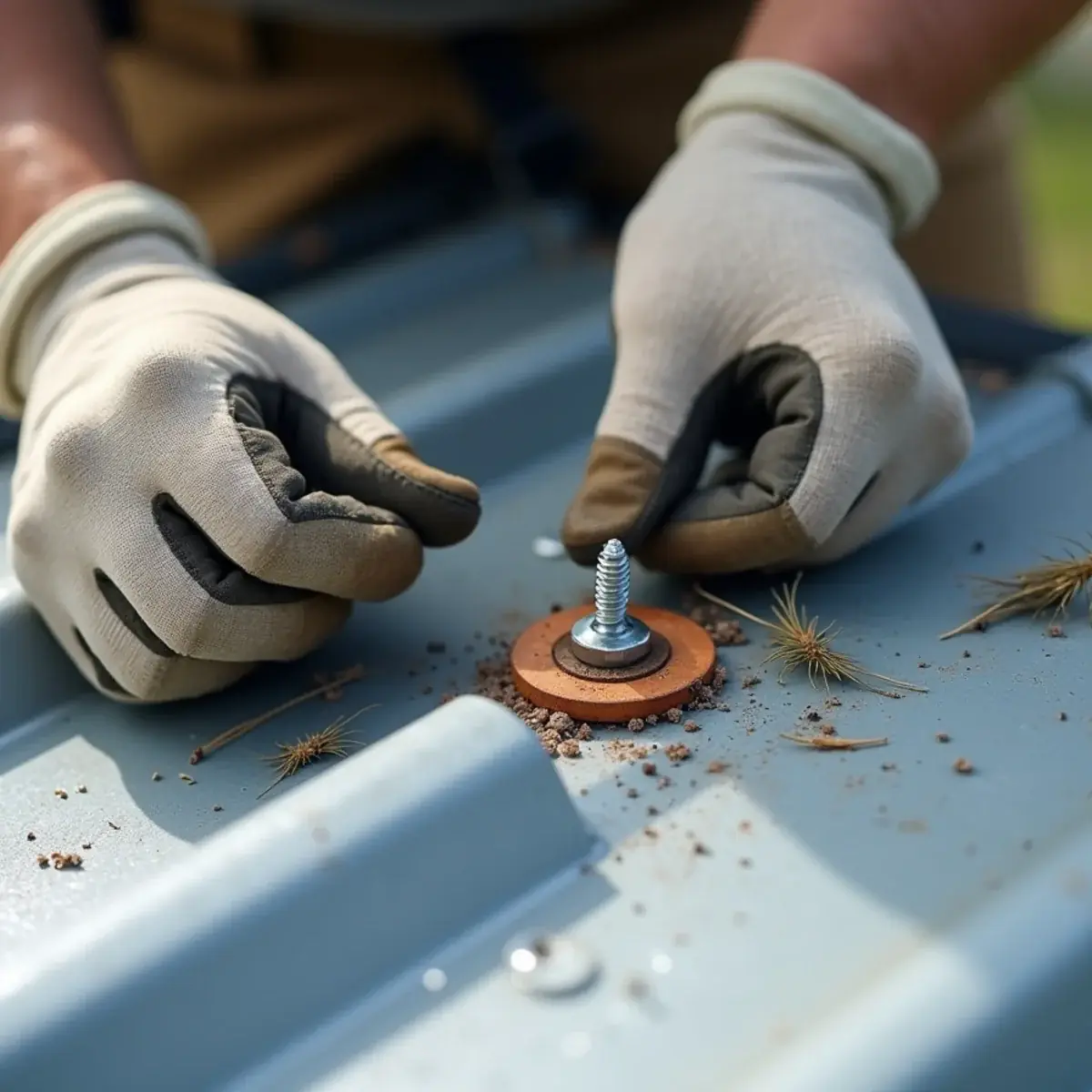
Exposed-fastener panels are held by thousands of screws, each sealed by a rubber washer. Metal expands in July sun and contracts in a cool rain, and over years that movement walks screws loose. Meanwhile UV dries the washers until they crack. The fix is to back out each tired screw and drive a new one, often one size larger so it bites fresh wood, with a new washer seated snug but not crushed.
Open seams, rust and loose ridge caps
- Side laps and end laps where sealant has failed and wind-driven rain pushes under the panel.
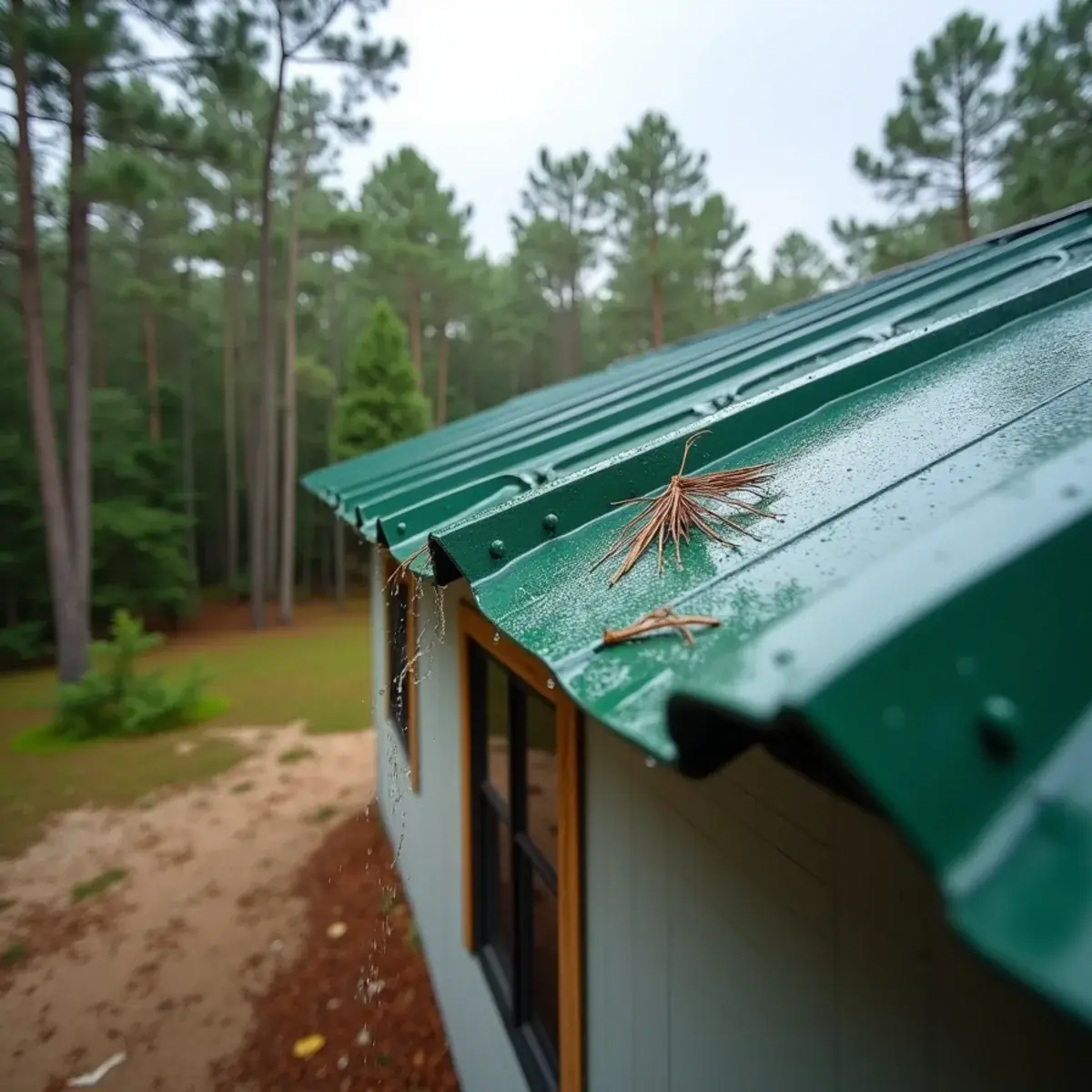
- Rust at cut edges, scratches and spots where pine needles hold moisture against the metal.
- Ridge caps and trim with missing closures or loose fasteners, which let water and wasps in at the top.
- Flashing at pipes and chimneys, where a rubber boot has split or a counterflashing has pulled away.
If water is already coming in after a storm and a panel is bent back, treat it as emergency roof repair first and fasteners second.
Screw-down or standing seam: which one is on your roof
You can usually tell from the yard. If you see rows of screw heads across the flat of each panel, it is a screw-down (exposed-fastener) roof. If the panels meet at raised vertical seams and you see no screws at all, it is standing seam.
| Screw-down (5V crimp, R-panel, PBR) | Standing seam | |
|---|---|---|
| How it attaches | Screws through the panel face into the deck or purlins | Hidden clips under the seam; no holes in the panel face |
| Typical upkeep | Screws and washers need checking and replacing over the years | Little fastener upkeep; seams and trim still get checked |
| Where you see it | Farmhouses, shops, barns, manufactured homes | Newer homes, restorations, higher-end reroofs |
| Up-front cost | Lower | Higher |
5V crimp is the old Southern pattern with five shallow V ribs per sheet, and it looks right on historic frame houses. R-panel and PBR are heavier-ribbed panels borrowed from commercial buildings; PBR adds a purlin-bearing leg at the overlap.
How a metal roof job goes, repair or new install
Metal roof repair
- Walk and photograph the roof. Every fastener row, lap, ridge cap, boot and trim piece on the affected slopes, plus the attic below the leak.
- Written scope and price. Which screws get replaced or upsized, which laps get resealed, which panels or trim need replacing.
- Repair. Backed-out or stripped screws come out and new, slightly larger fasteners with fresh washers go in; laps are cleaned and resealed with sealant made for metal; damaged panels or ridge caps are replaced.
- Check. A water test or a look at the attic after the next rain, and photos of the finished work.
New metal roof
- Measure, choose the system. Profile, gauge, finish and color, and whether the old roof comes off.
- Permit and Notice of Commencement through Santa Rosa County, or the City of Gulf Breeze inside its limits.
- Tear-off and deck work. Old roofing comes off, soft decking is replaced and the deck is re-nailed where code calls for it.
- Underlayment and trim. High-temperature underlayment, drip edge, eave and rake trim go on before the panels.
- Panels, flashing and ridge. Panels are fastened to the pattern their product approval requires, with matching flashing, boots and vented ridge.
- Final inspection and paperwork. County sign-off, photos, and the panel and paint warranties in your file.
Metal roof installation: panels, gauges, underlayment and wind rating
A metal roof is only as good as what holds it down and what sits beneath it. When the roofer prices a new install, these are the choices on the estimate.
- Gauge. Lower numbers mean thicker steel. Residential screw-down panels are commonly 26 gauge or thinner; standing seam is often 24 gauge. Thicker steel resists denting and oil-canning better, but ask the roofer what the panel's product approval actually requires.
- Underlayment. Metal gets hot, so most roofers use a high-temperature synthetic or peel-and-stick underlayment rather than old felt.
- Wind rating. The panel, clip or screw spacing, and deck must match a Florida product approval for the wind speed at your address. Closer fastener spacing at eaves, rakes and ridges is normal.
- Finish. Fluoropolymer (PVDF) paint finishes hold color and resist chalking longer than unpainted aluminum-zinc coated steel.
A metal install is a reroof, so it needs a permit. Inside Milton city limits the process starts with City of Milton Planning and Santa Rosa County Building issues the permit; in the unincorporated county it goes straight to the county. The roofer normally pulls it.
Metal over shingles: when Florida code allows it and when tear-off is better
Florida code generally allows one new roof covering over one existing layer, and only under specific conditions: the old roof cannot be water-soaked or badly deteriorated, and there cannot already be two layers. Wind-zone and product-approval rules apply on top of that. So a recover is sometimes legal. It is not always wise.
Recover can make sense on a sound, single-layer roof with a solid deck where budget is tight. The roofer will tell you which camp your roof is in after looking at it, including from the attic. If the decision is between metal and new shingles, the roof replacement page covers the shingle side.
What is included in metal roof repair and installation
- Fastener work: new screws with new neoprene or EPDM washers, upsized where the old holes are stripped
- Seam and lap sealing with a sealant rated for metal and sun, after the old caulk is cleaned off
- Panel and trim replacement for dented, torn or rusted pieces, matched as closely as the profile allows
- Flashing, pipe boots and ridge caps made for metal roofs, not shingle parts bent to fit
- On a new roof: tear-off or recover decision in writing, deck repairs, underlayment, trim, panels, vented ridge, permit and final inspection
- Documentation: before and after photos, the workmanship warranty terms, and the manufacturer's panel and finish warranties
Finish matters in this sun. Light colors and reflective paint finishes keep attic temperatures down in July and August, and a quality painted finish resists chalking and fading for many years longer than bare metal.
Why metal suits Milton: wind, heavy rain, pine needles, long service life
Milton gets well over 60 inches of rain a year and a thunderstorm most summer afternoons. Metal sheds water fast, and pine needles slide off a smooth panel instead of packing into valleys the way they do on shingles. A properly fastened system holds up to wind well, which matters in a county that took Ivan, Dennis and Sally.
Metal also suits the way people live out here. On acreage in East Milton, the wooded lots around Pace and the rest of our Santa Rosa County service area, a single roof that can outlast two shingle roofs means one less big project. The tradeoff is the fastener upkeep on screw-down panels, which a periodic roof inspection catches before it turns into a ceiling stain.
Metal roofs on historic homes in downtown Milton and Bagdad
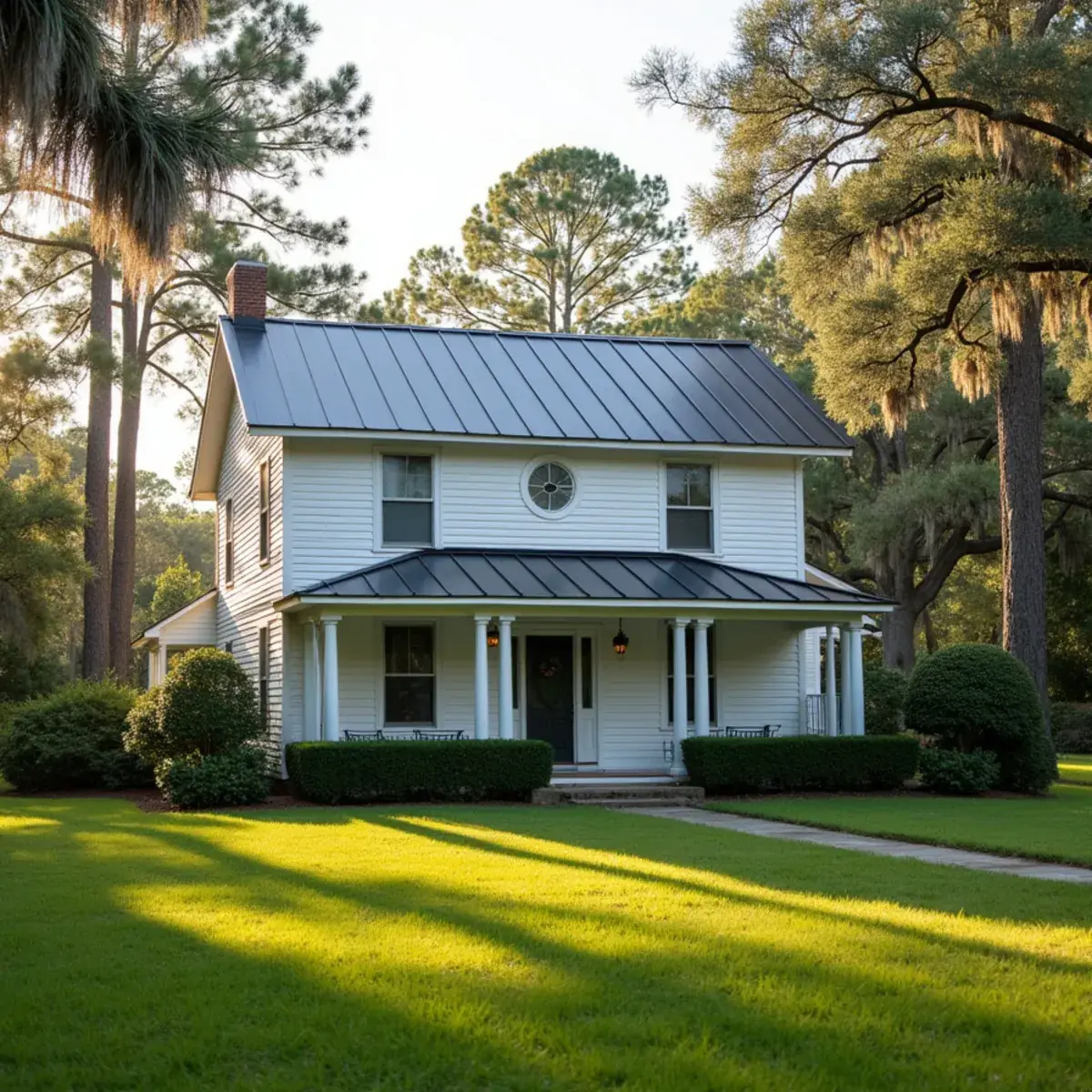
The Milton Historic District along US 90 by the Blackwater River and the old mill village in Bagdad are full of steep-pitch frame houses, and many wore metal long before it was fashionable. Re-roofing them takes a different hand from a subdivision job.
- Profile. 5V crimp or a narrow standing seam usually looks closer to the original than wide commercial ribs.
- Framing. Old roofs may sit on skip sheathing or boards rather than plywood; the roofer checks what is there before choosing fasteners.
- Details. Deep overhangs, dormers and porch roofs need custom trim and careful flashing.
- Approvals. Permits run through Santa Rosa County (starting with City of Milton Planning inside city limits). Ask whether any historic design review applies to your property before you pick a color or profile.
Metal or shingles: cost, lifespan and insurance
Metal costs more up front than architectural shingles and usually lasts much longer. Shingles in this climate often reach end of life around 15 to 20 years; a well-kept metal roof can go decades. Insurance is less clear-cut. Some insurers credit newer roofs or certain wind features, and a wind mitigation report records how the roof is attached, so ask your agent how a metal roof would change your premium before you decide. Our metal roof vs shingles comparison goes deeper.
What moves the price of metal roof work
- Repair or full install, and the number of screws or seams involved.
- Panel type and gauge: screw-down costs less than standing seam.
- Tear-off versus recover, and how much decking needs replacing.
- Roof pitch, height and the number of valleys, dormers and penetrations.
- Custom trim on historic or complex roofs.
Not sure metal is the right call, or just need roof repair in Milton on the roof you have? The roofer can price both and let you compare.
Why Milton homeowners call Zana Roofers for metal roofing
- Roofers who work on metal. We send a roofer who repairs and installs metal, not a shingle crew guessing at screw-down panels. Every roofer we send is licensed and insured in Florida.
- Repair before replacement. A screw-down roof with tired fasteners usually needs a re-screw, not new panels, and that is what gets quoted when it is true.
- Answered any hour. A panel peeled back in a night storm gets a person on the phone right away, and a temporary fix as soon as it is safe.
- Price in writing first, including fastener counts, panel replacements and any decking found under the old roof.
Metal roofing across Milton, Santa Rosa County and the coast
Inland, metal is everywhere: 5V crimp on older farmhouses north of Milton, R-panel on shops and manufactured homes in East Milton, and standing seam going onto restored frame houses in Bagdad and downtown Milton. Subdivision homes in Pace switch from shingles to metal more often each year, usually at replacement time.
Near salt water the details change. In Navarre and Gulf Breeze, salt air attacks cut edges, scratches and plain steel fasteners, so stainless or coated fasteners and aluminum or heavily coated panels are worth asking about, and many panel warranties limit coverage within a set distance of salt water. Every community we cover is on the service areas page.
Metal Roof Repair and Installation: questions from Milton homeowners
How long does a metal roof last in Florida?
A well-installed metal roof commonly lasts several decades in Florida, far longer than shingles. Standing seam with hidden clips tends to go longest with the least upkeep. Screw-down panels last too, but their screws and washers need attention along the way. Salt air near the coast, scratches left to rust and poor fastening shorten the life, so the install and the follow-up checks matter as much as the metal.
Why is my metal roof leaking around the screws?
Usually because the rubber washers have cracked or the screws have backed out. Daily heating and cooling loosens screws over time, and sun dries out the washers until they stop sealing. Overdriven screws that crushed the washer at install are another cause. The repair is replacing the worn fasteners, often with a slightly larger screw, rather than smearing sealant over the heads.
Can metal panels go over my existing shingles?
Sometimes. Florida code generally allows one new layer over one existing layer, but only if the old roof is sound, dry and not already doubled, and the system meets wind requirements. Most roofers here still recommend tear-off, because it lets them inspect and re-nail the deck. The roofer can tell you which option fits your house after looking at it.
Is a metal roof louder in the rain?
Not much, on a house. When metal is installed over solid decking and underlayment with an insulated attic below, rain sounds about the same as on shingles. The drumming people remember comes from barns and porches where the panels sit on open purlins with nothing beneath them. If quiet matters to you, mention it so the roofer can plan the underlayment.
Does a metal roof lower homeowners insurance in Florida?
It can help, but the material alone is not the main factor. Florida wind discounts come from a wind mitigation inspection (form OIR-B1-1802), which looks at how the deck is attached, how the roof connects to the walls and whether there is a secondary water barrier. A new metal roof installed to current code often scores well on those items. Ask your agent what your carrier credits.
Do metal roofs rust near the coast?
Bare or scratched steel will, and salt air speeds it up. Coated steel panels with a quality paint finish hold up well inland and reasonably well near the water if cut edges and scratches are touched up. Right on the Sound or the bay, aluminum panels and stainless or coated fasteners last longer. Check the panel warranty's distance-from-salt-water terms before you buy.