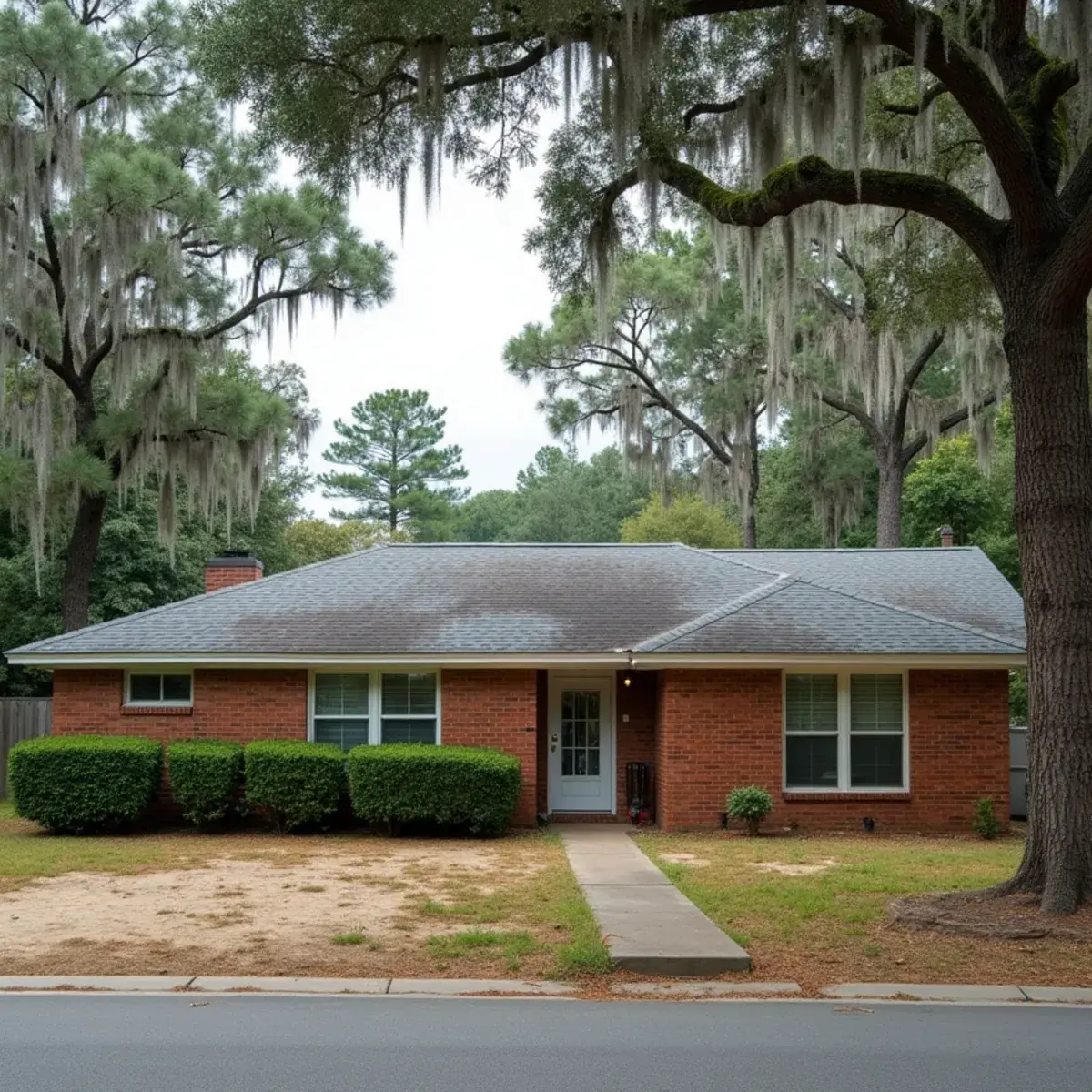

A roof inspection in Milton, FL gives you a written, photographed record of your roof's condition: what is wrong, what is wearing out and roughly how many years it has left. It is what you need when an insurer asks about roof age, when you are buying or selling, or when a storm has you wondering what you cannot see from the yard.
Most people in Milton never think about their roof until a letter arrives. It might come from an insurer asking how old the roof is, from a buyer's agent, or from your own nerves after a storm rolls across the Blackwater. A roof inspection turns that worry into a written answer: what condition the roof is in, what needs fixing and how much life is left.
Call (773) 207-0769 to book one. The roofer we send climbs the roof, checks the attic, photographs the problem areas and gives you findings in writing. Every roofer we send is licensed and insured in Florida.
When Milton homeowners need a roof inspection
- An insurance letter asking for roof age, a roof certification form or proof of remaining life.
- Buying or selling a house, when the roof is the first thing a buyer's inspector flags.
- After a storm, even if nothing is visibly missing from the ground.
- Before hurricane season, to catch loose flashing and lifted shingles while repairs are easy to schedule.
- A roof from the 2004 to 2005 rebuild. Roofs replaced after Ivan and Dennis are now past 20 years, beyond typical shingle life here (why those roofs are coming due).
If any of those apply, an inspection is the simplest way to find out where you stand before you commit to roof repair in Milton or a full replacement.
Insurance letters: roof age, remaining useful life and roof certification forms
Florida law, s. 627.7011(5), F.S., changed how roof age works for homeowners policies issued or renewed since July 2022. Roof age counts from the last time 100 percent of the roof was replaced.
| Roof age | What the statute says |
|---|---|
| Under 15 years | The insurer cannot refuse to issue or renew a policy solely because of roof age. |
| 15 years or older | The insurer must let you get an inspection, at your expense, by an authorized inspector. If it shows at least 5 years of remaining useful life, the insurer cannot refuse on roof age alone. |
Many insurers send their own roof certification or roof condition form and state who may sign it. Ask your agent for the exact form and confirm the roofer is an accepted signer before the visit, so the paperwork is right the first time. Our post on roof age and Florida home insurance walks through non-renewal letters in more detail.
A roofer can inspect, document conditions and estimate remaining life. A roofer cannot tell you what your policy covers or deal with the insurer for you; that conversation is between you and your insurance company.
What the roofer checks: shingles or panels, flashing, penetrations, decking, attic
On the roof
- Covering: granule loss, cracked, curled, creased or missing shingles; on metal, backed-out screws, cracked washers, rust and open laps.
- Flashing: step flashing at walls, chimney counterflashing, valleys and drip edge.
- Penetrations: pipe boots, vents, skylights and satellite mounts, the usual leak points.
- Ridge and edges: ridge caps, rake edges and eaves, where wind lifts first.
- Debris: pine needles packed in valleys and gutters that hold water against the roof.
In the attic
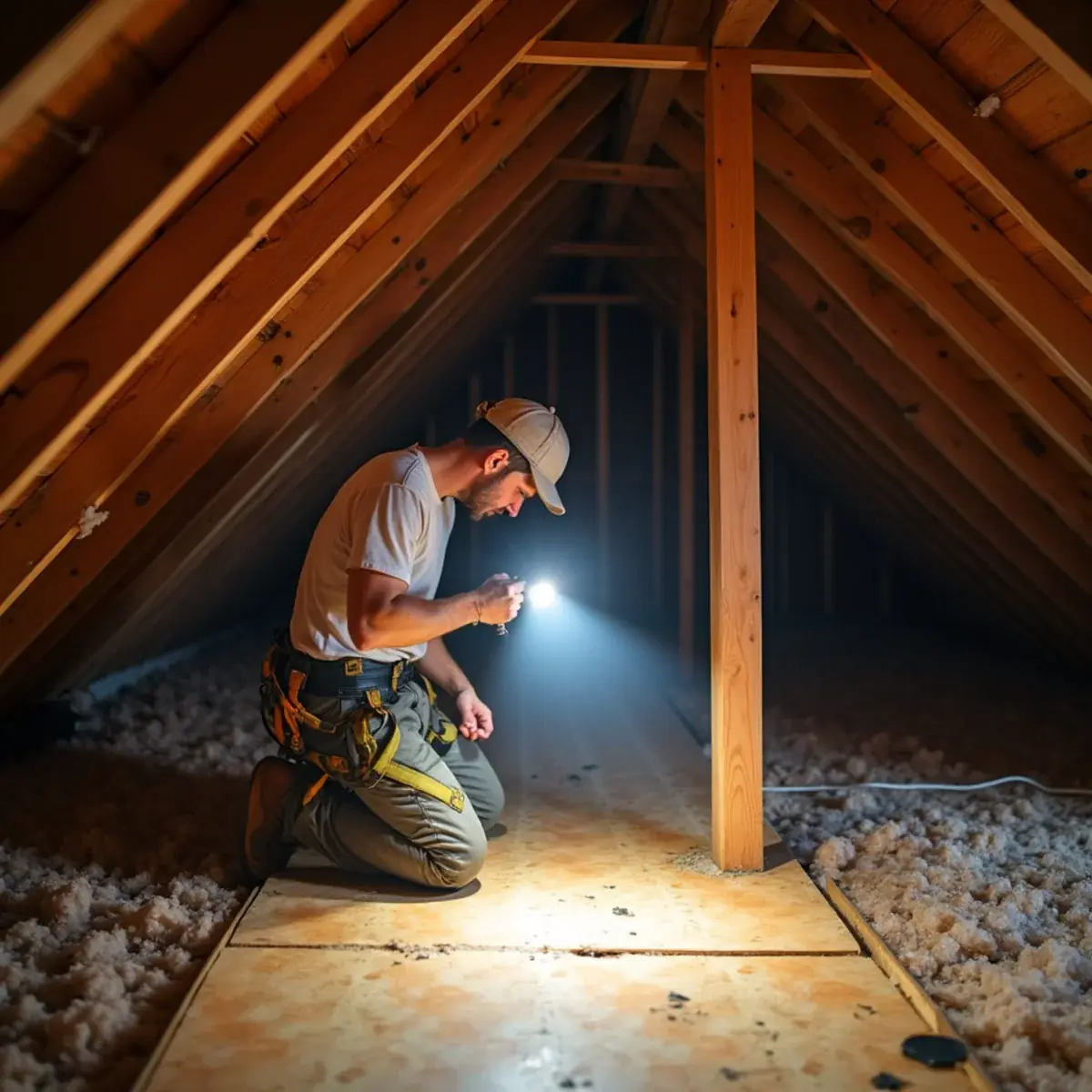
The underside tells the truth the shingles hide. The roofer looks for daylight at nail holes, water stains and dark rings on the decking, soft or delaminated plywood, rusted nail tips that point to poor ventilation, and how the deck is fastened to the rafters.
How a roof inspection works, step by step
- Booking. Tell us why you need it: an insurer's form and its deadline, a sale, a storm, or a routine check. The reason decides what the report has to cover.
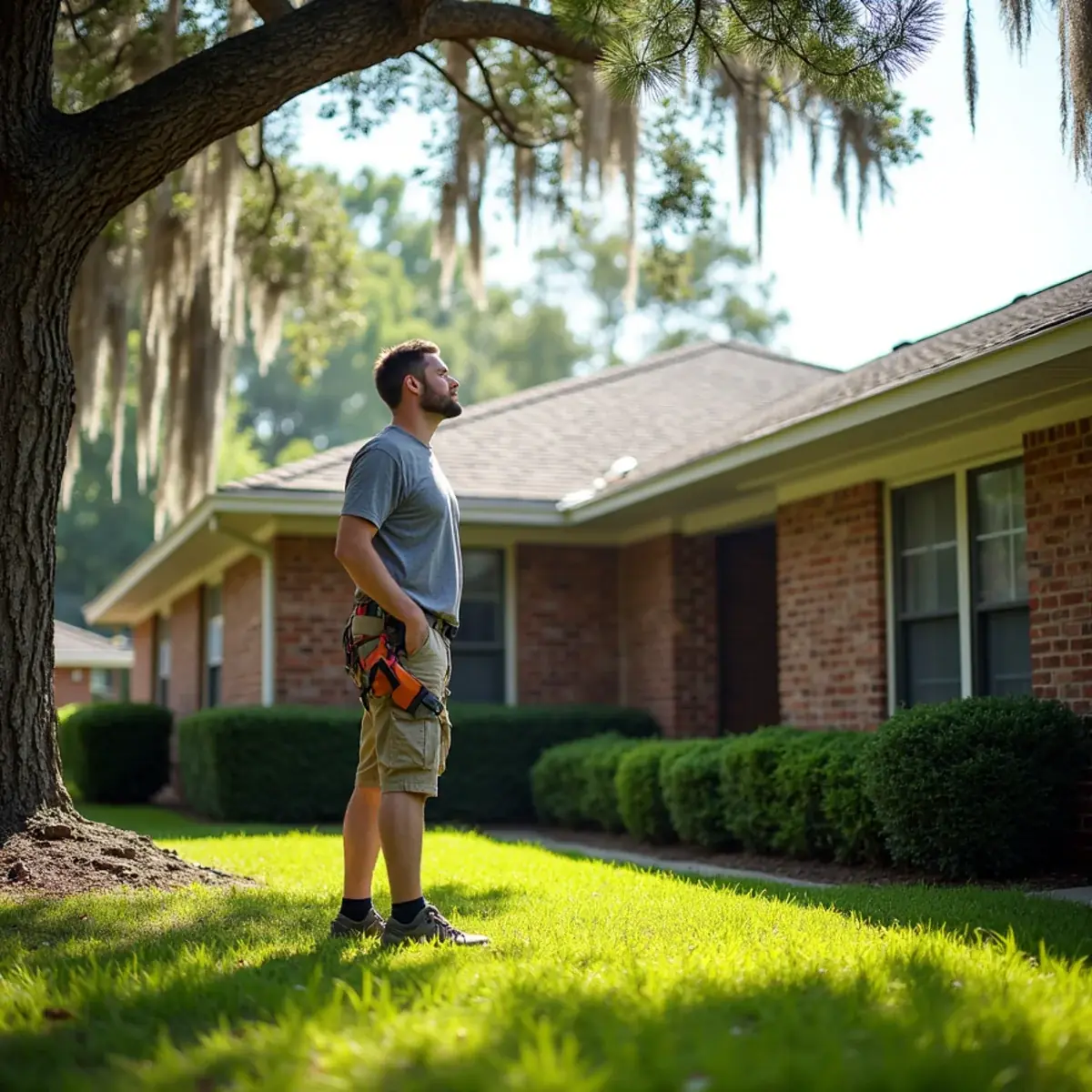
- Ground walk. The roofer looks at every slope from the yard, plus gutters, downspouts, fascia and soffit, and notes trees over the roof.
- On the roof, when it is safe. Covering, flashing, penetrations and ridge, with close-up photos. On steep or fragile roofs the roofer may use a ladder at the eaves and a camera pole instead of walking it.
- In the attic. Decking, nail tips, stains, insulation and ventilation, from the access hatch or a crawl along the framing.
- The report. Photos, findings, an estimate of remaining useful life and a repair list or replacement estimate, plus any insurer form filled in if the roofer is an accepted signer for it.
- Walk-through. The roofer goes over the findings with you, by phone or on site, so you know which items are urgent and which can wait.
Most single-family inspections take an hour or two on site. Large, steep or two-story roofs, and attics that are hard to move through, take longer.
After-storm inspections vs routine checks
A routine check looks at wear: how the roof is aging, what will need attention in the next few years, and whether small repairs now will stretch its life. Spring, before hurricane season starts in June, is the natural time. Our hurricane season roof checklist lists what you can look at yourself.
An after-storm inspection looks for new damage: creased shingles that lifted in a gust and settled back, limb scuffs, torn flashing and bent panels. Creases are easy to miss from the ground and can leak months later. If the roofer finds damage, the storm damage roof repair page explains the repair side, and Florida's one-year window for reporting a new claim from the date of loss is a good reason not to wait.
Buying or selling a home: roof condition and the 4-point inspection
Insurers often ask for a 4-point inspection on older homes: roof, electrical, plumbing and HVAC. The insurer's form lists who may sign it, and it covers the roof only briefly. A dedicated roof inspection goes further and gives both sides of a sale something concrete to negotiate from.
- Sellers in Pace subdivisions or the older streets of Bagdad can fix small items before listing so the roof does not stall the deal.
- Buyers get a written view of remaining life before closing, which helps when an insurer starts asking about roof age.
- Landlords near Whiting Field and in East Milton get a record of condition between tenants.
Wind mitigation reports: what they cover and who is allowed to sign them
The wind mitigation report is a specific state form, OIR-B1-1802. It records features that can earn premium discounts: how the roof deck is attached, how the roof connects to the walls, whether there is a secondary water barrier, and the roof shape.
The two work well together. A roof inspection tells you whether the roof is sound; a wind mitigation report tells your insurer how it is built. If you are planning a roof replacement, a new wind mitigation report afterward can capture the re-nailed deck and secondary water barrier that current code can require.
What you receive: photos, findings, a repair list or a replacement estimate
- Photos of each problem area, labeled so you know which slope or room they belong to.
- Written findings covering the covering, flashing, penetrations, decking and attic.
- An estimate of remaining useful life, stated plainly.
- A repair list with a written price for each item, or, when the roof is done, a replacement estimate.
- The insurer's form, completed, when your insurer accepts the roofer as a signer.
You are under no obligation to hire the same roofer for repairs. The inspection fee is quoted in writing before the visit, and the report is yours to keep.
What affects the price of an inspection
- Roof size, pitch and height, and whether the roof can be walked safely.
- Attic access: a clear hatch is quicker than a cramped crawl over ductwork.
- Whether an insurer's certification form has to be completed and signed.
- Distance within our service area around Milton and how soon you need the visit.

Why Milton homeowners call Zana Roofers for an inspection
- A report you can use. Photos, findings and remaining life in writing, built for the reason you asked: an insurer, a buyer or your own planning.
- Straight answers, no sales pitch. If the roof has years left, the report says so. You are under no obligation to hire the same roofer for any repair.
- Licensed and insured roofers. Every roofer we send is licensed and insured in Florida, which matters when an insurer asks who signed the form.
- Booked on one call, any hour. Call 24/7 when the insurer's letter shows up on a Saturday; the inspection is scheduled for the first convenient daylight slot.
Roof inspections across Milton and Santa Rosa County
Insurer roof-age letters are landing all over the county, because so many roofs went on in 2004 and 2005. In Milton and Pace, that usually means a 20-plus-year shingle roof in a subdivision. In East Milton and Bagdad, it is often a metal roof or an older frame house where the attic tells more than the shingles.
Along the water in Navarre and Gulf Breeze, inspections pay extra attention to salt-air wear on fasteners and flashing and to wind exposure on the slopes facing the Sound and the bay. Before hurricane season, a check in April or May leaves time to fix anything the report finds. See every community on the service areas page.
Roof Inspection: questions from Milton homeowners
My insurer says my roof is too old. What can an inspection do?
It can give the insurer evidence instead of just a date. Under s. 627.7011(5), F.S., if your roof is 15 years or older, your insurer must let you get an inspection by an authorized inspector, and it cannot refuse coverage on age alone if the inspection shows at least 5 years of remaining useful life. Ask your agent which form to use and who may sign it.
How much remaining life does a Florida insurer want to see?
The statute uses five years. For a roof 15 years or older, an insurer cannot refuse to write or renew a policy based on roof age alone if an authorized inspection shows at least 5 years of remaining useful life. Insurers may still weigh other factors, such as visible damage, so read the letter carefully and ask your agent what else they need.
How often should a roof be inspected in Northwest Florida?
Once a year is a sensible baseline, ideally in spring before hurricane season, plus after any storm that brings strong wind, hail or falling limbs. Roofs over 15 years old, screw-down metal roofs and roofs under heavy pine cover benefit most from regular checks, because small problems there turn into leaks quickly in a 60-inch-rain climate.
Is a roofer's inspection the same as a wind mitigation inspection?
No. A wind mitigation inspection uses Florida form OIR-B1-1802 and must be signed by one of the license types the form lists, such as qualified home inspectors, building code inspectors, certain contractors, engineers or architects. A roofer's inspection reports on the roof's condition and remaining life. Many homeowners need both, and they answer different questions.
How long does a roof inspection take?
Most single-family homes take an hour or two on site: the yard walk, the roof itself when it is safe to get on, and the attic. Steep, two-story or very large roofs take longer, and so do attics with little room to move. The written report with photos usually follows after the visit, sooner if an insurer's deadline is close.
Does homeowners insurance pay for a roof inspection?
Usually not for a routine or insurer-requested inspection. Under Florida law, when an insurer asks about a roof 15 years or older, the homeowner pays for the inspection that shows its remaining life. After storm damage, your insurer sends its own adjuster to inspect for the claim. Be wary of anyone offering an inspection in exchange for filing a claim; Florida law prohibits that.