Atlantic hurricane season runs June 1 to November 30. The roof work that matters most happens before June: get the roof inspected, clean gutters and valleys, trim limbs over the house, check pipe boots and flashing, look in the attic, take dated photos of every slope, find your roof's permit date and read your policy's hurricane deductible. When a storm is named, secure loose items and update your photos. After it passes, stay off the roof, inspect from the ground and call for a tarp if water is getting in.
Why Santa Rosa County Roofs Need a Plan
Ivan in 2004 stripped roofs from Gulf Breeze to Navarre and up into Milton, and Dennis followed in 2005. Sally in 2020 moved slowly and dropped rain for hours, and afterward Santa Rosa County handed out about 8,500 tarps. Many roofs replaced after Ivan and Dennis are now past 20 years old, which is late in life for shingles in this climate.
Roofers book up fast once a storm is in the Gulf, and after landfall everyone needs a tarp at once. The cheapest protection is the work you finish while the weather is calm.
Before June 1: The Roof Checklist
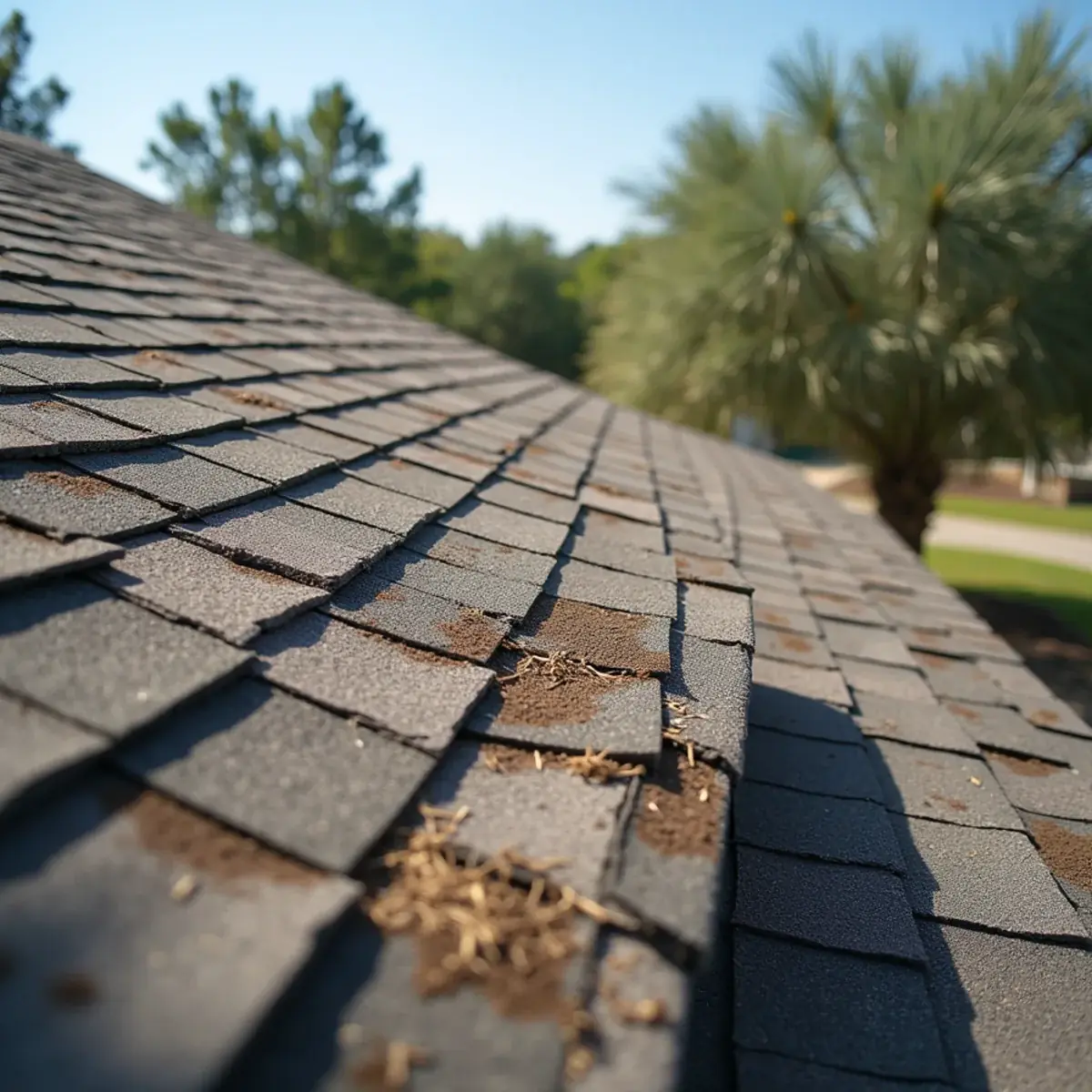
- Book a roof inspection in spring. A roof inspection catches lifted shingles, loose ridge cap and failing sealant while there is time to fix them.
- Clean gutters and valleys. Pine needles pack valleys and gutters, and water that cannot drain backs up under the roof edge.
- Trim limbs over the roof. Branches that overhang the house become projectiles. Leave big pines and limbs near power lines to a tree service.
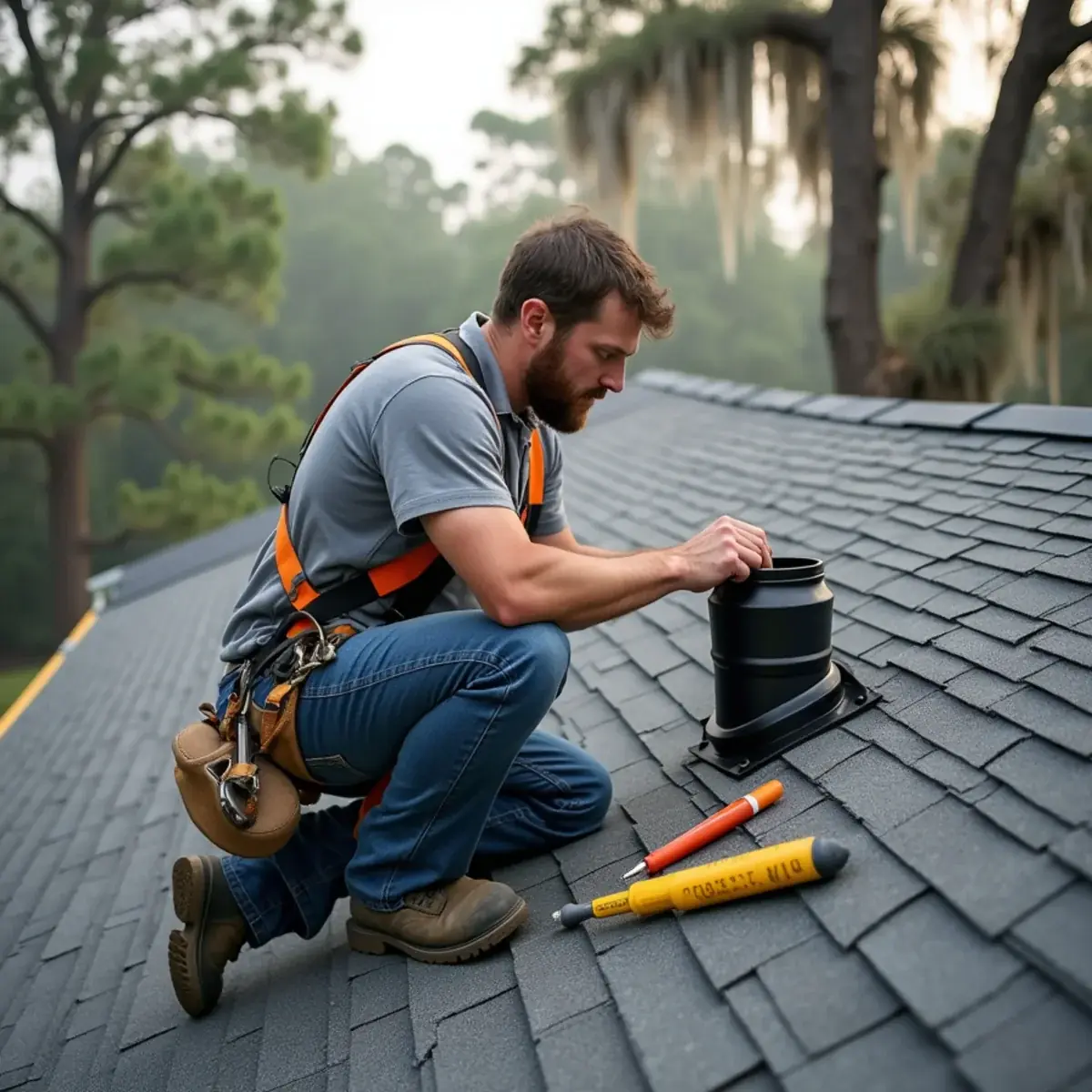
- Check pipe boots. The rubber collars around plumbing vents crack in the sun and are one of the most common leak points here.
- Check flashing. Look at step flashing along walls, chimney flashing and the drip edge at the eaves and rakes.
- Look in the attic. On a sunny day, look for daylight through the deck, water stains on rafters and damp insulation.
- Photograph every slope. Take dated photos and a short video of the roof, gutters and ceilings. They show the condition before a storm.
| Item | Homeowner from the ground | Roofer on the roof |
|---|---|---|
| Gutters and downspouts | Yes, with a safe ladder setup | Yes |
| Valleys, pipe boots, flashing | Spot obvious problems with binoculars | Yes |
| Attic check | Yes, from the hatch | Yes |
| Limbs over the roof | Small limbs only | No, call a tree service |
| Photos | Yes | Yes, close-ups during the inspection |
Before June 1: The Paperwork Checklist
- Find your roof's permit date. The City of Milton does not issue its own permits; Santa Rosa County Development Services does, for both city addresses and unincorporated areas like Pace and Navarre. Gulf Breeze addresses inside the city limits go to the City of Gulf Breeze. A roof permitted on or after March 1, 2009 falls under Florida's 25 percent roof rule change, which can shape how a partial storm repair is handled.
- Read your hurricane deductible. It is often a percentage of your dwelling coverage rather than a flat dollar amount. Know the figure now, not after the storm.
- Save your policy number and your insurer's claim line in your phone and on paper.
- Know the claim deadline. Florida law (s. 627.70132) requires a new property claim to be reported within 1 year of the date of loss. Check your own policy.
What Fails First in a Hurricane, From the Roofer's Side
Roofers who tear off storm-damaged roofs in this county see the same failure order again and again. Wind pressure peaks at the edges and corners, so damage usually starts there and works inward:
- Rake and eave edges. Shingles along the gable ends and the bottom row lift first, especially where the drip edge or starter course is missing.
- Hips and ridge caps. The caps at the top of the roof and along the hips of a hip roof peel next, opening a line straight into the attic.
- Vents and soffits. Wind-driven rain gets forced through ridge and box vents, and loose soffit panels let wind pressurize the attic from below.
- The deck itself. On roofs with too few nails, whole sheets of plywood can lift once the shingles over them are gone.
- Roof-to-wall connections. In the worst storms, a roof that is only toe-nailed to the walls can shift or lift as a unit.
Where wind mitigation fits in
The items on the state wind mitigation form, OIR-B1-1802, line up with that list: how the deck is attached, how the roof connects to the walls (clips or straps rather than toe-nails), whether there is a secondary water barrier, and the roof's shape. Those are the features that keep a roof on, and they are also the ones insurers credit. A roof inspection in spring tells you which of them your roof already has.
When a Storm Is Named and Heading This Way
- Bring in or tie down patio furniture, grills, trampolines and anything that can fly into a roof.
- Clear gutters again if needles have built up.
- Take a fresh set of photos of the roof and ceilings.
- Charge phones and battery packs, and save the numbers for your insurer, the power company and Zana Roofers at (773) 207-0769.
- Do not climb up to add tarps or sandbags. A tarp put on before a storm usually tears off in the wind and can damage shingles on the way.
After the Storm Passes
Stay off the roof. Wet shingles, loose decking and hidden debris cause falls every storm season. Watch for downed lines; call the power company and 911 if lines are down. Then work from the ground and inside.
- Walk the yard and look for missing shingles, lifted ridge cap, bent metal panels, torn gutters and limbs on the roof.
- Check downspout outlets for heavy shingle granules.
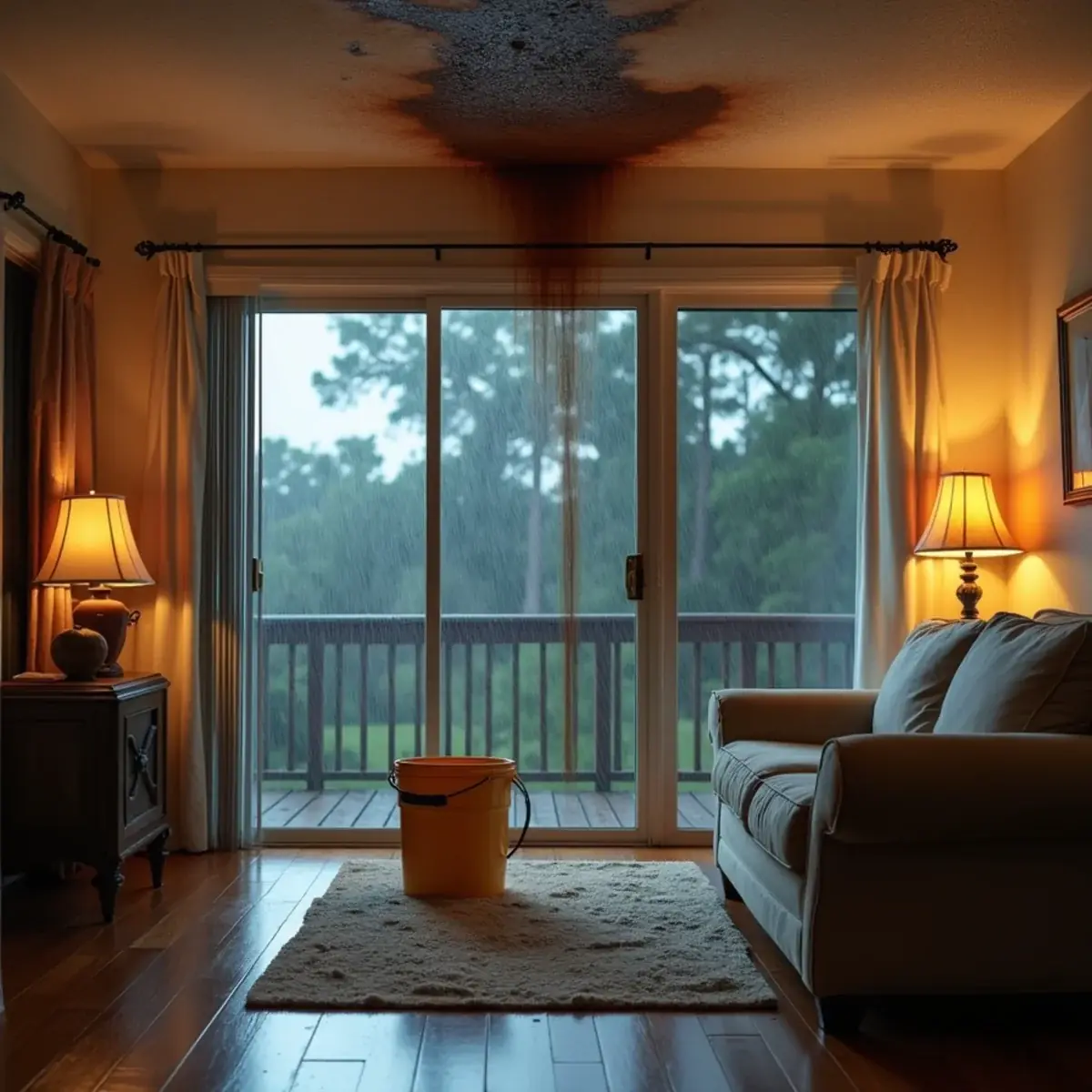
- Inside, look for ceiling stains, drips and bulging drywall. Look into the attic from the hatch with a flashlight.
- Photograph everything before cleanup, and keep receipts for tarps, fans and other steps to prevent more damage.
- If water is coming in, call (773) 207-0769 for emergency roof repair. At night or in ongoing wind, a roofer can usually only tarp or dry-in; the permanent repair comes later.
- Report damage to your insurer yourself. For a full damage assessment and repair estimate, see storm damage roof repair.
Before letting anyone on your roof, check the license on the DBPR license search. Every roofer we send is licensed and insured in Florida. The roofer can document damage and write an estimate, but cannot interpret your coverage or negotiate your claim.
Extra Steps for Gulf Breeze and Waterfront Homes
Homes on the Gulf Breeze peninsula and along Santa Rosa Sound take wind straight off open water, with salt in the air year-round. Add these to your list:
- Check for rusted nails, screws and drip edge, which can let go before the roofing does.
- Look closely at the ridge and the corners of hip roofs, where wind pressure peaks.
- On metal roofs, check exposed fasteners and washers for rust or backing out.
- Confirm whether your address is inside Gulf Breeze city limits, since that changes where a repair permit comes from.
The Bottom Line
Hurricane prep for a roof is mostly spring work: an inspection, small repairs, clean valleys, trimmed limbs, dated photos and your paperwork in one place. When a storm is named, secure the yard and update the photos. After it passes, stay off the roof and get the opening covered fast. Done in that order, a storm is far more likely to cost you a repair than a roof.
To book a pre-season check anywhere around Milton, call (773) 207-0769. After a storm, the same number gets you emergency roof repair any hour of the day.
Frequently asked questions
When should I get my roof inspected before hurricane season?
Spring is the best time, ideally March through May. That leaves time to fix lifted shingles, pipe boots and flashing before June 1, when the season starts and roofers get busier. A second look after any named storm that brings strong wind to Santa Rosa County is also worth it, even if you see no leaks.
Should I put a tarp on my roof before a hurricane?
Usually no. A tarp on an intact roof tends to tear loose in hurricane winds and can damage shingles as it whips around. Tarps are for covering damage after a storm, installed by a roofer and fastened with battens. Before a storm, spend your time on gutters, loose outdoor items and photos.
How soon after a hurricane can a roofer come out?
It depends on conditions. Roofers wait until winds drop, lightning ends and roads are clear, and after a big storm demand is heavy. Zana Roofers answers (773) 207-0769 24 hours a day and sends a licensed roofer with the fastest safe response. The first visit usually stops water with a tarp or dry-in, and the full repair follows.
How can I check my roof for damage without climbing on it?
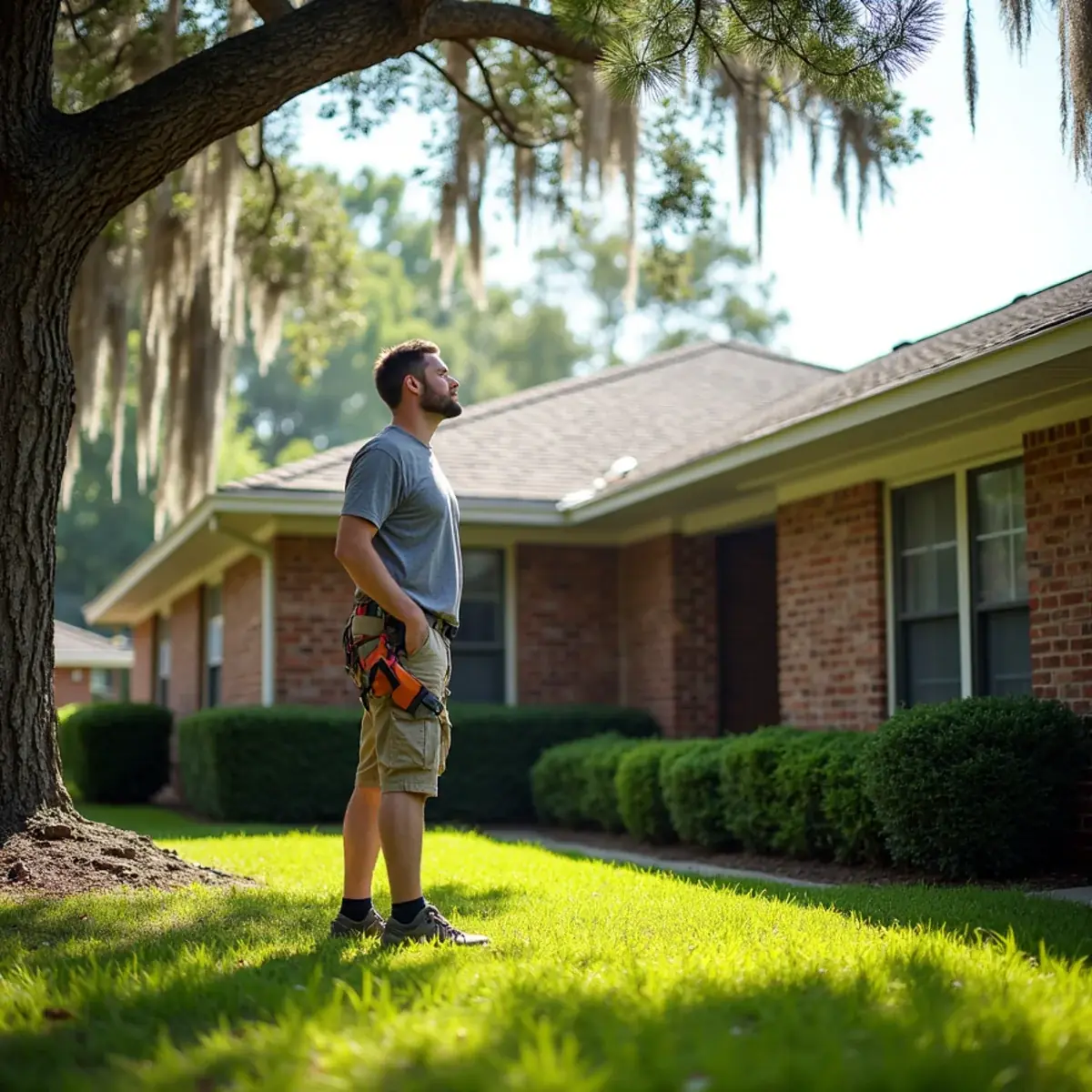
Walk all the way around the house and look at every slope from the ground, ideally with binoculars or by zooming in with your phone camera. Look for missing or lifted shingles, bare spots, dented vents and loose flashing, and check the yard and gutters for shingle pieces and granules. Then check the attic with a flashlight for wet decking or daylight.
Is it too late to get my roof ready once hurricane season starts?
No. June 1 is the target, but small repairs, gutter and valley cleaning, limb trimming and photos are worth doing any time before a storm is in the Gulf. Book early in the season if you can; once a named storm is forecast, roofers fill up quickly and the work that can be done shrinks to securing what is there.
Every roofer we send is licensed and insured in Florida. Zana Roofers connects you with independent licensed roofing contractors who perform the work.