Roof replacement in Milton, FL means tearing the old roof down to the wood, repairing and re-nailing the deck to current Florida code, and installing a new shingle or metal roof under a county permit. It is the right call when a roof is worn across every slope, leaking in more than one place, or too old for your insurer, not because of a single leak.
A roof does not fail all at once. It wears down a slope at a time until patching it costs more each year than it is worth, or until an insurance renewal letter forces the question. Around Milton, a lot of homeowners are reaching that point together, because so many roofs here were replaced in the same two years after the 2004 and 2005 hurricanes.
Call (773) 207-0769 to have a roofer look at yours. The roofer we send measures the roof, checks the deck from the attic, explains your material options and puts the full price in writing before anything is signed. Every roofer we send is licensed and insured in Florida.
Signs a Milton roof is ready for replacement
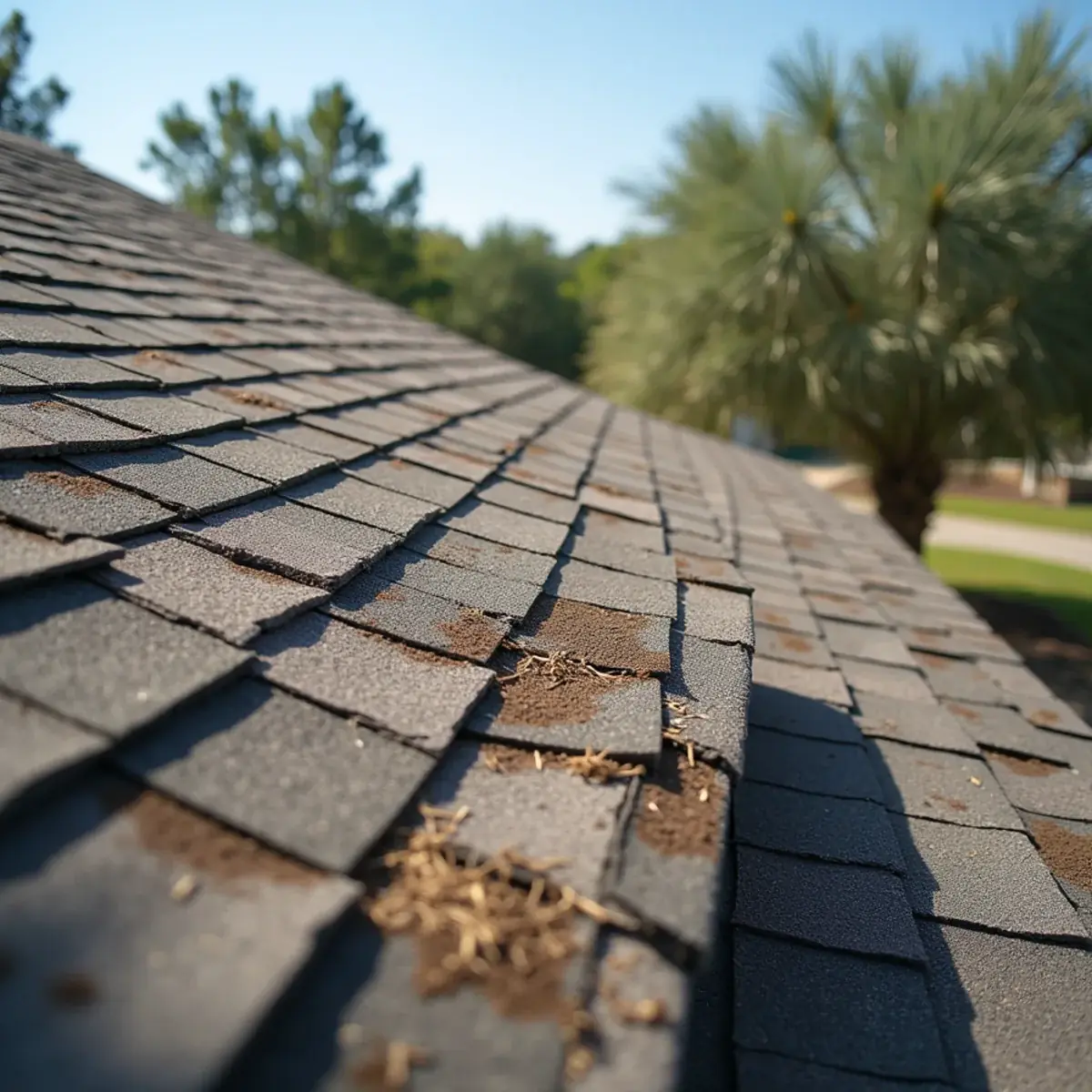
Age alone does not condemn a roof, but age plus symptoms usually does. Walk around the house with these in mind:
- Shingle edges curling up or corners cupping, visible from the street on the south and west slopes first.
- Bare patches where the granules have washed off, and grit collecting at the bottom of downspouts.
- Cracked or brittle shingles that snap instead of bend.
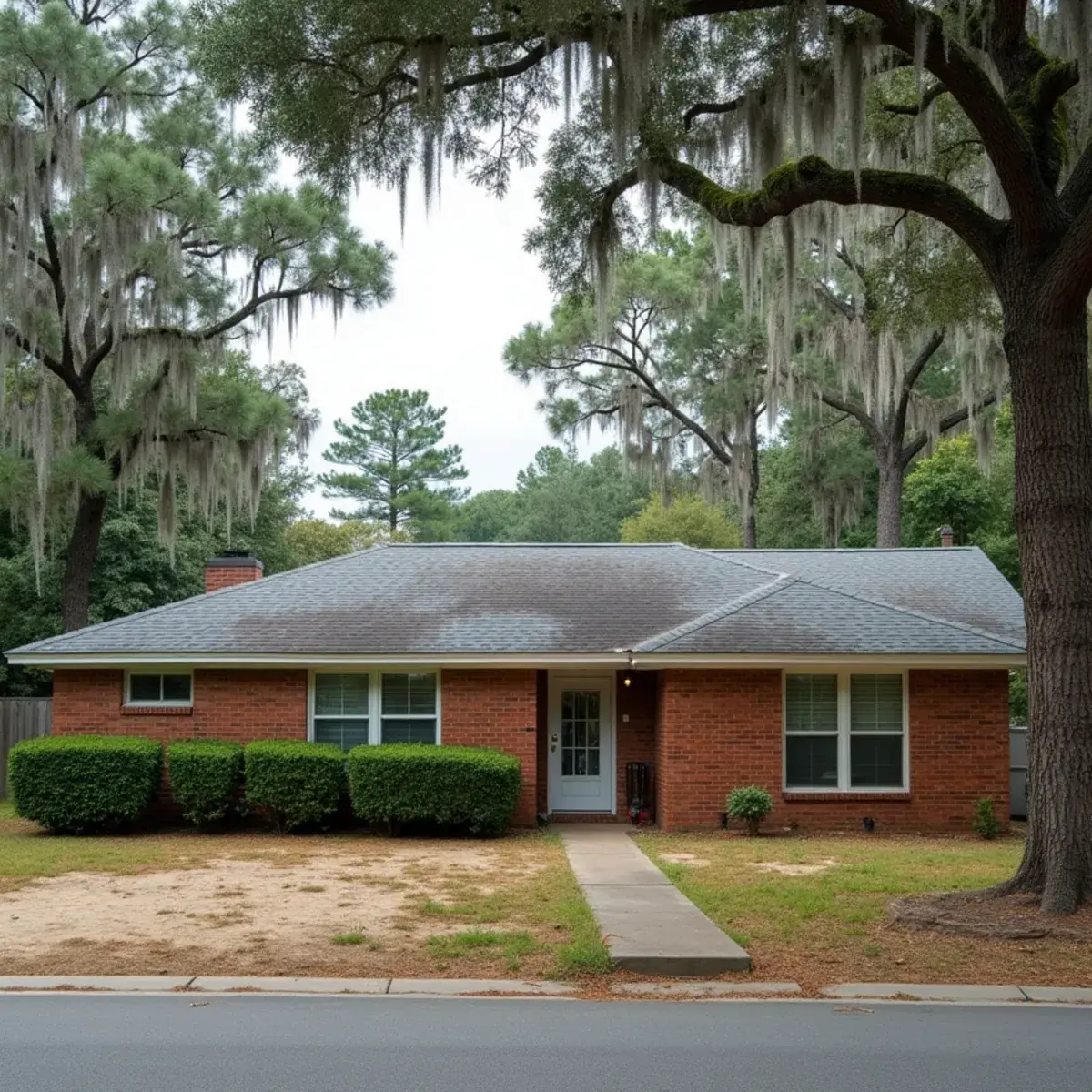
- Black streaking and moss on the shaded side under the pines (cosmetic on its own, but it holds moisture).
- A sagging ridge line or soft spots underfoot, which point to deck damage.
- Leaks appearing in new places after each heavy rain, even after repairs.
- A renewal letter from your insurer asking about roof age or condition.
If only one or two of these apply and the roof is under 15 years old, targeted roof leak repair is often the better spend. Our guide to repairing or replacing a 15 to 20-year-old roof lays out how to weigh it.
Roofs installed after Ivan and Dennis are now past 20 years
Hurricane Ivan in September 2004 and Hurricane Dennis in July 2005 hit Santa Rosa County back to back. Across Milton, Pace and Navarre, a huge share of homes got new roofs in the rush that followed, often installed in a hurry while every roofer in the region was working through a backlog.
Those roofs are now more than 20 years old. In this heat, humidity and UV, that is the end of the road for most asphalt shingles, and the rubber boots and sealants on them gave out long ago. The subdivisions along Avalon Boulevard and Berryhill Road, and the 2000s neighborhoods west toward Pace, are full of them. Our article on Santa Rosa County roofs twenty years after Ivan and Dennis covers what to look for on a storm-era roof.
Roof age and Florida home insurance: what insurers ask for after 15 years
Florida law sets the ground rules here. Under s. 627.7011(5), Florida Statutes, an insurer may not refuse to issue or renew a homeowners policy solely because the roof is less than 15 years old. Once a roof reaches 15 years, the insurer must allow you to get an inspection by an authorized inspector, at your own cost. If that inspection shows at least 5 years of remaining useful life, the insurer cannot refuse coverage on roof age alone.
So a 22-year-old roof with curled shingles is unlikely to pass, while a 16-year-old roof in good shape might. A roof inspection tells you which side of that line you are on before you decide. For the full picture of letters, forms and timelines, read roof age and Florida home insurance.
Material options: architectural shingles, standing seam and screw-down metal
Three materials cover nearly every residential reroof in this part of the Panhandle.
| Material | What it is | Worth knowing |
|---|---|---|
| Architectural shingles | Thick, laminated asphalt shingles with a dimensional look | The standard choice on subdivision homes; heavier and more wind-resistant than old three-tab when installed to the manufacturer's high-wind nailing pattern. |
| Standing seam metal | Panels joined by raised seams, fastened with hidden clips | No exposed screws to loosen, panels can expand and contract freely, and needles slide off easily. Usually the highest upfront cost of the three. |
| Screw-down metal (5V crimp, R-panel) | Panels fastened through the face with gasketed screws | Common on rural homes and outbuildings around East Milton; lower cost than standing seam, but screws and washers need periodic checking. |
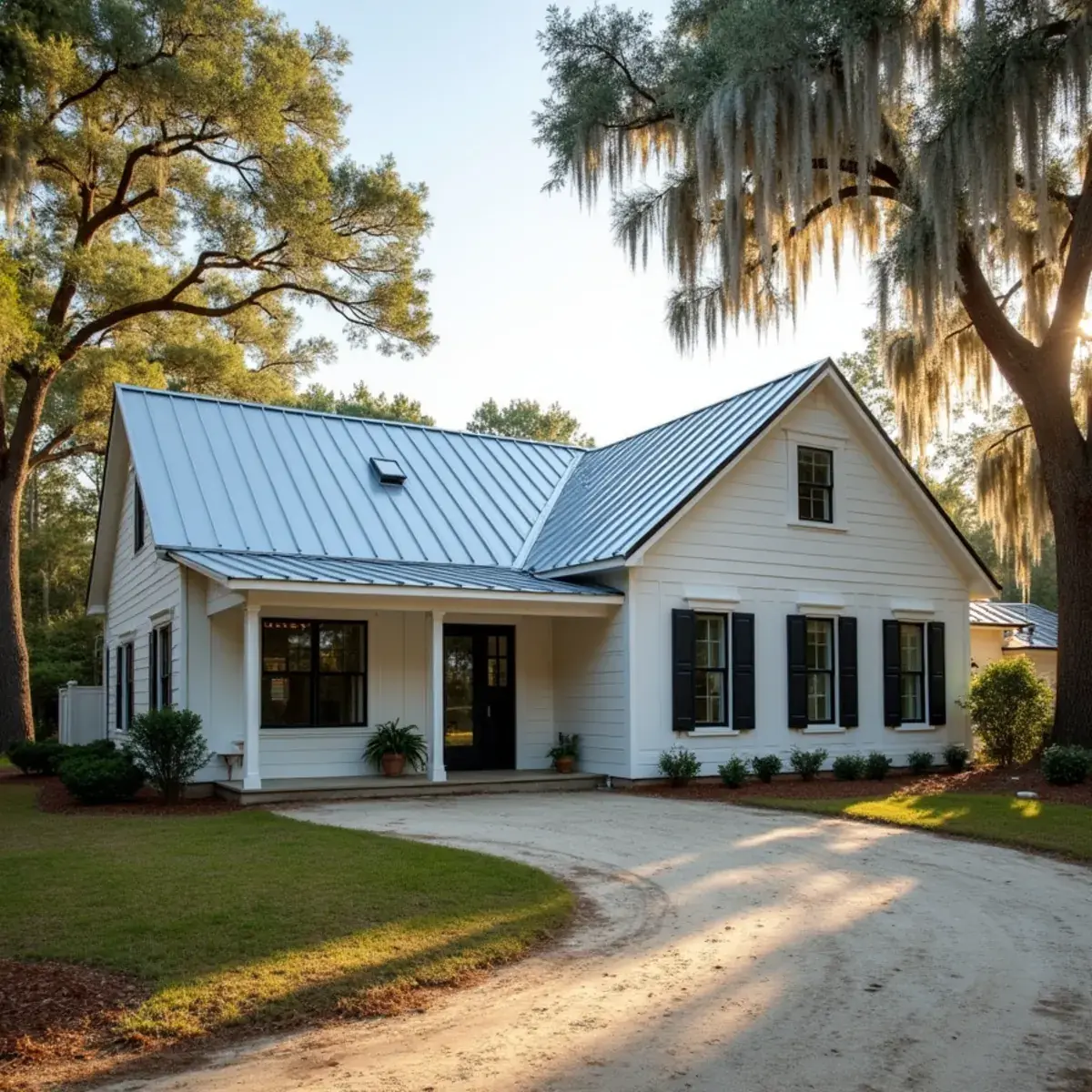
Metal costs more at the start but generally outlasts shingles in this climate. If you are leaning that way, our metal roof installation page compares panel types, gauges and wind ratings in more depth.
Impact-rated shingles and high-wind installation
Some shingle lines carry a Class 4 impact rating, the top grade in the UL 2218 hail test, and most architectural shingles carry a high-wind rating when they are nailed to the manufacturer's high-wind pattern, usually six nails per shingle instead of four. Ask which pattern the roofer will use; the rating on the bundle only counts if the installation matches it. Some insurers also credit impact-rated roofs, so ask your agent before choosing.
What Florida code requires on a reroof
A reroof is not just new shingles over old plywood. When the covering comes off, the Florida Building Code (Existing Building volume) can require the rest of the roof assembly to be brought up to current standards, depending on the house and its location. The points that come up most:
Deck re-nailing
Older decks were often attached with fewer or shorter fasteners than today's wind design calls for. Code can require the sheathing to be re-nailed to the current pattern once it is exposed, which is one of the strongest upgrades a house can get against uplift.
Secondary water barrier (sealed roof deck)
This is a layer, such as taped seams or a self-adhered membrane, that keeps water out if the shingles or panels blow off. Florida code can require it on a reroof, especially in the wind-borne debris region and on higher-value homes.
Underlayment and drip edge
Code-approved underlayment goes over the whole deck, and metal drip edge finishes the eaves and rakes so water clears the fascia. Both are standard on any properly permitted reroof today.
What a roof replacement contract should include
Two replacement quotes can look close on price and describe very different roofs. These are the line items a complete contract names, so you can hold the quotes side by side.
- Tear-off and disposal down to the deck, with a dumpster, yard protection and a magnetic sweep for nails
- Deck repair: how many sheets of replacement plywood are included and the price per sheet beyond that
- Re-nailing and a secondary water barrier where Florida code calls for them on your house
- Underlayment and drip edge, named by type
- New flashing at walls, chimneys and valleys, plus new pipe boots and roof vents, rather than reused old metal
- Ventilation: intake at the eaves and exhaust at the ridge or vents, sized for the attic so heat and moisture do not cook the new roof from underneath
- The roof covering itself, by manufacturer, product line and color, or by metal profile and gauge
- Permit, inspections and final paperwork, including the permit record you will need to prove the roof's age to your insurer
- Workmanship and manufacturer warranty terms in writing, and who registers the manufacturer warranty
The roof replacement process: permit, tear-off, deck check, dry-in, final inspection
- Estimate and contract. The roofer measures, inspects the attic and gives you a written price that names the material, underlayment and how replacement decking is handled.
- Permit. The roofer pulls the permit and posts it at the house before work starts.
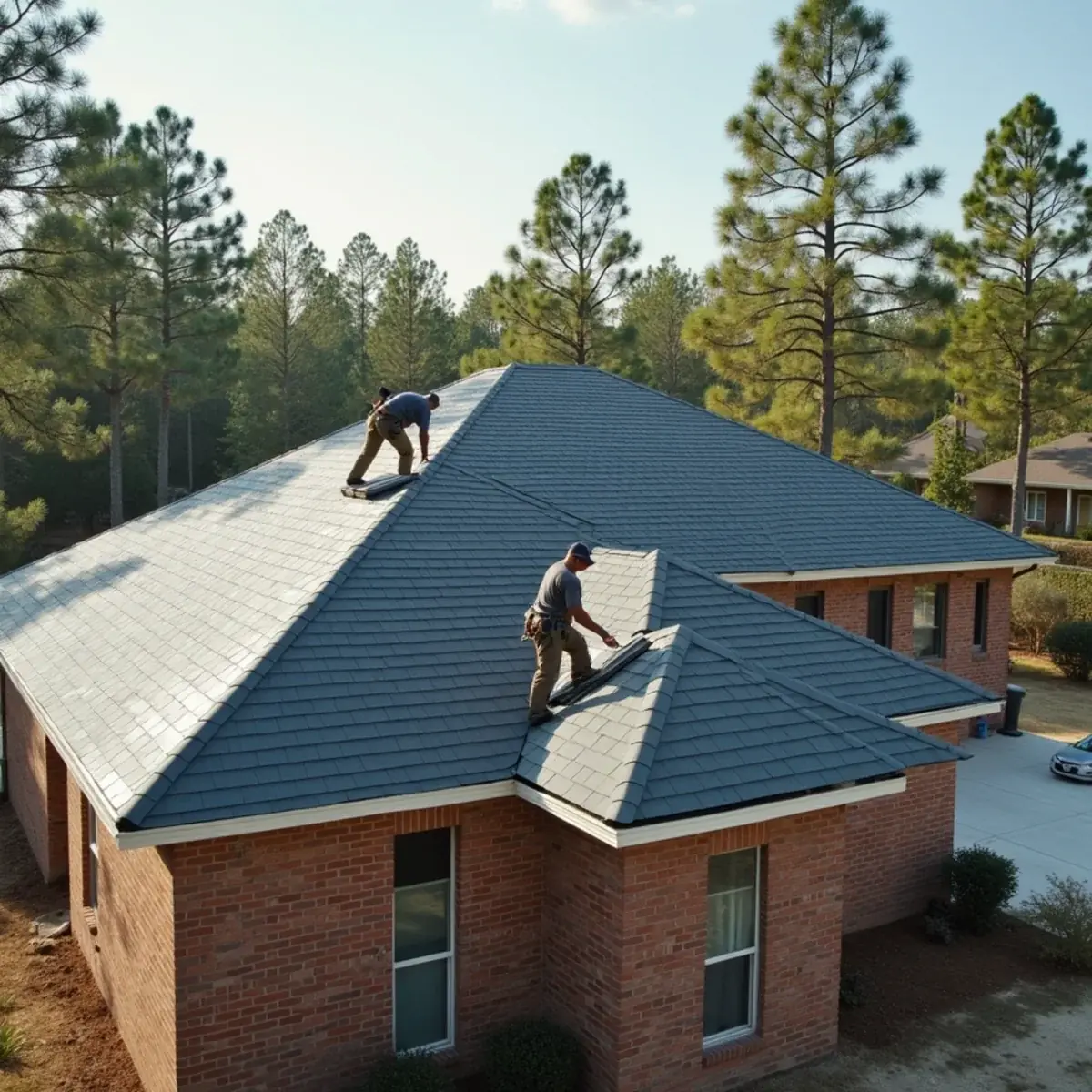
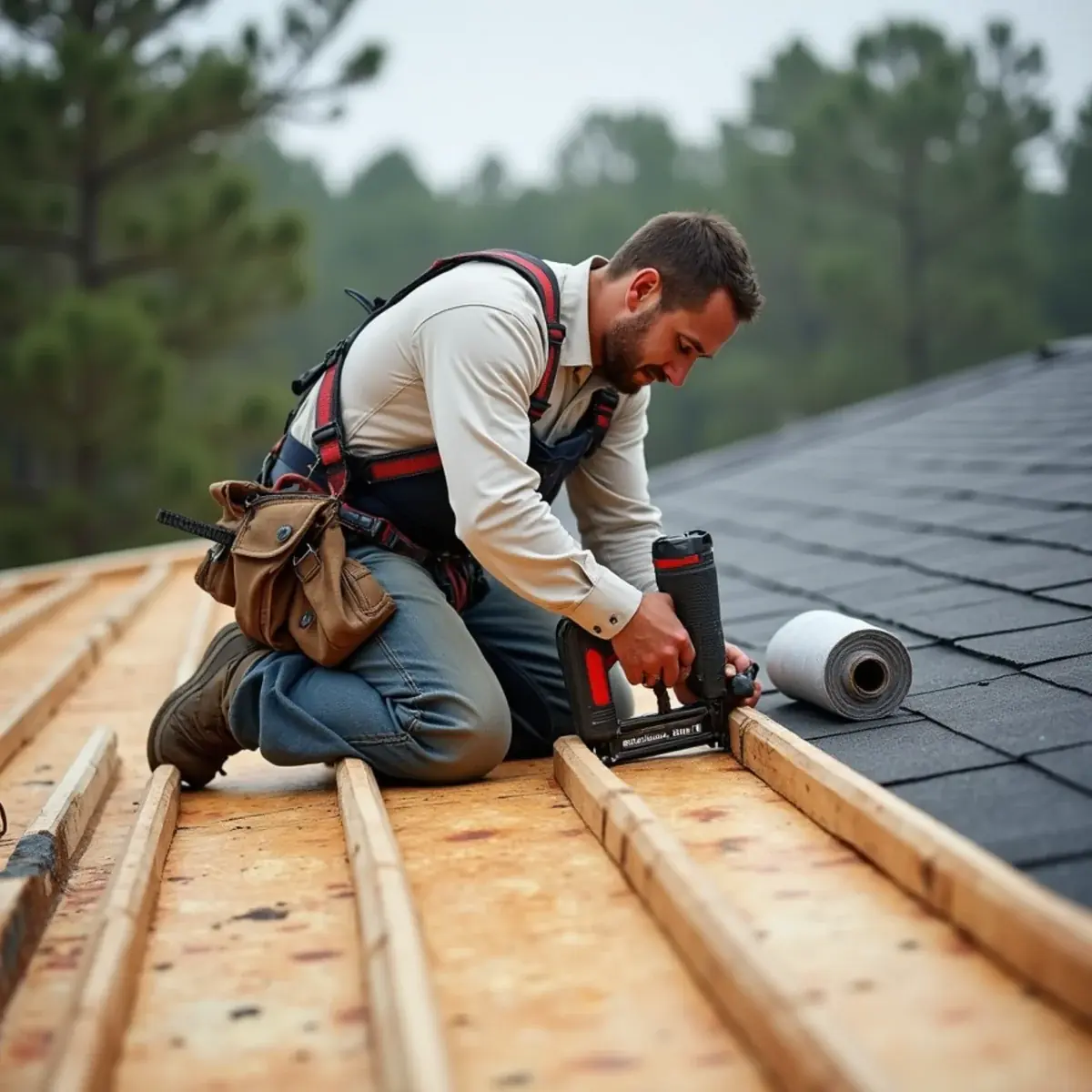
- Tear-off. Old shingles or panels and underlayment come off down to bare wood. Tarps and magnetic sweepers protect the yard and catch nails.
- Deck check. Every sheet gets walked and inspected. Rotted or delaminated plywood is replaced and the deck is re-nailed where code calls for it.
- Dry-in. Underlayment, secondary water barrier and drip edge go down so the house is protected even if an afternoon storm rolls in.
- New roof covering. Shingles or metal panels go on, along with new flashing, pipe boots, vents and ridge.
- Cleanup and final inspection. The site is cleaned, and the county inspector signs off on the permit.
Roof permits in the City of Milton and unincorporated Santa Rosa County
Here is the part that confuses people: the City of Milton does not issue its own building permits. For homes inside city limits, the project starts with City of Milton Planning, and Santa Rosa County Building (Development Services) issues the permit. Homes in unincorporated areas, including Pace, East Milton, Bagdad, Navarre, Tiger Point and Midway, go straight to Santa Rosa County.
Inside Gulf Breeze city limits, check with the City of Gulf Breeze; our Gulf Breeze roofing page has more, and the service areas hub lists every community we cover. The county says permits are usually required except for minor repairs, and a full replacement is not a minor repair. The roofer normally pulls the permit and schedules the inspections.
Larger jobs such as a full reroof also need a Notice of Commencement recorded with the county before work starts. The roofer usually prepares it for you to sign; it protects you if a supplier is not paid. Keep a copy with the permit.
Florida's My Safe Florida Home program has, in some years, paid for wind mitigation inspections and matched part of the cost of hardening upgrades such as roof-deck attachment and secondary water barriers. Funding opens and closes, so check the program's current status before you sign a contract if you want to apply.
What affects roof replacement cost
Every reroof is priced from measurements of your house, not a lookup chart. These are the things that move the number up or down:
- Roof size and shape. Hips, valleys, dormers and multiple levels add cutting, flashing and labor compared with a simple gable.
- Pitch. Steeper roofs need more safety equipment and go slower.
- Number of layers to remove. Two old layers mean twice the tear-off and disposal.
- Deck condition. The amount of rotted plywood is unknown until the old roof is off, so contracts usually state how replacement sheets are handled.
- Material. Architectural shingles, screw-down metal and standing seam sit at very different price points.
- Code upgrades. Re-nailing and a secondary water barrier add material and time.
- Access. Tight lots, pools, screened enclosures and big trees over the roof change how debris comes down.
If your roof still has life in it and you mainly want a problem fixed, roof repair in Milton is the place to start. If a hurricane or fallen limb is the reason you are replacing, read the storm damage roof repair page first, because Florida's 25 percent rule can affect how much of the roof has to come off.
Why homeowners call Zana Roofers for roof replacement
- One call starts it, any hour. A person answers 24/7, takes the details of the roof and the insurer's deadline if there is one, and sets up the visit.
- Licensed and insured roofers only. Every roofer we send is licensed and insured in Florida. A reroof needs a permit, and only a properly licensed contractor can pull it.
- The full price before you sign. Measurements, materials, deck allowances and permit all go in the written estimate, so the number does not grow on tear-off day without your approval.
- Repair first, if repair will do. A roof with life left in it gets a repair quote, and the roof inspection report shows the evidence either way.
Roof replacement in Milton and nearby communities
Most replacements around Milton are 1990s and 2000s shingle roofs reaching the end of their life at the same time, in the subdivisions off Avalon Boulevard and Berryhill Road and across Pace. In East Milton, acreage homeowners often switch to screw-down metal when the shingles give out, and historic frame houses in Bagdad and downtown Milton need a roofer who expects board sheathing and old layers under the shingles.
On the coast, Navarre roofs face open-water wind and salt air that shorten shingle life, and many Gulf Breeze homes are larger, higher-value reroofs where Florida's deck-attachment and secondary water barrier rules come into play. Permits for all of them run through Santa Rosa County, except inside Gulf Breeze city limits. The full list is on the service areas page.
Roof Replacement: questions from Milton homeowners
How long does a shingle roof last in Northwest Florida?
Usually less than the number printed on the bundle. Heat, UV, humidity and storm wind wear shingles down faster here than up north, and many roofers expect roughly 15 to 20 years from architectural shingles in Santa Rosa County, often less from older three-tab. Shade from pines, attic ventilation and the quality of the original install all shift that range.
How long does a roof replacement take?
The work on the roof itself usually takes a few days for a typical single-family home, longer for large or steep roofs and for metal. Rain days, the amount of rotted decking found and inspection scheduling can stretch it. The permit has to be issued before work starts, so plan on some lead time before the tear-off date.
Do I need a permit to replace a roof in Milton or Santa Rosa County?
Yes. A full roof replacement needs a permit. Inside Milton city limits the project starts with City of Milton Planning and Santa Rosa County Building issues the permit; in unincorporated areas like Pace, East Milton and Bagdad it goes straight to the county. Inside Gulf Breeze city limits, check with the city. The roofer normally pulls it.
Can a new roof lower my wind insurance premium?
It can. Florida insurers give wind discounts based on a wind mitigation inspection (form OIR-B1-1802), which looks at roof-deck attachment, roof-to-wall connections, secondary water resistance and roof shape. A reroof with re-nailed decking and a sealed deck can improve those answers. The form must be signed by a qualified inspector, and discount amounts vary by insurer.
Can new shingles go over my old roof?
Sometimes, but it is rarely the better choice here. Florida code allows a single recover layer only when the existing roof is sound and not wet or already doubled up, and covering it hides the deck from inspection and re-nailing. A full tear-off lets the roofer replace rotted plywood, add a secondary water barrier where required and give your insurer a clean, documented new roof.
When is the best time of year to replace a roof in Milton?
Late fall through spring, outside the worst of hurricane season and the daily summer thunderstorms. Roofers book up fast after any storm, so scheduling before June gives you more choice of dates. A roof can be replaced in summer too; the crew simply dries in each section the same day and watches the afternoon radar.