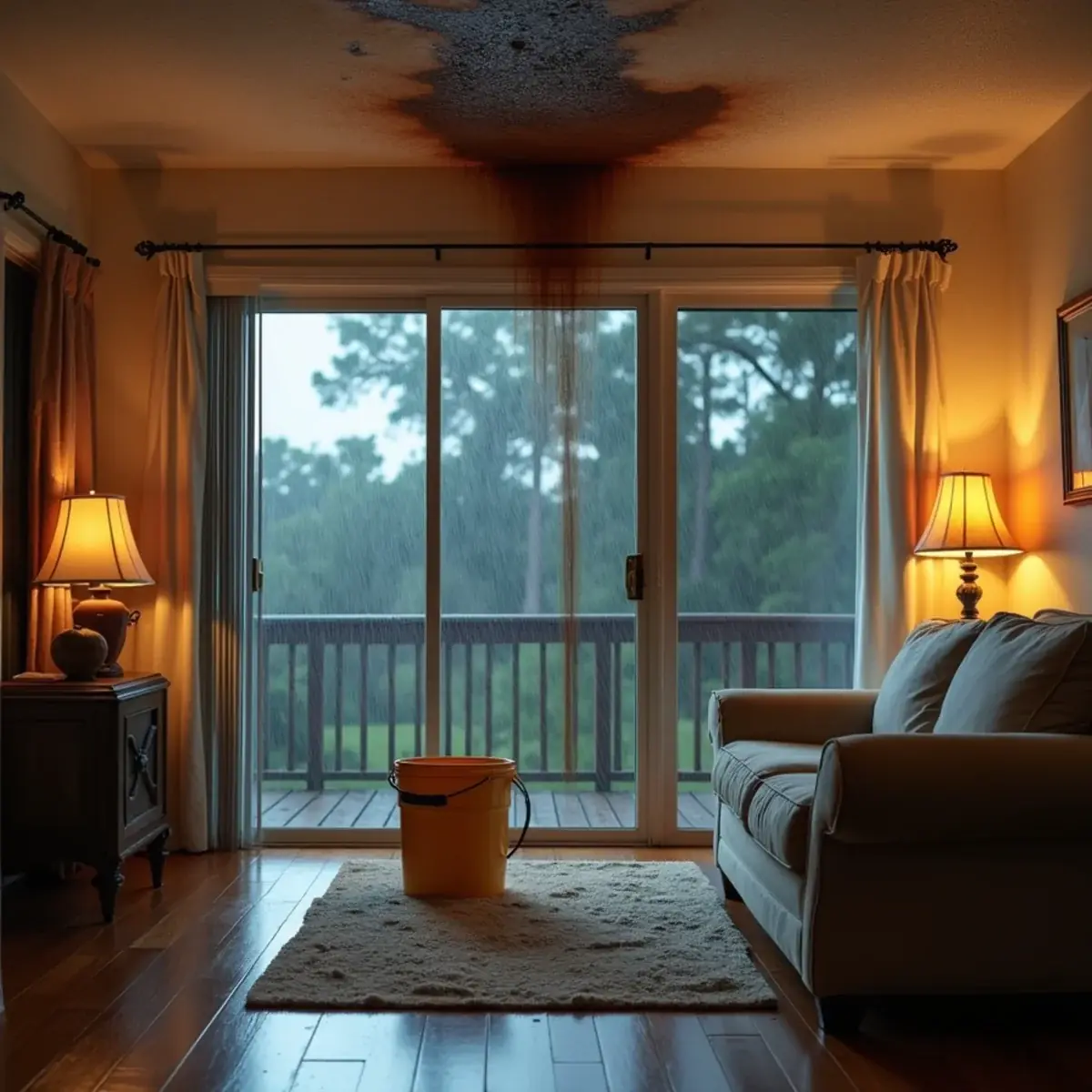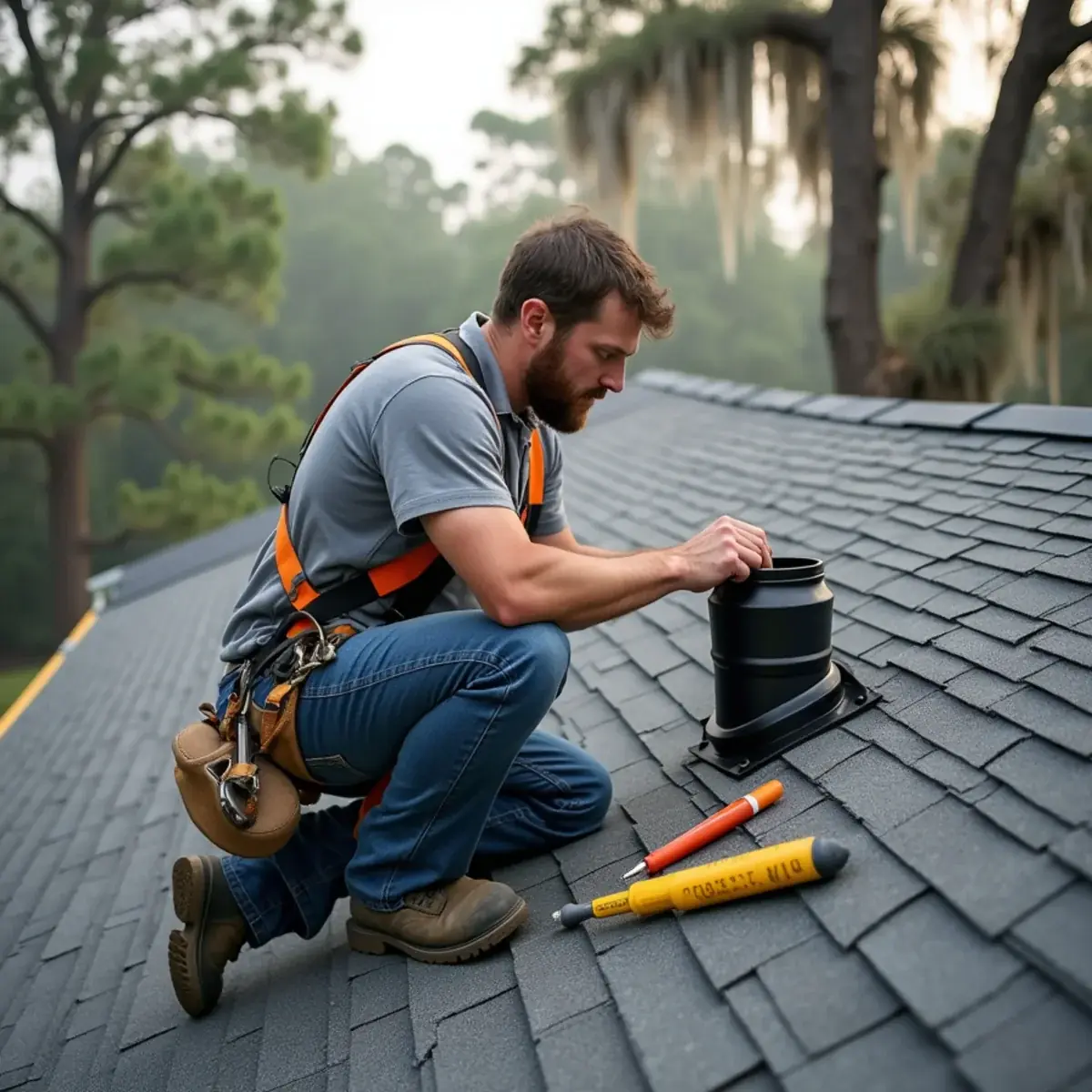
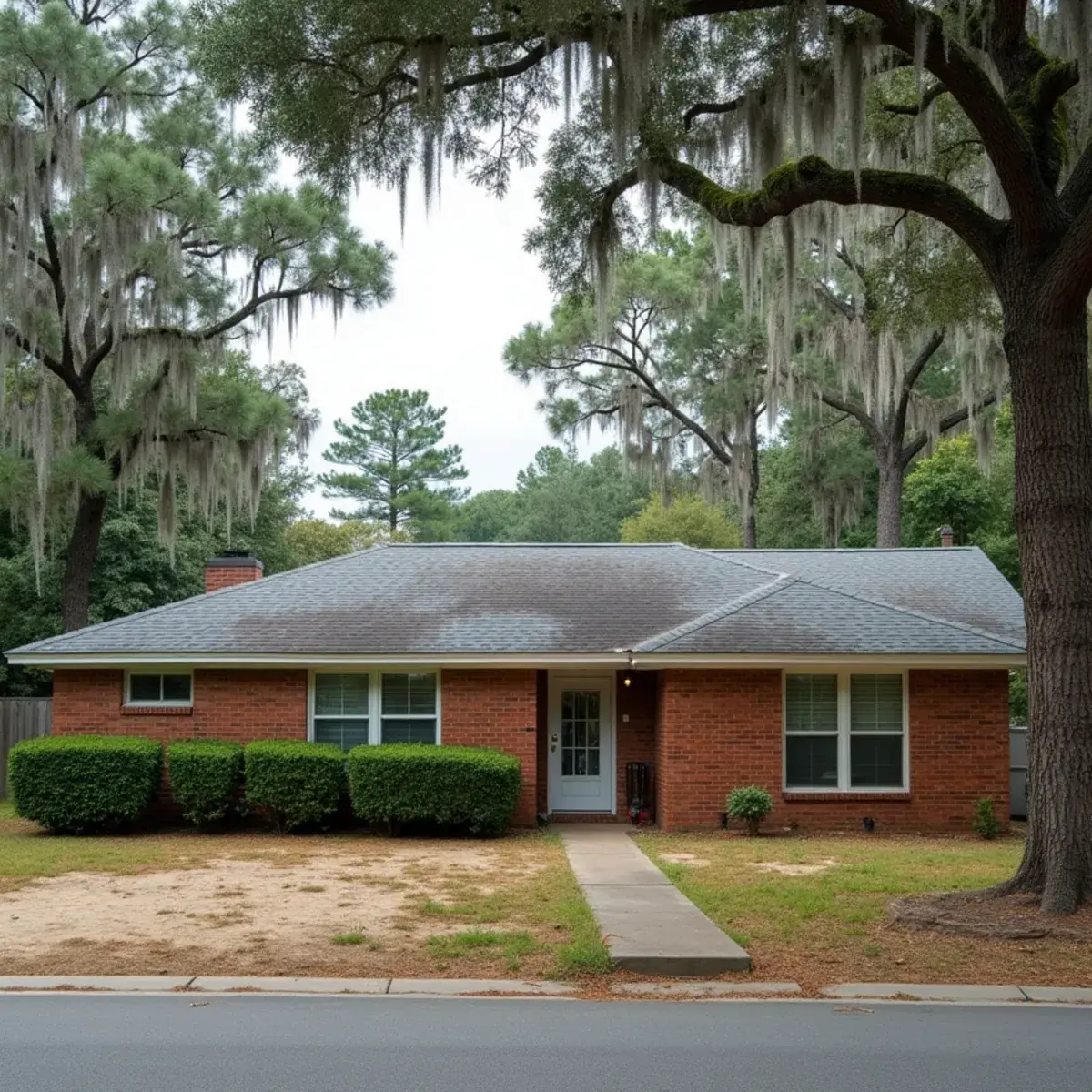
If your Santa Rosa County roof went on during the rebuild after Hurricane Ivan (September 2004) or Hurricane Dennis (July 2005), it is now more than 20 years old, and in this climate that is late in a shingle roof's life. Three-tab shingles here typically last somewhere around 15 to 20 years, and architectural shingles usually go somewhat longer. If yours is in that group, it is probably due for replacement or at least a close inspection. Below: how to confirm your roof's age, the signs it is wearing out, and what replacement involves now.
The Storms That Set the Clock
Ivan came ashore just west of Gulf Shores, Alabama, in September 2004, which put Pensacola and Santa Rosa County on the storm's stronger eastern side. Roofs across Milton, Pace, Gulf Breeze and Navarre lost shingles, decking and in some cases whole sections. Ten months later, Dennis made landfall on Santa Rosa Island between Navarre Beach and Pensacola Beach and hit many of the same houses again, some of them still waiting on Ivan repairs.
The result was a wave of new roofs across the county between late 2004 and roughly 2006. That wave is why so many homes here share a roof age. In September 2020, Sally stalled offshore and dumped heavy rain across the area, and Santa Rosa County handed out about 8,500 tarps afterward. Many roofs damaged by Sally were patched rather than replaced, so a lot of them are still the post-Ivan originals underneath the repairs.
How Long Roofs Last on the Gulf Coast
Manufacturer ratings assume milder conditions than Northwest Florida gives a roof. Strong sun most of the year dries the asphalt and wears off the granules that shield it. Humidity and well over 60 inches of rain a year feed algae and keep valleys damp under pine straw. Summer thunderstorms test the shingle seal strips again and again, and tall pines and live oaks drop limbs.
| Roof covering | Typical life here | What tends to fail first |
|---|---|---|
| 3-tab asphalt shingles | About 15 to 20 years | Seal strips, tab edges, granule loss on sunny slopes |
| Architectural shingles | Usually longer than 3-tab, depending on install and exposure | Pipe boots, valleys, ridge cap |
| Screw-down metal (5V-crimp or ribbed) | Panels often outlast shingles by many years | Rubber washers and exposed fasteners |
| Standing seam metal | Generally the longest of the common options | Flashing details at walls and penetrations |
A well-ventilated attic, good original nailing and shade can stretch these numbers. A roof installed in a hurry during the post-Ivan rush, with short-cut nailing or reused flashing, may fall short of them.
How to Find Out How Old Your Roof Really Is
Do not rely on memory or on what the seller said. These sources give you a date you can stand behind:
- Permit records. Santa Rosa County Development Services issues roofing permits for the unincorporated county and for projects inside Milton city limits. Its online permit portal, or a call to the office, can show reroof permits on your address. For a house inside Gulf Breeze city limits, the city is the place to ask instead.
- Closing documents. Your home inspection report, the seller's disclosure and any appraisal from the purchase often note the roof's age or the year it was replaced.
- Insurer records. Your declarations page or underwriting file may list a roof year. Past wind mitigation or 4-point inspection reports usually state it too.
- The previous owner or neighbors. In subdivisions where most homes were reroofed after Ivan, neighbors often remember when the crews came through. Treat this as a clue, not proof.
Signs a Post-Ivan Roof Is Wearing Out
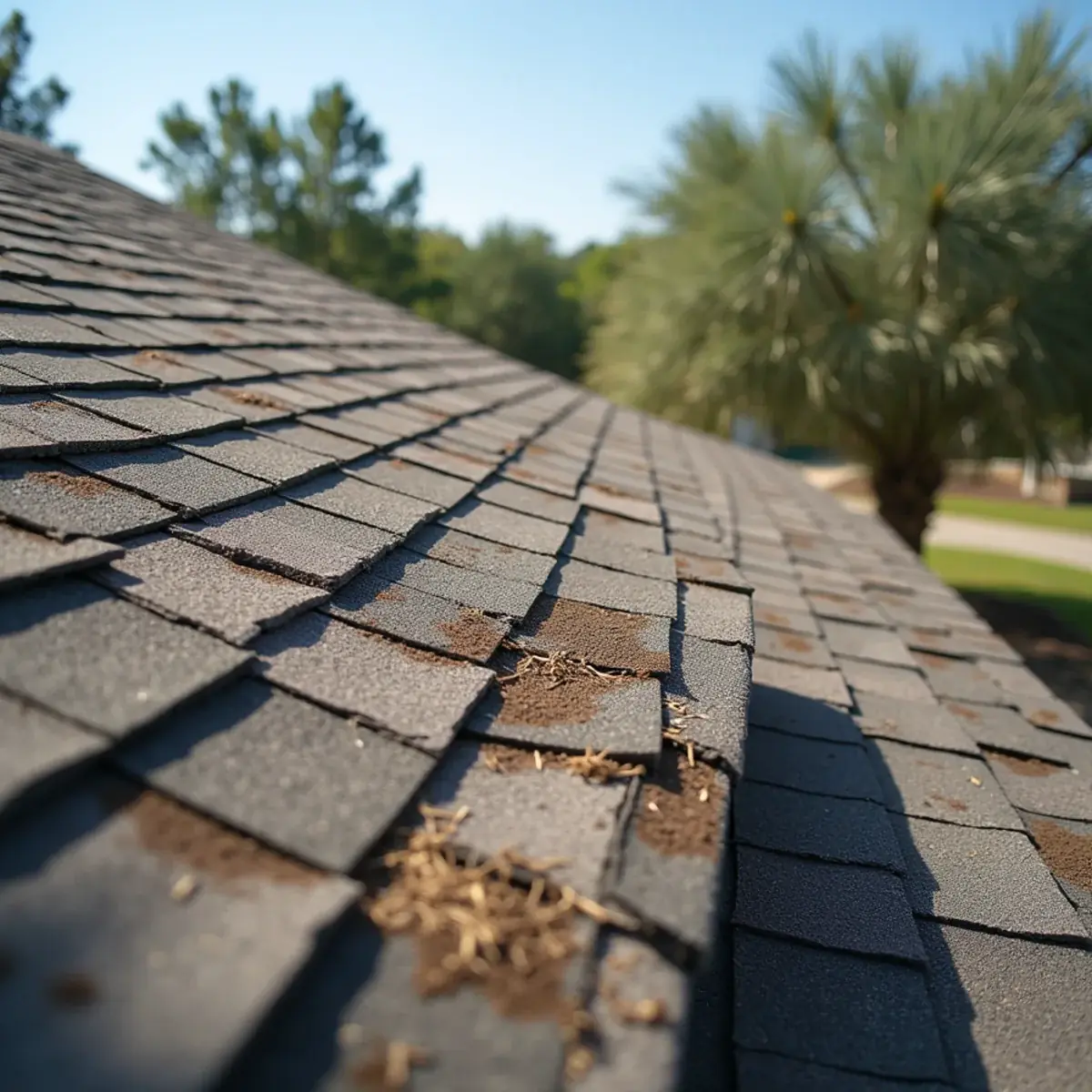
- Granules collecting in gutters and at downspout outlets
- Shingle edges curling up or the middles cupping, especially on south and west slopes
- Cracked or missing tabs after ordinary summer storms, not just hurricanes
- Bare spots where the dark mat shows through
- Nail heads pushing up under shingles
- Cracked rubber on pipe boots and rusted flashing at walls and chimneys
- Soft or springy spots underfoot, or daylight showing through the deck in the attic
- Leaks appearing in a new place every season
Two or three of these on a roof past 20 years usually means repairs will keep coming. A roof inspection that covers every slope and the attic gives you a clear picture before you decide.
What a 2005 Roof Lacks Compared With a Reroof Today
Roofers who tear off post-Ivan roofs in this county see the same things again and again. The rebuild was enormous, materials and crews were stretched, and the code itself has moved since. Not every roof from those years is weak, but these are the common differences:
| Detail | Typical on a 2004 to 2005 rebuild roof | Typical on a code-compliant reroof today |
|---|---|---|
| Deck attachment | Whatever the original framing used, often fewer or smaller nails | Deck re-nailed to current wind standards where code requires it |
| Water barrier under shingles | Felt underlayment only | Secondary water barrier, such as taped seams or self-adhered membrane, where required |
| Shingle fastening | Often the standard four-nail pattern | Manufacturer's high-wind pattern, commonly six nails |
| Edges | Drip edge sometimes missing on rakes | Drip edge on eaves and rakes, sealed starter course |
| Ventilation | Often under-vented attics | Intake and exhaust sized for the attic |
That is why a replacement now is more than new shingles. The upgrades underneath are what keep the roof on in the next Ivan, and several of them are exactly what a wind mitigation inspection credits on your premium.
Pace and Navarre Roofs Face Different Conditions
In Pace, many subdivisions built in the 1990s and 2000s were reroofed in the same months after Ivan, so whole streets of shingle roofs are aging out together. Inland, the bigger threats are sun, pine debris and limb strikes.
Down in Navarre, close to Santa Rosa Sound and the Gulf, salt air works on fasteners, drip edge and flashing, and wind exposure is higher. Dennis made landfall nearby, and a roof there can look fine from the street while its metal components are corroding. Ask the roofer to check fasteners and flashing closely on any coastal roof of this age.
What a Roof Replacement Involves Today
A reroof in Santa Rosa County needs a permit, and the roofer normally pulls it. Expect a full tear-off down to the deck, replacement of any rotted plywood, and, depending on the house and location, re-nailing of the deck to current standards and a secondary water barrier under the new covering. Drip edge and code-approved underlayment are standard. Those steps make a new roof considerably stronger than the one it replaces, which matters the next time a storm like Ivan lines up on this stretch of coast.
You can stay with architectural shingles or look at metal roofing, which many rural and older homes around Milton already use. Either way, the roof replacement estimate comes in writing before any work starts. Every roofer we send is licensed and insured in Florida. Call (773) 207-0769 to have someone look at your roof.
How the permit works in Santa Rosa County
- Permit application. The roofer applies to Santa Rosa County Development Services, which issues roof permits for unincorporated areas and for homes inside Milton city limits (those start with City of Milton Planning).
- Notice of Commencement. On a full reroof, a Notice of Commencement is recorded with the county before work starts. You sign it; it protects you if a supplier goes unpaid.
- Inspections. The county inspects during the job, typically once the deck and underlayment are ready and again at the end, so do not let anyone cover the deck before the inspection is done.
- Final sign-off. Keep the closed permit with your invoice. It is your proof of roof age for every insurer from now on.
The Bottom Line
If your roof went on after Ivan or Dennis, it is now in the age range where Gulf Coast shingles give out and insurers start asking questions. Confirm the real date from the permit record, look for the wear signs above, and get a roof inspection before a storm or a renewal letter forces a rushed decision. If it is time, a roof replacement built to today's code is a much stronger roof than the one it replaces.
Call (773) 207-0769 any hour to set up an inspection anywhere in Santa Rosa County.
Frequently asked questions
My roof was replaced after Ivan. Do I need a new one now?
Not automatically, but it deserves a close look. A shingle roof installed in 2004 or 2005 is past 20 years, which is at or beyond typical shingle life in this climate. Some well-installed architectural roofs still have life left; many 3-tab roofs do not. An inspection of every slope and the attic will tell you which group yours is in.
Does a repair after Hurricane Sally count as a new roof?
No. Patching shingles or replacing a damaged section after Sally does not change the roof's age for insurance. Florida counts roof age from the last time 100 percent of the roof was replaced. If your full roof dates to the post-Ivan rebuild, that is still its age, no matter how many repairs have been made since.
Can I look up my roof permit online?
Often, yes. Santa Rosa County Development Services handles building permits for the unincorporated county and for Milton, and it runs an online permit portal where you can search by address. Older records may not all be online, so if you cannot find a reroof permit, call the county office and ask them to check your property's permit history.
What is a Notice of Commencement, and do I need one for a new roof?
It is a short form recorded with the county before larger construction jobs start, naming the owner, contractor and property. On a full roof replacement you will usually be asked to sign one. It protects you against liens if the contractor fails to pay a supplier, and the roofer normally prepares it. Keep a copy with the permit.
Does Florida help pay for a stronger roof?
Sometimes. Florida's My Safe Florida Home program has, in past years, paid for wind mitigation inspections and matched part of the cost of upgrades such as deck re-nailing and secondary water barriers. Funding and eligibility rules change, so check the program's current status before you sign a contract if you want to use it.
Every roofer we send is licensed and insured in Florida. Zana Roofers connects you with independent licensed roofing contractors who perform the work.